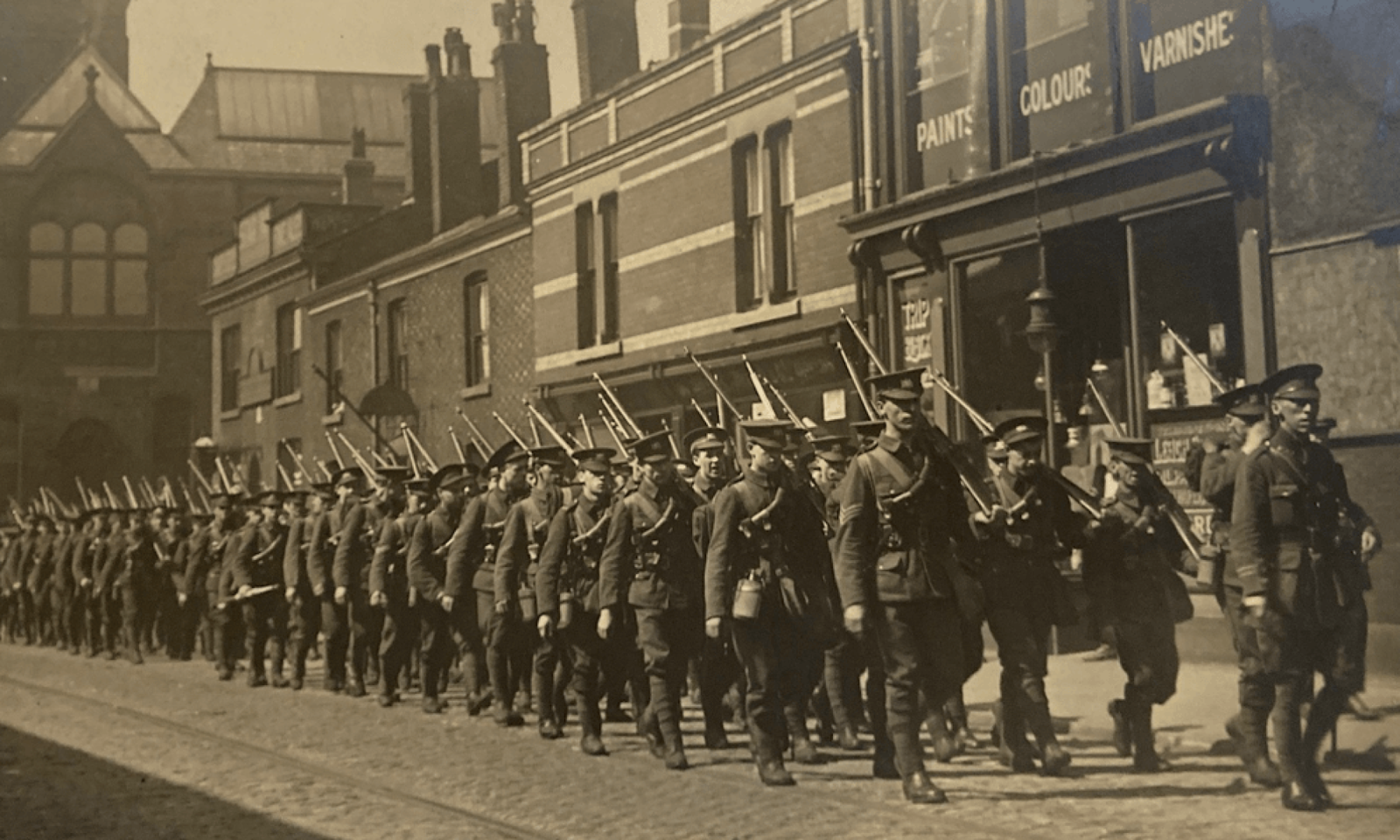
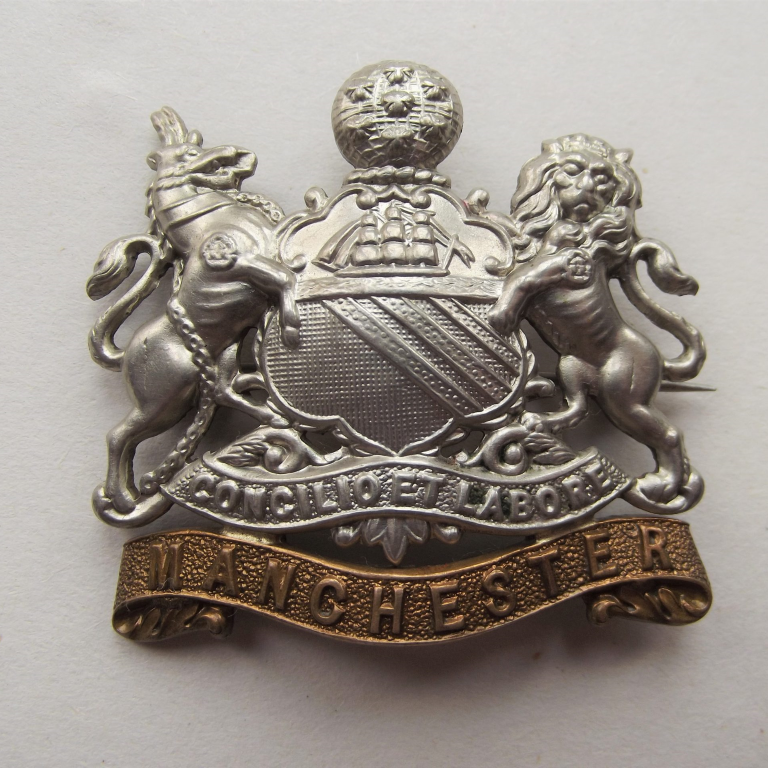
10th Bn. Manchester Regt., 126th Brigade, 42nd (East Lancs) Division
The narrative provides a first-hand account of the experiences of a soldier of the 10th Battalion Manchester Regiment, 126th Brigade, 42 (East Lancs) Division. The primary value is the coverage of the Sinai campaign in 1916-17 and, to a lesser extent, the battalion’s time in France in 1917. This is a transcription of a transcription and the original papers at the IWM contained many place name misspellings and errors. All known errors have been corrected and the grammar has been improved where necessary for the sake of readability. Additionally, a few images from the private papers of Major JF Bleakley have been inserted which were not in the original papers but as both were in the same battalion they were stationed in the same places and, in the editor’s opinion, the images enhance the overall narrative for the average reader.
England 1914/15
I joined the 2/10th Manchester Regiment on 23rd of September 1914. After 7 weeks training in Oldham, my own town, we went to Southport in billets and we trained there for over 6 months leaving on the 21st of May 1915. We went to Cuckfield in Sussex where I was billeted in a workhouse along with my Company. Not a fine place to be in, I must say. I was picked with a party of 250 men of the battalion, and we went to Sandwich Bay Musketry Camp, Kent. We went through a second course of firing. After being there for nearly two weeks we went back to Cuckfield and the following day, Saturday, we went along with the rest of the battalion to Pease Pottage Camp, Crawley, Sussex. And only there two days before I went home on my last leave for three days before going with the 250, the first draft to the Dardanelles. Before sailing we had two days at Bull Point Rest Camp, Devonport. I went on board the S.S. Ionian on Saturday July 3rd, 1915 but sailed the day after. The boat was packed, having 2,000 men on board. We passed Gibraltar on Thursday night July 8th and we reached Malta on Monday noon July 12th, but we could not get off the ship. We were only in the harbour 24 hours and then we sailed for Egypt. We reached Alexandria, Egypt on July 17th and the ship stopped there for coal. We left the next morning and sailed for the Isle of Lemnos which was the base for the Dardanelles.
Gallipoli
We arrived at the harbour on Tuesday July 20th and stayed on the Ionian for just over a day. Then we went on a smaller boat which took us to the Dardanelles and I landed there on Thursday night July 22nd, 1915. We went straight away into dug-outs behind the firing line and shells were bursting all around but I soon got used to it, but I had rather a rough time which I do not wish to go through again if I can help it for the Turks had the upper hand on us right enough.
I was taken to the 2nd field hospital suffering from dysentery on the 14th of September and when I had been there for 4 days, I was taken down to the beach and then on to hospital ship Dongola and sailed for Malta and on September 25th we landed there. I was taken to the Hamrun Hospital, Malta and stayed their 2 weeks before I went on board the H. S. Panama and I sailed for England October 8th, 1915.
Repatriated to England 1915
We passed Gibraltar at 4 o’clock on Tuesday morning October 12th and arrived at Southampton, England October 15th, 1915. From there I went on the hospital train to Birmingham and went in the 1st Southern General Hospital, Dudley Road. I was only in there 2 weeks before I went to Orchard Convalescent Camp Kent. After being there 2 weeks I went home to Oldham on ten days’ sick leave. I then went to Southport once again, this time attached to the 3/10th Manchesters as they were there at the time. I was billeted with Mrs. Crossley, 120 Shakespeare Street and although I was only there a little over 3 weeks, I must say I made the best of it and had a ripping time. I left Southport with the 3/10th on Tuesday morning at 2am on December 14th, 1915, and we went to Codford, Wiltshire. We were in huts and up to the neck in mud. I had only been there one week before I went home on Christmas leave for 6- days from the 21st to the 28th of December. I was then on the second draft ready to go out to the Front again. I stopped a day over my leave and got 9 days’ pay stopped for it when I got back. I must be lucky. The first draft left Codford on Sunday January 9th, 1916, so I was then on the next draft for going. I left Codford with the next draft on Thursday morning March 2nd to go out once more. We went to Devonport after having an enjoyable time of two days in a Rest Camp. Then I boarded the S. S. Lake Michigan, that was Sat. March 4th, 1916.
Egypt 1916
We arrived at Alexandria, Egypt, after sailing 13 days, on the 16th of March and we went under canvas at Mustapha where I was put in charge of a tent. I had a fine time of it and having been there 13 days, we left on March 28th for the Suez Canal, landing at Shallufa the day after.
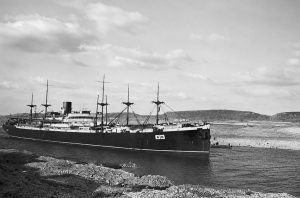
Australian Troopship on Suez Canal (Major JF Bleakley Collection)
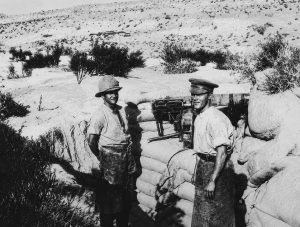
Machine Gun Post at Shallufa (Major JF Bleakley Collection)
In five days time I rejoined the 1/10th Manchesters. We then moved to camp at Port Suez. I was only there a week before I left the Batt. and went as a clerk in an office at Port Tewfik near Suez. I worked there for the A.D. of Works, Canal Defence, Southern Section and it was not half a sound job. It was there that I first did Typewriting. It was the 12th of April when I started there. On the 22nd I went to Ismailia for the day with a message. I went to Ismailia again in 2 week’s time. While I was there I went to several places such as Shatt, Isur Maus, Quarantine Station, etc., with money for the Nitre workmen and other things. Having been there for 3 months, I left as the work was finished so on the 26th June I went to rejoin my Batt. once more. They were now at El Ferdan so I joined them there. I was only there 3 weeks before I went with 550 men picked from the Batt. and we went to Kantara. After 3 days we went 30 miles further into the Desert to Romani landing there on Thursday and we kipped in the open. We were there three days before we entrained again and went to Hill 40. We got off the train there but had to get on again in 5 minutes time as we did not stop there after all, (oh yes this is a rag-time mob), so we went back to Kantara. This place is on the Canal side. We stayed there for another day and then we marched to El Ferdan which was a matter of 15 miles and that is not a short distance out here when one is done up to start with. We were only there for 2 days before we marched to Ballah at early morning. We stayed there for the day and at 12pm the same day we marched back to Kantara. We passed through Kantara and marched on to Hill 40 which is about 8 miles out on the Desert. We were there for a week and then marched to Hill 70.
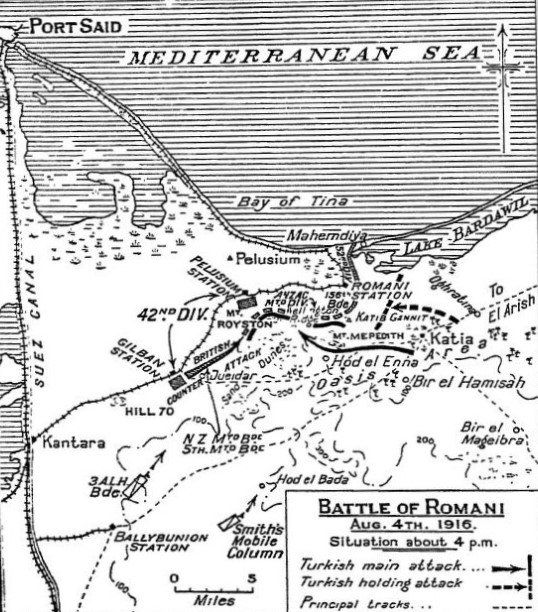
Map from “The Palestine Campaigns” by Lieut-Gen. Sir Archibald Wavell (London: Constable & Co, 1928)
(My word don’t we move about and we do see life)
The Turks were now attacking Romani and that was on the 8th Aug. 1916 so we were in reserve. We stayed there 4 days and then we went further out still to Pelusium which was about 7 miles off Romani, but before we were needed to have a bang at Johnny Turk those that were not taken prisoners retired.
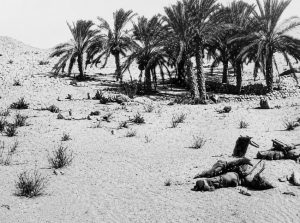
Battlefield Debris in the Aftermath of fighting at Mount Royston (Major JF Bleakley Collection)
We were still there at Oldham Wakes (last week in August) and at that we went for a bathe in the sea, which was about 5 ½ miles away, on Thursday this was instead of being on our holidays in England. We had 5 days there and then went back to Pelusium on Thursday Sept. 7th, feeling a little better after having a wash for once. We only stayed at that place for one day and on the 9th of Sept. which was my birthday (19th) we started on 3 days march. The first night we stopped at Romani and the 2nd night at Kathia and on the third day of the tramp we arrived at Oghratina, which is a post nearly 50 miles out of the desert from the Canal.
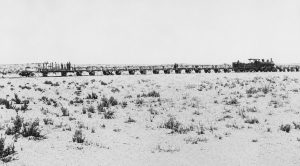
Railroad at Oghratina (Major JF Bleakely Collection)
At this place we again did “out posts” for when we arrived there the train lines came from the Canal to there and they were building the railway still further towards the Turks, who had now gone back to El Arish which was one of the bases, so we kept advancing with the railway. When on “out posts” each platoon goes out on its own, this is much better than doing “tricks” with the Batt. We could also get dates and watermelons near to this place and there is nothing like a melon when one is in need of water. After being on “out post” for over a week we moved 2 miles further back for what is called a ‘rest’. It is while you are supposed to be resting that drilling starts once more and makes one more fed up than ever. At this time I was feeling off form! When we had been there 7 days I took ill with Malaria fever and was carried away from the boys to the 2nd Field Hospital, my temperature then being 105.6 so I was well away. I had to be put in iced blankets to cool me down to 103.6.
I had a rough night of it and was taken the day after to another 3rd Field Hospital – this was on the 29th Sept. 1916. After being there for another day I was sent to a Field Hospital at Kantara. I had another bad night there and in the morning was sent up the Canal in a boat to the 31st General Hospital, Port Said which is a pretty fine hospital. It was going to be a Works before the war but the government claimed it. The place belonged to a German. On the 2nd of Oct. I am feeling better and am allowed to get out of bed.
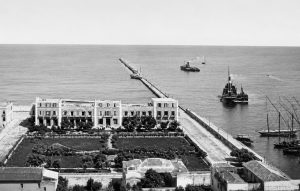
Port Said (Major JF Bleakely Collection)
After being at Port Said just over two weeks, I was sent to the Citadel Hospital. One can get a fine view of the city of Cairo from the hospital. This is my first time at this place so it is a sight worth seeing.
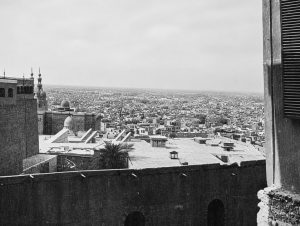
View of Cairo from the Citadel Hospital (Major JF Bleakely Collection)
On the 27th of Oct. I went on an outing to the Pyramids with a party. We went in the car. I enjoyed myself very much, after having been shut in hospital for a month. The Pyramids are a fine sight. I went inside the Great Pyramid, but with not being so strong after my illness it nearly put me out for the heat inside was dreadful. We had tea at a house near the Pyramids which belongs to the Sultan of Egypt, but he had lent it to the Red Cross, so that Convalescent Tommies could have their tea there. Before the war this place had only been used for Royalty, the last to be there was the Crown Prince of Germany when he was visiting the Pyramids. On the 30th Oct. I left the Citadel Hospital and went to the Boulac Convalescent home, Cairo. This place was before the war the palace of some Turkish Princess and is a large building but the place is full of mosquitoes which are biting lumps out of me. I was only there 5 days before I had Dental treatment, the same as I had to have in Convalescent Home in England the year before. A week after I went there, I went on another outing to the Pyramids and had another fine time. On Nov. 11th 1916, Sat, I went on an outing to a place called Barrage, about 25 miles from Cairo on the train. We spent a good afternoon there.
On the 16th of Nov. Thursday, I went with an outing party to the town of Cairo and we had tea in some gardens in the city and on Sat 25th I went with a party to the Cairo Museum – a very interesting place. Two days later I went on another trip to the Barrage and the day after the 28th I got a pass to Cairo and I had a fine time on my own. On the 30th Nov. I left Boulac Convalescent Home and went to Kantara, and on the 2nd of Dec. 1916 I again rejoined the 1/10th Manchesters who were about 30 miles out from the Canal, on the Desert. The day after I joined the Batt. we went on Kit Port duty. We are now only about 20 miles from El Arish where Johnny Turk has got a base so we are looking forward to some more fun.
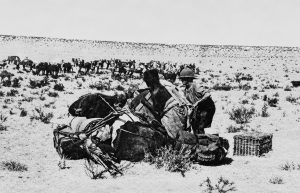
Baggage Camels (Major JF Bleakley Collection)
After I had been there 2 weeks we moved up a few more miles, but the Turks having retired from El Arish we were not needed so we came back to the same place.
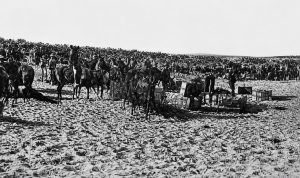
Concentration Point for Attack on El Arish (Major JF Bleakley Collection)
This is the 23rd of Dec. 1916 and things look as if we are going to have a quiet Christmas for me this time. A week later, on the 1st of Jan. we went on the track again and for two days on the march. We arrived about 8 miles from El Arish. After a few days there we marched on to El Arish and camped just outside the town.
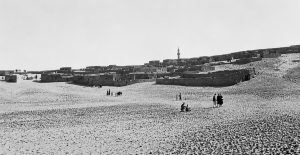
El Arish (Major JF Bleakely Collection)
We were there just about 2 weeks then we got rumours we were leaving Egypt and going to France and on Monday Feb. 5th we entrained and rode down to Kantara where we encamped for 3 days before starting on a march to Ismailia which was 2 days march from Kantara. We stayed for one night at El Ferdan, a place where we were stationed for a while, before starting off again the next day. We arrived at Ismailia on Friday 10th Feb. 1917 and camped at Moascar camp just outside Ismailia where we are now being fitted out with clothing and things and are waiting orders to go to France. We stayed till Sunday Feb. 25th 1917 when we entrained at night for Alexandria. While we were on this journey one of the lads named L___ lost his life from drowning whilst we were stopped at a station on the way.
France 1917
We landed at Alexandria the following morning the 21st. We went straight from the dock side on board S.S. Huntspill which was once an Austrian ship which had been returned early on in the war and was named Kaizbor. We didn’t sail till 27th Feb. 1917. It was very calm for the first few days and then we had it very rough for a while and we didn’t land at Malta till the 3rd March 1917, leaving the same morning. After 3 days sail we arrived at Marseilles, France on March 6th 1917. We entrained at once and after 3 days ride we arrived at Pont Remy. From there we marched about 7-miles to another village. It is terribly cold and snowing, quite a contrast to Egypt, for the cold is hardly bearable to me but I shall get used to it in time. The village I am in at present is Huppy and we are billeted in old barns, which is really much better than nothing. We are very near to the Somme Front. We stayed there for nearly a month and on the 30th March 1917 we moved to a village about 9 miles. away called Liercourt which is near to Pont Remy. I had the pleasure to drive in a motor wagon. A few days later I managed to go to Abbeville in a motor and it proved to be a very pretty large town but I had no time to look round. On Sat.7th Apr 11-1917 we went on the train to some place and then marched a few miles to a place named Morcourt and went again in billets, old barns! The German aeroplanes come over the village very often and drop a few bombs at times and several battles are fought in the air with our planes and theirs but otherwise things are very quiet. On the 12th April 1917 we moved to Flaucourt which was a march of about 14 miles and we went in dug-outs. On 14th April 1917 I again left the Batt. with a bad leg and hands through Septic. I was there 4 days and then went to the C.C. Station (Crecy). While I was there I received the news about our Batt. doctor, Captain Baird who was blown up by a German trick mine.
On the 28th April 1917 being much better, I played for our Divisional team at football against the 48th Div. as a large number of them were also at the C.C.S. Unfortunately, we lost the match by one goal. On the 30th April I left the C.C.S. and went to a town named Villers-Bretonneux and was there 4 days pulling huts down and loading railway wagons with wood to be sent up the line. This town is a pretty large size and I spent quite an enjoyable time there before I went back to the Batt. at Crecy on the 5th May 1917 and on the 18th I left the hospital to rejoin my unit, who are at present in the firing line. I landed at Peronne, the smashed up town, the same day and 2 days after I left there and rejoined the Batt. at a village named Ytres and the same night we moved up to the firing line which was a walk of about 8 miles. Things are pretty quiet in this part of the line at present. After being in the front line for 5 days our Company came out and we went in Reserve, which was in a large wood which had not been destroyed like the rest of the woods in France. It is a treat to be beneath the green trees and hear the birds singing and although we are only about 2 miles away from the Germans here, when they are not shelling us, we can hardly tell there is a war on at all. While we were up in the firing line this time we had the ill luck in our Company to have one killed and one wounded with a shell. On the night of the 31st May 1917 our Company went out in front of the firing line to dig an advanced trench and about 10 o’ clock in the morning of the 1st of June we were spotted by Boschies who opened out with rapid shell fire on us. We had to make a dash of it to get back. We had to rush through a smoked village and how we all missed being killed was wonderful. We then went to another wood which was only about 1 mile from the line and the next night we had another man wounded by a stray shot. The next night we went digging again in the front and were once again lucky. On the night of 4th June 1917 we had another rough house with 25 of our Batt. killed or wounded.
Of the 5th June 1917 we moved down the line for a rest in a smashed up village, Ytres. It was here that I went to the Signalling and shortly I expect leaving the Batt. again to go on a course for the same. On the 15th June 1917 I left the Batt. to go to the 42nd Divisional School of Signalling at Bus which is 2 kilos further down the line. After being there for about 2 weeks my Batt. had another rough time up the line and I lost a few of my pals — Harry Highton, Tommy Dyson, Tom Bewmont, and George Holt being killed at the time. The Batt. managed to capture a Minenwerfer Gun from the Germans and 3 men were recommended and moved from there with the Signal School and we marched about 4 miles further north to a village named Aix la Petay and camped just outside the place. On the 14th July I went on a visit to my Batt. who had come down the line and were at a village about 3 miles away called Courcelles. On the 5th of August 1917 I finished the Signalling Course and went back to Batt. At Courcelles and I am expecting going home on leave any day now. On the night of Aug 8th I left the Batt. to go home on 10 days leave. At last I entrained at the next village to where I was stationed with my unit namely Achiel le Grand to go to Boulogne where I shall catch the boat for dear Old Blighty. I landed at Boulogne at about 4 o’ clock on Thursday morning the 9th August 1917 but could not get home that day but sailed the day after, Aug. 19th, at 8 o’clock in the morning and landed at Folkestone at 10am and changed at London and landed home in Oldham at 11 o’clock at night Friday Aug 10th 1917. After a ripping 10 days at home, I left Oldham on the night of Monday Aug 20th 1917 to go back to the rotten country France and back to “the Life!” I landed in France at Boulogne about dinner time on Tuesday Aug 21st but the same night I went in the 3rd Canadian General Hospital with the old complaint, Malaria. I stayed there till Sept. 8th and then went to the 7th Convalescent Camp, Boulogne.
Today, Sunday, is my birthday which is the third one running I have had away from home, but anyway although I am in here it is much better than being up the line. On the 12th Sept. I left the camp going on the Hospital Train from Boulogne to Trouville. On Sunday Sept. 16th I got a pass to go down to the town of Trouville, which is a fine seaside town to which people come from Paris for holidays. I spent a très bon time there for the weather was grand and the bathing there was great. After, I went down every few days as I was at the Convalescent Camp Trouville for 6 weeks. I left there on Friday Oct. 26th 1917. On my way to the base at Etaples travelling from Trouville in a Hospital train I arrived at Rouen where I spent the night, leaving there in the afternoon next day and going by train to the Base Etaples the 30th I.B.D which is a large camping ground. Arriving there Oct. 27th I remained there for about 2 weeks and on the 28th Oct. I left to join the Batt. which was up at Nieuport. I landed late and right at reinforcement camp behind the line and stayed till Nov. 4th 1917- and arrived at the Batt. dump the same night at Coxyde. The next day I arrived at a place named Tulpen. I went up the line with the boys the same night on fatigue for a few hours. The next day Nov. 11th I went with the Batt. up the line. I am in Company H.Q. with the signallers and things are pretty quiet. After being up the line 5 days we were relieved and came down to Oostduinkerke which is a few miles behind the line. I went on fatigue in the line on the night of Nov. 17, 1917, and had quite a night of it. On the night of Nov. 18th we left the camp Oostduinkerke in the afternoon and went in motor lorries to the town of Dunkerque and stayed in a billet just outside the town for the night and next morning we set out on a march of 20 kilos in the day and stayed the night near the village of Wormhoudt. The morning after we again set off on the march and rested at night in another village. On the 21st Nov. we were again on the trot and the same the day after.
On the 22nd November 1917 we arrived at Rincq where we shall very likely stay for a few days. This village was near to Aire. I had the pleasure to have a look round the town. After 7 days at Rincq we left on the morning of 27th November 1917 and marched just over 20 kilometers to the village of Robecq which is 8 kilometers from Bethune. The next day we marched through Bethune and to a place about 4 kilometers the other side where we are in reserve of the Division. The front line being about 5 kilometers from the place we stayed at was called Beuvry and it was a très bon place. After staying there about 12 days, we moved up into the front line in a part just in front of Cuinchy, where I was in advance post signal office. I arrived. there on 10th December 1917. We left the line 6 days later and went down to a village called Capair and on the 20th of December I went for 2 days in a signal school at the B.T.O. line leaving there on the 22 of December 1917 and went with the battalion in the front line. Again, I was on advanced Signal Station and it really is some life for I shall be up here for Christmas and New Year. On the 24th December 1917 Christmas Eve whilst going out for Company H.Q. back to my own Signal Station a shell dropped in the trench just against me and upon picking myself up I found myself hit in four places in the right leg. I was taken to the battalion doctor and there he took two pieces of shell from my leg and then I went further down the line and underwent an operation the same night. I came to on Christmas Day to find myself on a nice soft bed in a ward trimmed up for Christmas. After all I had a pretty good time at the place. I am now at Cuinchy which is just at the rear of Bethune on the 5th of January. My leg is getting much better and I left the 1st C.C.S. I was put on board a canal Hospital Barge landing at St Omer on the night of the 6th January 1918. I was taken to the 7th General Hospital.
England 1918
I left the Hospital on Sunday the 13th January 1918 and went by Hospital train to Boulogne then on hospital ship bound for Blighty. We stayed in the harbour for the night, sailing the next morning at 9 o’ clock 14th January 1918 and arriving at Dover at about 11.30am I was put on a Hospital train going to Glasgow, Scotland arriving there at about 3.30 am in the morning following, 15th January 1918, and I was taken to Springburn Hospital at Glasgow. After being there for two weeks I was allowed to get out of bed and had a fine time at Glasgow till the 5th February 1918 when I left there and went to Blackpool to the K.L.M.C. H. During my stay there, which lasted 14 weeks I had a ripping time. On Thursday the 9th of May 1918 I left the K.L.M.C.H. and went home for my 10 days sick leave. My leave expired on the 20th May (Monday) and I reported to the 8th Res. Manchester Regt which was stationed at Hunmanby, near Scarborough, Yorkshire. The camp was right out in the wilds, for Hunmanby is a quiet little village miles away from anywhere. During my stay there I visited Filey several times, this being a quiet little seaside town, about 4 miles away from camp. On Friday the 26th of July I managed to get home on weekend leave, returning from home to Hunmanby on Tuesday the 30th of July. I had several small outings and bicycle rides as far as Scarborough and Bridlington. On the 20th September I again went home on weekend leave and returned to Hunmanby on the 24th of September. On Friday the 27th of September I moved with the Battalion to Filey a distance of 4 miles and we were billeted there in empty houses, my address being 16 Rutland Street. On Friday the 18th of October I went home on ‘Special Leave’ undergoing an exciting stunt (i.e. wedding) on Saturday the 19th and I had a ripping time at home afterwards. My leave expired on Thursday the 24th and I arrived back at Filey again on Thursday night feeling fed up again as is quite usual after a leave home.
On Friday the 1st November I left Filey for the Transfer Centre at Ripon, the following morning the 5th of November to proceed to Woolwich (London) for a trade test. I arrived there the same night and was billeted in Brookhill Barracks. I went through a fitter’s test and passed out. On Friday the 8th inst. I left London to proceed to the R.E.s stationed at Longmoor. The next day moved to Bordon Camp, Hants. and was transferred to the R.O.D. R.E. 6’s who were stationed there. So I was finished with the Manchester Regt. after being with them for 4 years and 1 5/8 months. This Bordon is a quiet little spot about 20 odd miles from Southampton.
On the 11th of November 1918 Monday we went on Parade to hear the Fighting was over at last. After being there for 2 weeks, I was put on a draft to go overseas again, for work on the Railways, so came on Draft leave on Sunday night 24th November 1918 arriving home the next morning. I was at home 9 days leaving on Tuesday afternoon the 3rd. of December 1918 and arrived at Quebec Barracks Bordon late the same night on the 9th of December 1918.
France 1918/19
Monday, I left Bordon with the 138 draft for France once more leaving there at early morning and arriving at the rest camp Southampton the same night. I had a look round the town at night. On the following day Tuesday 10th of December 1918 I left Blighty once again sailing at 6pm and arriving in France on the following day Wednesday the 11th December 1918 at the Port of Le Havre, where I stayed in the rest camp. I came across in the S.S. Southwestern Miller and it was a pretty rough sail. I am now with the 55th Broad Gauge Railway Operating Company. I spent a few good days at Le Havre, which is a fine town. I left there on the 17th of December 1918 Tuesday entraining for some unknown place. On this journey I travelled in a German truck which had been handed over. We passed through Etaples the following morning and Boulogne at dinner time and arrived at Audruicq which is near Calais and is a R.O.D. Depot.
At this place I was put with the draft under canvas, and I guess I had quite a time being in a tent at this time of the year. I spent Christmas Eve 1918 in a tent and a right Christmas Eve it was too, for there was plenty of snow. On Christmas morning I was moved in a hut nearby which was much better than remaining in a tent of which I had had more than enough. I did not have a bad Christmas Day at all, for I clicked for a good dinner and tea, so under the conditions all was très bon. I had a fairly easy time while at Audruicq. On Friday night January 3rd 1919 I left Audruicq with a small draft for Dunkirk. I broke the journey at Hazebrouck. This is another place that has had a bit of smashing up by the Bosch. I was billeted in what used to be a Ministry leaving there by the 8.40 am train for Dunkirk the next morning the 4th January arriving there the same afternoon and was attached to the docks company of R.O.D.’s and was billeted in Railway living vans. I started work on a shunter in the yard here on the January 5th 1919 on Night Shift for the first week. The yard here has 20-lines and this is some job. The place is called Triage des Dunes and I guess it is all dunes too. Dunkirk is pretty near and is a fairly decent place which has been knocked about a bit with bombs by the Boch. On my 4th week there I was put on a points man’s job being in a cabin at the south end of the Triage des Dunes yard. In the month of February great rumours are set about regarding demobilization but they seem to take plenty to start in the Detachment of R.O.D. Later in the month rumours are flying about to this effect, that the detachment is going to Boulogne. On Saturday 28th February (?) I went to a little seaside place named Malo which is a car ride out of Dunkirk. This is a quiet little place but I passed a pleasant afternoon there. On the 1st of March (Sunday) the clocks were turned forward one hour (midnight) for the daylight “stunt”. I spent a few evenings round Mardyck village and petite Sands! On Saturday April 26th I moved with the R.O.D. detachment from the living vans at Triage des Dunes to a camp about a mile away near Petite Sands, and was billeted in a hut. On Wednesday night the 30th of April I did my last night’s work with the R.O.D.s. I was DEMOBBED at last on Saturday morning the 3rd of May 1919. I reported to the Demob. Camp at Dunkirk on the morning of Sunday the 4th.
England 1919
I sailed from Dunkirk on the SS Scotian and arrived in Blighty in the afternoon at Dover. There I caught the train for the Dispersal Camp at Prees Heath, arriving there at 3.30 am on the 5th of May 1919. Having filled several papers I left there at 1.30 pm for Oldham arriving home at 5pm for my 28 days demob. leave. So now at last I have finished soldiering and I am back among all who are so dear to me.
Service Numbers:
10th Manchester Regiment: 2544, 375701
Royal Engineers (Railways): WR.151634
Acknowledgement:
This journal has been transcribed from originals held at the Imperial War Museum. The transcription is provided here under Non Commercial Use License and remains the copyright of the IWM.
The papers are catalogued here at the IWM.