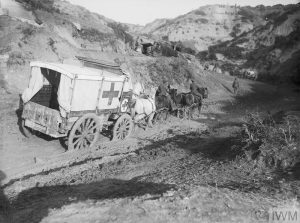
Richard Bottomley Nowell was born in Ashton-under-Lyne on September 7, 1880. His father was a medical surgeon and so Richard studied medicine for a time before becoming a “gentleman”.
He was commissioned into the 3rd Volunteer Battalion, the Manchester Regiment on February 21, 1903. Appointed Captain on June 10, 1905 he maintained that rank and his seniority when the 3rd Volunteer Battalion became the 9th Battalion Manchester Regiment on April 1, 1908.
On June 22, 1908 he married Florence Elizabeth Ann Tipler and they moved to Handforth, near Wilmslow, Cheshire where they had two children. His occupation prior to the war was a stockbreeder.
In the battalion orders of May 6, 1911, it was announced that Capt. R.B. Nowell completed a course of instruction in Transport Duties from April 3-19 and was awarded a certificate on Army Form E 535.
He sailed with the Battalion to Egypt in September 1914 and on November 4, 1914 was promoted to Major. Landing with the battalion at Gallipoli on May 10, 1915 (in command of the Transport section), he was second in command and “D” Company commanding officer. 12 days later when Lt. Col. D.H. Wade was shot by a sniper he temporarily assumed command of the Battalion before turning it over the next day. Later in the campaign he assumed command of the Battalion again from June 9th to July 16th being granted the temporary rank of Lieutenant Colonel.
On August 7, 1915 he was shot through the left shoulder by a rifle bullet while leading 1/2 of the Battalion in the Battle of Krithia Vineyard. The bullet entered the inner border of the left scapula [shoulder blade] approximately 1 1/2″ below the scapula spine and exited approximately 2″ below the acromion at the posterior border of the deltoid muscle. Remarkably, the bullet cleanly exited without passing through the lung or breaking any bones. He was admitted to No 11 Casualty Clearing Station and transferred to the transport ship Ermine at “W” Beach, bound for Mudros. He remained in hospital at Mudros and was additionally treated for Enteritis as he had been suffering from severe diarrhea for some time previously. He was invalided to the UK on August 26 traveling from Mudros to Malta on the Hospital Ship Ermine and from Malta to Devonport aboard the transport ship Ascania, arriving September 11, 1915.
He remained in London for a few weeks, staying at 19 Park Lane, and was medically assessed at Caxton Hall on September 28, 1915 where he was declared unfit for General Service and granted 2 months home leave until November 27th. He was pronounced still unfit in December but on January 31, 1916 he was pronounced fit enough for home service and ordered to report to the 3/9th Manchesters. On April 27 he was medically assessed at the 3rd Northern General Hospital, Sheffield and pronounced fit for General Service.
On June 26, 1916 he was ordered to return to the Mediterranean Expeditionary Force and embarked the transport ship Corsican at Devonport on July 3rd rejoining the Battalion in Egypt on July 20, 1916. Here he was immediately posted as 2nd in command.
On January 31, 1917 he led the advance party at Port Said preparing for the Battalion’s imminent move to France.
In March 1917 the Battalion shipped out to France and Lt. Col. (Temp.) R B Nowell was once again placed in command of the Battalion from April 27 to May 25, 1917 and again from July 27 to 30 when Lt. Col. E. C. Lloyd went on leave to Paris. On August 7 he proceeded to England on leave and after his return took temporary command of the Battalion again from September 15 to October 15 while Lt. Col. Lloyd was away. In December 1917 he proceeded to England on leave from the 13th to the 29th. On January 15, 1918 he proceeded to the UK to report to the War Office and was struck off the strength of the battalion.
In England he was posted to the 5th Reserve Battalion Manchester Regiment on March 5, 1918 and at some point after that was assigned the Headquarters of the Yorkshire Coast Defences. Sadly, in July 1918 his wife Florence died.
On November 26, 1918 he was medically assessed for demobilisation and war pension purposes, at RAMC HQ Scarborough, and although he complained of Myalgia (muscle pain) and occasional Lumbago (lower back pain), was pronounced category A fit and ordered to return to HQ Yorks Coast Defences. He was demobilised on January 29, 1919 and retuned to his home at Outwood House, Handforth, Cheshire but now as a widower.
He remained in the Territorial Army Reserve and was awarded the Territorial Decoration in March 1919. He resigned his commission on April 15, 1921 retaining the rank of Lieutenant-Colonel. Around the same time, he married Annie Brown and they made their home in Lytham St Annes. By 1939 he was living in Devon as a retired stockbreeder. His son had emigrated to Brazil in 1948 and so in 1953 he and his wife also emigrated there.
Lt. Col. Richard Bottomley Nowell, T.D. died in Brazil on February 22, 1959. He was 78 years old.
John (Jack) Alfred Dearden was born in Douglas, Isle of Man on February 17, 1881 and educated at King William’s College. His father, John Alfred Dearden was a surgeon and in 1901 he was living in Douglas, Isle of Man with his parents (mother, Mary Selina Beckwith Dickson) and three younger sisters (Cecil Maud Dearden, Violet Selina Dearden and Mary Dorothea Dearden) and two domestic servants. At this time, Jack was serving as a Lieutenant in the Militia in the 6th battalion Liverpool Regiment. He went on to serve in the Boer War from January to May 1902 and was awarded the Queen’s South Africa Medal.
He was awarded a commission in the Regular Army with the Manchester Regiment as a Second Lieutenant on January 28, 1903 and promoted to Lieutenant on February 2, 1907. On March 12, 1912 he was made adjutant of the 9th Battalion Manchester Regiment and granted the temporary rank of Captain in the Territorial Force whilst holding the appointment of Adjutant.
The local newspaper reported on January 13, 1912:
Lieutenant J. A. Dearden, of the 2nd Battalion Manchester Regiment, now at Curragh Camp, Ireland, has been appointed to succeed Captain Minogue as adjutant of the 9th Battalion Manchester Regiment (Ashton Territorials), and will take up his duties in March.
He served with the Battalion in Egypt where he was promoted to Captain on December 1, 1914. He landed with the Battalion at Gallipoli on May 9, 1915, but was invalided to hospital in Malta shortly thereafter, leaving the Battalion on June 7th. He left Valletta on HMT City of Benares on July 4th arriving in the UK (Devonport) on July 13, 1915. Here he was diagnosed with Neurasthenia (an ill-defined medical condition characterized by lassitude, fatigue, headache, and irritability, associated chiefly with emotional disturbance) and prescribed three months leave.
Throughout 1916 he was regularly medically assessed and repeatedly classified as unfit for General Service but was given light duty office work at the War Office. Finally, in December 1916 he was pronounced fit for General Service but not suitably fit to be posted to sunnier climates, such as those of Egypt or India. Since the 9th Battalion were still in Egypt at this time, guarding the Suez Canal, he continued his war service in the UK where he remained until the end of the war. During this time, on May 19, 1917, he was promoted to Major.
After the war, in September 1919, he was transferred to the 1st Battalion Manchester Regiment, as Staff Captain, for the purposes of being definitively assessed for his fitness to continue to serve. He somehow passed this assessment and served with the Manchester Regiment in Ireland when they deployed there in April 1920. This was the time of the Irish war of independence and on January 28, 1921 the 1st Battalion Manchester Regiment was involved in the Dripsey Ambush. There is no evidence to suggest a connection but on February 17, 1921 Major John Alfred Dearden was the defendant in a Field General Court Martial under section 40 (acting to the prejudice of good order and military discipline) and was “severely reprimanded” and encouraged (forced) to resign his commission which he officially did on July 2, 1921. Nevertheless, he was permitted to join the Regular Army Reserve of Officers upon retirement and was paid an Army pension of £258/year.
Throughout his retirement he evidently had no other source of income as he repeatedly petitioned the Army to commute his pension for small amounts of cash. In 1926, due to his age, he was moved to R.A.R.O. Class 2 status (in the event of mobilization, or partial mobilization, you will take no action but should your services be required you will receive instruction from the War Office).
An amalgamation of newspaper reports published on July 27, 1928 follows:
MAJOR FOUND DEAD
Major John Alfred Dearden, the 47- years-old secretary of Knebworth Golf Club, was found dead in bed this morning. A glass containing disinfectant was by the bedside.
The discovery was made by the Club Steward in the Secretary’s bedroom at the Club House. Major Dearden was selected from a large number of applicants for the post of full-time Secretary of the Club some nine months ago, and he tendered his resignation yesterday, after being asked to do so. Major Dearden, who was single, was formerly of the Manchester Regiment.
Major John Alfred Dearden tragically died by his own hand on July 26, 1928 in Hertfordshire. He was 47 years old.
Michael Henry Connery was born in Dublin on May 8, 1856. His father, Michael Connery, was a private on the married establishment of the 96th Regiment of Foot, a precursor to the Manchester Regiment. According to his own testimony, he travelled as a very young boy with the regiment to South Africa and then India before returning to England in October 1868 when the 96th Depot was stationed at Colchester.
And so it was that on April 19, 1869 he too joined the 96th Regiment of Foot, at Colchester as a boy soldier, giving his age on attestation as 15 when, in fact, he was not yet 13. He was promoted rapidly and by 1873 he was a corporal and living at the barracks at Ashton-under-Lyne. Here he met and married Ellen Egan and together they had three boys. His first son, William Lawrence Connery was born in Ashton-under-Lyne on November 25, 1875. James Thomas Connery was born in Gorton on June 5, 1877 and Joseph Michael Connery on June 21, 1879. On July 1, 1881 the Childers Reforms came into effect and the 96th Regiment of Foot amalgamated with the 63rd (West Suffolk) Regiment of Foot to form the Manchester Regiment.
But in November of 1882 he discovered that his wife was committing adultery and so he petitioned for divorce and the final decree was granted on August 5, 1884. He retained custody of his three sons.
In May 1886 he married Emily Field while he was a Sergeant Quarter Master for the Manchester Regiment and still living at the Army Barracks in Ashton-under-Lyne. The following year his fourth son Arthur William Field Connery, named after his wife’s father, was born in Ashton on July 19, 1887.
On May 16, 1892 his son James Thomas Connery followed in his father’s footsteps and joined the Manchester Regiment as a 15 year old boy. His younger brother Joseph Michael Connery followed his lead and also attested on June 19, 1893 just before his 15th birthday. His oldest son William Lawrence had joined the militia but on January 10, 1894, (while still serving in the militia), he too joined the Manchester Regiment.
On July 7, 1897 Michael Henry Connery was commissioned as Honorary Lieutenant and Quartermaster for the 3rd & 4th Battalions, Manchester Regiment (since regulations only allowed one Q.M. at the barracks and both battalions shared the depot there). By March 1901 he and his wife were both still living in the Army Barracks at Ashton, their youngest son Arthur away at boarding school.
From June 17, 1901 to September 30, 1902 he served in the South African Campaign as Transport Officer of the 5th Battalion (May 1901 to April 1902) and then Transport Officer of the 6th Battalion (May 1902 to September 1902). During his time with the 5th he also served as Supply & Transport Officer for Colonel Barker’s Mobile Column, at Wynburg (October 1901 to May 1902). He was awarded the South African Queen’s Medal with 5 Clasps: Cape Colony, Orange Free State, Transvaal, South Africa 1901 and South Africa 1902. He was also mentioned in despatches (Gazetted July 29, 1902) as was his oldest son, Colour Sergeant William Lawrence Connery (Gazetted September 10, 1901). Based upon his service in the Boer War, Lieutenant Connery was promoted to honourary Captain on August 22, 1904 “for his conduct in the field.”
Since he misrepresented his age when he attested, the Army reckoned that he had reached the mandatory retirement age of 55 years on April 19, 1909, by now serving with the 4th Battalion. Although he was eligible to retire on an annual pension of £200 per year, instead he elected to join the 9th Battalion Manchester Regiment, Territorial Force as their Quarter Master. By 1911 he had been promoted to Honorary Major and Quarter Master, (Gazetted April 22, 1909), and he and his wife had moved out of the Barracks and were living at “Willow Bank” on Henrietta Street, Ashton. In June 1911 he was honored by being selected to attend King George V’s coronation in London as Quartermaster to the composite battalion sent by the East Lancs Division.
He sailed with the 1/9th to Egypt in September 1914 and in April 1915 his youngest son, Arthur William Field Connery, joined him as a freshly commissioned Second Lieutenant and serving as an infantry officer. They landed with the 9th Battalion at Gallipoli on May 9, 1915, the day after his 59th birthday. On June 14, 1915 Major Connery was slightly wounded in the left arm by shrapnel when a shell landed on his dugout but was treated at a field ambulance and remained at his post. He was again slightly wounded on July 13, this time in the right thigh, but once more remained at his post. A week earlier, his son 2/Lt. Arthur Connery had been wounded in the mouth and medically evacuated to England. On August 22 his son Hon. Lt. Joseph Michael Connery arrived to serve with him but his stay was very brief, becoming sick after 4 days and then subsequently medically evacuated to England.
He left the peninsula with the 1/9th Battalion in December 1915 and on December 29th was appointed Embarkation Officer for the 42nd Division for their move to Egypt. He continued to serve with the battalion in Egypt during the first half of 1916 until he was hospitalised for sunstroke on July 23, 1916 at El Ferdan. He was admitted to the 31st General Hospital at Port Said the following day where he was proscribed rest and then medically assessed on July 7th. They found him to be suffering from Nephritis and Granular Kidney. He was invalided home from Egypt embarking the Hospital Ship Galika and arriving at Southampton on July 18, 1916. Here he was admitted to the 4th London General Hospital, Denmark Hill where he spent a couple of nights before they confirmed the diagnosis of chronic nephritis and sent him home.
Back in Ashton he went into Manchester and was medically assessed at the 2nd Western General Hospital, Withington Street on August 3 where they noted much albumin in the urine and that his heart beat was irregular. They recommended that he come in for treatment and granted him 1 month’s leave, effective from July 20. He remained in hospital for about 2 weeks.
On October 3, 1916 the War Office informed him that he was to be “Gazetted Out”. Not a man to take things lying down he had himself independently medically examined and wrote back to the War Office respectfully requesting that he be employed, for Home Service, in any other capacity.
Bedford House Ashton-u-Lyne October 18, 1916
I have examined Major M.H. Connery, M.C. and find he is still suffering from Nephritis with an intermittent high tension pulse. His general condition is however very good and he expresses himself as feeling very fit.
He is anxious to do something and personally I think he is quite capable of undertaking Home Service which would not in my opinion retard his recovery. Robert Bleasdale, M.B.
The War Office informed him that due to the amalgamation of the reserve units of the Territorial Force that no vacancies existed for Quarter Masters and he relinquished his commission due to ill-health on October 7, 1916. Later in the year he was awarded the Military Cross for his services in Gallipoli and received his medal from the King at Buckingham Palace in late December.
April 1917 was a tumultuous month for Major Connery. A vacancy appeared with the Scottish Command at a Prisoner of War Camp and he reported for duty to Stobs Military Camp, near Hawick, on April 27, 1917. The following day his wife Emily passed away and was buried at Hurst Cemetery, Ashton. He later became Adjutant & Quartermaster at the Prisoner of War Camp, Caolasnacon, a camp for German PoWs who were building the road along the southern side of Loch Leven. He was still serving here on May 8, 1919 when he was ordered to report to the 2nd Scottish General Hospital, Edinburgh for a medical assessment. They found him to be “very stout”, surely a euphemism for a man over 15st but only 5ft 8″ tall, and still suffering from an irregular heartbeat. They noted that he was short of breath with the slightest exertion but had no pain or other symptoms. As a consequence he was placed on the retired list effective July 1, 1919 and given the honorary rank of Lieutenant-Colonel for his long and distinguished service. He retired on a pension of £300 per year.
He died peacefully at home in Ashton on April 25, 1921 at 8:30pm and was buried on April 29th at Hurst Cemetery with his wife, Emily, who predeceased him. Thousands of people lined the streets of Ashton to pay their respects. His oldest son, Lt.-Col. William Lawrence Connery, M.B.E., J.P., and mayor of Ashton, was later buried in the same plot when he died in April 1944.
The Ashton Reporter carried the following article published on Saturday April 30, 1921:
DEATH OF LIEUT.-COL. M. CONNERY
Fifty Years in the Service, and Four Sons with Commissions
POPULAR QUARTER-MASTER OF TERRITORIALS
We regret to report the death of Lieut.-Col. M. H. Connery, M.C., late of the 1/9th Battalion Manchester Regiment, (T.F.), which occurred on Monday night at his residence, Willow Bank. Henrietta Street, Smallshaw. Col. Connery’s end was very peaceful. Although he had been under the care of Dr. Beasedale for some time, he had been able to go about and was out of doors on Monday. In the evening he sat reading in his favourite chair. He put his book down and said to his daughter-in-law, “I don’t think I will read any more”. His head fell on his shoulder and he passed away. He died practically in harness for he had been down to the Armoury practically daily since the Defence Corps was raised.
Col. Connery was born in Dublin 65 years ago. His father was in the old 96th foot (now the 2nd Battalion Manchester Regiment). He joined the Manchester’s as a boy of 16, and served his country for almost half a century. He rose from the ranks and was gazette quartermaster in the Manchester Regt. in July 1887. He served in the Boer War. Once he was thrown from his horse and he often was troubled with his leg as the result of the fall.
WITH THE TERRITORIALS
When he retired from the regular forces in April 1909 he accepted the post of Quartermaster with the 9th Battalion, Manchester Regiment. He needed no Army Manual to teach him the duties of a Quartermaster, he knew everything laid down in regulation and a good deal more besides.
It was his association with the Ashton Territorials that has endeared the name of Connery to Ashton. When Major Connery, (everybody knew him as Major), became the Quartermaster of the First Ninth, he soon became a prime favourite amongst the officers and men. He was no slacker, and he permitted no slacking. When the Major was in a reminiscent mood he could tell stories – tinged with an unmistakable brogue, and the point well emphasized by his slight impediment in speech – until one’s sides ached with laughing. He could conjure up rations and desirables when in camp, in a manner that was the despair and admiration of other quartermasters. He worked on a system, and if he said the transport would be ready at a given time, it was ready to the minute.
THE OUTBREAK OF WAR
When the Territorials were mobilised it was a study to watch the Major’s face when the appeal was made for overseas volunteers. How it lighted up when almost to a man the Battalion stepped forward. “I knew it”, he said, “the Ashton lads were always game!” If they were ready, so was he, and despite his age, he jumped like a schoolboy at the chance of once again taking active service. He endured the heat of Egypt and the trials, the sufferings and the horrors of Gallipoli.
In July 1916 he reluctantly returned home on sick leave after being with the Battalion since it left Ashton in August 1914. His moustache was a little greyer, and the burly figure not quite so pronounced, but his healthy sun-tanned face, with its irresistible smile, belied his years. It was easy to grasp why he was highly esteemed both by the men of the Battalion and the people at home. His warm-hearted sympathy, his cheery good humour, and his solicitude must have been like balm on a sore to the nerve-strung men – some only mere striplings – as they emerged from the firing line. There are many mothers and fathers in Ashton who have thanked God that Colonel Connery was there to cheer and comfort their sons and look after their welfare amid the trials and dangers of the war in foreign lands. He was father, counsellor, and guide to them, and whilst on the Gallipoli Peninsular he saw to it that the men wanted for nothing if he could get it for them.
AWARDED MILITARY CROSS
Whilst in Gallipoli, Colonel Connery was twice wounded and was awarded the Military Cross. The record of recommendation by Major-General Douglas, in charge of the 42nd East Lancashire Territorial Brigade was as follows: –
“For his consistent devotion to duty in the performance of his duties as quartermaster. He has been twice wounded by shrapnel in carrying out his duties but continued to carry them out. He personally saw his convoy of supplies each day to their destination, under heavy shell fire. His influence for good has had a marked effect in his battalion. He has given frequent assistance to inexperienced quartermasters of other battalions. He is one of the best quartermasters I have ever known. I cannot speak too highly of his services.”
A CHAT WITH THE KING
On Dec. 9th, 1916 Colonel Connery was presented to his Majesty the King, who pinned the Military Cross on his breast, and warmly congratulated him upon his gallant conduct.
The King greeted him with a pleasant smile as he advanced and bowed, which at once placed the gallant colonel quite at ease. Then, after pinning the Military Cross on the Colonel’s breast, his Majesty chatted pleasantly with him. The King asked Colonel Connery what length of service he had and was surprised when he was told it was 48 years.
“How old are you, Colonel?”, asked the King, adding “I see you have been wounded twice.”
“Sixty your Majesty,” replied Colonel Connery.
“Have you any sons serving?”
“Four, all bearing your Majesty’s commission,” proudly replied Colonel Connery.
“Wonderful!”, observed the King. “You have done well – very well.”
FOUR SONS WITH COMMISSIONS
Colonel Connery was justifiably proud of the fact that he and his four sons all gained commissions from the ranks. His sons are Captain and Quartermaster W. L. Connery, M.B.E., now stationed at the Ashton depot; Captain J. T. Connery, who holds an appointment at the War Office; Captain Joe Connery, now retired; and Captain Arthur Connery, M. C., who is now in the Argentine.
Colonel Connery was a man of abstemious, almost Spartan, habits. He lived simply and sparingly and was a staunch teetotaller. He has gone, but his memory will live long in the hearts of those who realized the heart of gold which throbbed under a brusque exterior. Simple in tastes, and a man who sincerely tried to do his duty for his King and country; a man who did many a good deed by stealth and blushed to find it fame. The loss of so true a man will be sincerely mourned.
The following paragraph was published in the Manchester Regiment Gazette regarding his funeral:
“The Requiem Mass took place, at St. Mary’s Church, Ashton, on Friday April 29th was attended by a large number of people. Full military honours attended the funeral. Those present included the Colonel’s relatives, a number of officers from the Depot, and a number of Territorial officers who had served with him during the war. A party of Territorials, and also another party from the Depot, marched in the rear. The interment took place at Hurst Cemetery, where, as all along the route, large numbers had assembled to pay their last tribute to an old comrade.”
Lieutenant-Colonel Doctor Herbert Wade was the commanding officer of the 1/9th Manchesters at the outbreak of the war and landed with them at Gallipoli on May 9, 1915 as their C.O.
Doctor Herbert Wade was born in Oldham on July 2, 1865. He was the only son of Mayall and Martha Wade (née Charnley) and was born 3 years after his older sister Ester Ann Charnley Wade. Mayall Wade was an affluent Chemist & Druggist and young Wade was educated at Oldham High School and later at College in Chester.
On February 14, 1885, when he was 19 years old, he joined the 1st Cheshire & Caernarvonshire Artillery Volunteers as a private and remained with them for two years. He left England to work in Singapore in a junior civil service job and while there picked up colloquial Malay and served as a private in the Singapore Volunteer Artillery (Straits Settlements) from September 1889 to March 1893.
Returning to the UK he married Ada Neal, the daughter of the Ashton-under-Lyne Borough Comptroller, on December 23, 1893 and settled in Ashton. His son, John Mayall Wade, was born there on September 28, 1894 and his daughter, Ida Wade, was born 18 months later on March 5, 1896. Working as a librarian and a teacher, (Director of Technical Instruction), he was commissioned as a Second Lieutenant into the 3rd Volunteer Battalion, Manchester Regiment on April 11, 1900.
He rose through the ranks rapidly and just 15 months after being commissioned was promoted to Captain on July 13, 1901. Over the next few years, he passed several Army instructional courses including mounted infantry duties and musketry, (School of Musketry, Hythe Aug 21, 1908), before being promoted to Major on July 6, 1910, now in the 9th Battalion Manchester Regiment, Territorial Force, after its creation in 1908 through the Haldane Reforms. Outside of the Army his career flourished, becoming the Education Secretary of the Ashton Borough Council and he continued to live in Ashton with his wife, two children and a domestic servant. He was appointed Lieutenant Colonel and Commanding Officer of the 9th Battalion Manchester Regiment in July 1913, vice Lt.-Col. Charles Richard Wainright.
He sailed with the Battalion to Egypt in September 1914 along with his son, twenty-year-old Second Lieutenant John (Jack) Mayall Wade and his wife’s nephew, eighteen-year-old Second Lieutenant Thomas Grimshaw Hyde, both recently commissioned; his son only a week before they sailed. Lt.-Col. Wade commanded the battalion through their intensive field training and their brief role in the defence of the Suez Canal in April 1915.
They landed at Gallipoli under fire on May 9th but just 13 days after landing in Gallipoli, on May 22, 1915, he was shot and wounded in the abdomen and thigh while stepping over some sleeping men in the firing line. The bullet entered the left groin and lodged in the middle of the right thigh near the femur but without breaking any bones. He was treated on the peninsula for two days before being medically evacuated to Alexandria where he was admitted to the 15th General Hospital on May 27th. Over the next few weeks, the wound suppurated and the pus had to be drained through several large incisions. While he was undergoing treatment in Alexandria, he learned that his son, Second Lieutenant John (Jack) Mayall Wade, had been reported missing in action on June 19th while leading his men to attack the Turkish trenches. He was medically assessed on July 9 and was given an estimated six months recovery time and granted leave in the UK to recover. Consequently, on July 17 he embarked on the Hospital Ship Asturias at Alexandria arriving in Southampton 10 days later.
In the UK he initially spent some time in the 2nd Western General Hospital on Whitworth Street in Manchester but moved to outpatient treatment by the end of August. A few weeks later he was sufficiently recovered to command the Ashton Territorials present at the military funeral of Pte. Samuel Armitage in Ashton on October 7, 1915. He was also active in recruiting efforts in Ashton throughout October and November before joining the 3/9th Battalion in Southport, on light duty, on November 19. On December 7, 1915 he was medically assessed at the 2nd Western General Hospital in Manchester and pronounced fit for General Service.
He received orders to rejoin the Mediterranean Expeditionary Force and embarked on the transport ship Llandovery Castle, at Devonport, on January 14, 1916 bound for Egypt. He rejoined the battalion on February 8, 1916 after they had evacuated Gallipoli and were guarding the Suez Canal at Shallufah. He commanded the Battalion throughout their stay in Egypt taking over temporary command of the 126th Brigade for a short period in May. He took a 3-day local leave in late October and then sailed with the battalion to France in March 1917. For distinguished services in Egypt June 1 to September 30, 1916 he was Mentioned in Despatches by General Sir Archibald Murray, K.C.B., Commander-in-Chief of the Egyptian Expeditionary Force. But he had spent the Egyptian summer in the northern Sinai as the battalion played its part in the Desert Column pushing the Turkish forces past El Arish and the heat and difficult living conditions were to take a physical toll.
He was by now almost 52 years old and less than two months after arriving in France he was taken ill and on April 27 was admitted to No 8 General Hospital at Rouen, physically breaking down due to his age and the sudden change in climate. After a few days’ rest, he embarked the transport Western Australia on the evening of May 1 arriving at Southampton the following morning. Here he was admitted to Farnborough Hill Hospital in Hampshire, the home of the Empress Eugenie but converted into an Officers’ Convalescent Hospital during the war. Three days later, he was medically assessed at Cambridge Military Hospital, Aldershot, pronounced permanently unfit for General Service and granted 3 weeks leave. Based on this diagnosis the War Office transferred him to the Territorial Reserve on June 6, 1917. He did not return to action.
He returned to his position as Director of Education at Ashton-under-Lyne and by this time was living with his wife and daughter at “Holly Bank”, Birch Polygon, Rusholme in Manchester. It was a difficult time for the family as the Turkish Foreign Office had confirmed at the end of January 1917 that they had no record of Jack Wade being held prisoner. The conclusion was clear and his son’s death was officially confirmed in due course.
On a more positive note, his daughter Ida was married in July 1918 and his grandson Helge John Neal Moe was born a year later in May 1919. That same year, Lt.-Col Wade was awarded the Territorial Decoration on July 15 and in civilian life he became a Fellow of the Chartered Institute of Secretaries.
After the war, orders to reform the regiment were received in October 1920 and Lt-Col. D. H. Wade was appointed Commanding Officer on October 29. In 1921 he was appointed as a Justice of the Peace for the Borough of Ashton-under-Lyne but his tenure as Commanding Officer of the 9th Battalion was to be fairly short-lived when he was forced to retire from the Territorial Force on January 27, 1922 having reached the age limit of 57. Subsequent to his retirement, he was granted the rank of Brevet Colonel due to his long and distinguished services.
By 1939 he had retired and he and his wife were temporarily living at Hill Top, Hale, Altrincham with Ada’s recently widowed sister, Margaret Hyde and two domestic servants. Their family home was on Mauldeth Road, Withington and they lived there with a housekeeper. When the housekeeper left in late 1949 Ada Wade became depressed and, despite their daughter temporarily coming home from Norway to help, Ada’s mental health deteriorated and she gassed herself in the oven. The inquest was held in October 1949 and the verdict rendered was suicide while the balance of her mind was disturbed.
Lt. Col. Doctor Herbert Wade died on March 14, 1954 at a private nursing home in Withington, Manchester. He was 89 years old.
Between 1906 and 1912 a series of sweeping changes were made to the British Army and named after the then Secretary of State for War, Richard Burdon Haldane. These “Haldane Reforms” were the first major reforms since the “Childers Reforms” of the early 1880s and were aimed to rectify shortcomings uncovered during the Second Boer War.
Along with changes to the Regular Army, the Territorial and Reserve Forces Act 1907 completely restructured the reserve forces to ensure a properly trained set of units and recruits to supplement the Regular Forces in times of war and to provide a more efficient force for home defence. The act called for the old Volunteer Force and Yeomanry to be reorganized into a new Territorial Force, administered by County Territorial Associations, and the old Militia was formed into the Special Reserve. The result was that the Territorial Force was established on April 1, 1908 and the men who joined agreed to be liable for service with the regular forces in wartime but the Act stipulated that ‘they could go abroad if they wish’.
Additionally, to help provide a ready supply of militarily trained potential officers, the Haldane Reforms also established an Officer Training Corps, (OTC), in public schools and Universities. Many of the men commissioned into the 9th Battalion Manchester Regiment immediately after the outbreak of war came directly from, or had previously belonged to, an OTC.
In Ashton, the 9th Battalion, Manchester Regiment, Territorial Force was duly formed on April 1st 1908 and the 3rd Volunteer Battalion, Manchester Regiment (VBMR) was dissolved. At that time, the “establishment”, (the official, authorized strength and structure of a military unit), of the battalion was set at 29 Officers and 980 men, as were the other 11 battalions of the East Lancashire Division. At the Annual Prize Giving Dinner for the 3rd VBMR on January 28, 1908 the commanding officer Lt.-Col. Charles Richard Wainright stated that the battalion then consisted of 927 men earning them a full capitation grant of £2,156. Indicative of the dissatisfaction that many of the ‘Old Volunteers’ felt with the new rules and requirements of the Territorial Force, by August 31, 1908 the battalion’s numbers had shrunk to just 25 Officers and 458 men.
Nevertheless, each of the NCOs and men of the old Volunteer Battalion were given the opportunity to re-engage with the new Territorial Force on April 1, 1908 and this process continued over the following weeks. New Territorial Force service numbers were assigned starting at ‘1’ and increasing sequentially based upon the date and the order in which their attestation paperwork was processed rather than by prior tenure in the Volunteers.
Thus, Cpl. Thomas Valentine who joined the 3rd Volunteer Battalion, Manchester Regiment on April 15, 1898 but did not re-engage with the Territorial Force until April 23, 1908, (22 days after the first group of men), was assigned a Territorial Force service number of 243. Whereas Sgt. Arthur Bashforth, who joined the Volunteers on March 20, 1903, (5 years after Valentine), was given a lower Territorial Force service number of 58 because he was part of the first batch of men who re-engaged with the Territorial Force on April 1, 1908.
The London Gazette belatedly announced in November 1908 that:
“Officers from the 3rd Volunteer Battalion, The Manchester Regiment, are appointed to the battalion with rank and precedence as in the Volunteer Force. Dated 1st April, 1908.”
Territorial Pre-War Training Camps
One of the requirements of service was to attend annual training camps and the following were those attended by the 9th Manchesters:
From
To
Camp Location
07-Jun-08
14-Jun-08
Ramsey (Isle of Man)
25-May-09
13-Jun-09
Salisbury Plain
14-May-10
28-May-10
Salisbury Plain
20-Aug-11
03-Sep-11
Dolphinholme, Lancs
28-Jul-12
11-Aug-12
East Marton, Yorks
10-Aug-13
24-Aug-13
Aldershot
The annual training camp for 1914 was scheduled to start on August 9, 1914 at Caernarfon, for two weeks but for obvious reasons was cancelled.
9th Battalion Annual Pre-War Training Camp, Aldershot 1913
In July 1913, Major D. H. Wade was appointed Lieutenant Colonel and Commanding Officer of the 9th Battalion Manchester Regiment, vice Lt.-Col. Charles Richard Wainright.
Pre-War Recruiting
The following table shows the “establishment” of each of the units of the East Lancashire Division and the actual numbers of men in each unit during the successful recruiting drive of January 1 to March 31, 1914.
Unit
Estab
1-Jan
1-Feb
14-Feb
31-Mar
DLOY
438
450
460
464
470
1st EL Bde RFA
595
536
535
565
593
2nd EL Bde RFA
596
589
583
638
620
3rd EL Bde RFA
595
513
540
578
611
EL Divisional RE
485
426
491
491
512
5th Batt. LF
974
761
796
900
986
6th Batt. LF
979
859
846
890
902
7th Batt. LF
977
710
802
849
889
8th Batt. LF
975
619
751
811
873
4th Batt. ELR
976
559
571
670
690
5th Batt. ELR
976
562
587
607
716
9th Batt. MR
977
579
601
804
870
10th Batt. MR
976
728
806
878
889
5th Batt. MR
980
735
771
771
795
6th Batt. MR
987
852
934
934
987
7th Batt. MR
987
899
1057
1,084
1,046
8th Batt. MR
982
692
758
819
908
EL T & S Column
488
445
459
469
473
RAMC
1,004
951
967
964
996
Totals
16,008
12,465
13,315
14,186
14,826
It was further noted that the 9th Battalion, Manchester Regiment had 11 men due for discharge prior to that year’s Annual Camp and that on aggregate the East Lancashire Division expected only 50% of those men discharged for time served to re-enlist.
ENGLAND 1914
On July 1, 1914 the 9th Battalion Manchester Regiment, Territorial Force (Ashton Territorials), found themselves still substantially below their minimum required strength of 28 Officers and 977 men having a nominal roll of only 26 Officers and 888 men, despite a recent surge of over 150 new recruits from a very successful recruiting drive at Ashton Town Hall on the evening of February 14.
When War was declared on Tuesday August 4, 1914, another wave of recruits queued up outside the Armoury on Old Street to enlist in the battalion and by Friday evening at least 94 men had joined who were later to serve overseas; almost half with prior military service and with an average age of 25 years, substantially older and more experienced than most of those who had joined in February. Around a dozen more similarly aged and experienced recruits joined during the following week.
On the 10th August, 1914 Lord Kitchener announced that the Territorial Force could now volunteer to serve overseas. The news arrived at the battalion the following morning, via telegram, and it was explained to the men that although it could mean active service, it was more likely to be garrison duty in Malta, Gibraltar or Egypt to relieve the regular Army troops currently stationed there. The men went on a short route march and after they returned the names of volunteers were taken. It was reported that 858 men indicated their willingness to serve overseas. The following day a message was received from Brigadier-General Prendergast, the commanding officer of the East Lancashire Infantry Brigade:
My Dear Colonel Wade,
I must address you a line to send you my sincere congratulations on the splendid and patriotic response the 9th Battalion Manchester Regiment has given to W.O. call for volunteers by units. I am much gratified by the results, as I feel now I shall have my brigade intact with me wherever we may have to go.
Very truly,
G. PRENDERGAST, Col.
On Saturday August 15, 1914 the complete list of officers and men of the 9th Battalion Manchester Regiment was published in the local papers of the Reporter newspaper group and is provided here. The list names around 1,000 men from Ashton, Bardsley, Limehurst, Waterloo, Hooley Hill, Smallshaw, Woodhouses, Littlemoss, Taunton, Hurst, Hurst Brook, Guide Bridge and Park Bridge along with men from the nearby towns of Dukinfield, Hyde, Stalybridge, Denton, Audenshaw, Openshaw, Droylsden, Gorton, Newton Heath, and Clayton.
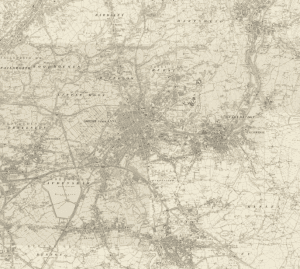
Ordinance Survey Map of Ashton and District from the 1890s
At this point, the battalion being fully up to strength, recruiting into the battalion was halted.
On Thursday August 20th, the 9th Manchesters marched into Chesham Fold Camp, Bury (a tented camp at Chesham Fold Farm). Bury was the divisional headquarters of the East Lancashire Infantry Brigade, which included, the 9th Battalion Manchester Regiment, the 4th East Lancashires, (from Blackburn, Darwen and Clitheroe), the 5th East Lancashires, (from Burnley, Accrington, Haslingden, Baccup, Padiham and Ramsbottom), and the 10th Manchesters (from Oldham), three sections Signal Company, Headquarters Company of Engineers, Lancashire Brigade Company A.S.C., Transport and Supply, and the 2nd Field Ambulance. The battalion was housed in around 100 European pattern tents pitched on the long slope of a hillock overlooking Bury.
Signallers (Attached)
The nominal roll of the battalion published in the Reporter newspapers indicated that 18 men of the No. 3 Section, East Lancashire Divisional Signal Company were attached to the Battalion for pay, rations, and discipline. These men, having arrived at Chesham Fold Camp two days earlier, now joined the battalion.
RAMC (Attached)
The nominal roll of the battalion published in the Reporter newspapers also indicated that 5 men of the Royal Army Medical Corps, Territorial Force from the 1/2nd East Lancs Field Ambulance were attached to the battalion for war service. Amongst many other routine medical and sanitary duties, their role in combat would be to man the Regimental Aid Post when the battalion was in the trenches.
Almost a week later, on Wednesday August 26th, the day after Lord Kitchener’s first address to the House of Lords as secretary of state for war, Brigadier-General Prendergast addressed the men. According to the Ashton Reporter, he asked the battalion to volunteer as a whole for any service they were asked to do not simply the garrison duty he had stated two weeks earlier. He promised them their own officers and companies and asked them “to loyally represent their dearly loved company and patriotic town of Ashton in this cruel but necessary war.”
Lt.-Col. D. H. Wade also addressed the men and exhorted them to “Be British!“. The men were then asked to show their willingness to volunteer for overseas service “anywhere” and around 70% of them showed their assent by sloping arms.
Three days later, with rumours of their imminent departure overseas becoming more concrete, a sense of urgency and reality set in. Lt.-Col. Wade again addressed the men and this time asked them in earnest, “Were they British enough” to volunteer for overseas service? The men debated amongst themselves and in the end 25 officers and 834 men gave their names. Orders were received to separate the “overseas” men from the “home service” men and a small camp of ten or eleven European pattern tents was setup a little removed from the rest of the battalion. By the evening of Monday August 31st around 25 home service men had changed their minds and re-joined the rest of the battalion.
At this point, the battalion was around 120 men and seven officers short of their full establishment.
Even though almost all the officers had volunteered, Major Edward Garside, the battalion’s second in command, at 55 evidently had failed the medical and so was not permitted to serve overseas. Additionally, Lieutenants Douglas Buchanan Stephenson and Alfred George Birchenall had not been able to join the battalion at Bury due to illness. And at camp, Captain Ralph Lees became quite ill and had to return to Ashton for an operation. Finally, Lt. George Makin, in charge of the battalion’s signallers, was also unable to serve overseas. Consequently, the following Second Lieutenants were quickly added to the battalion’s strength on September 2nd: William Hampson Lillie, Oliver Jepson Sutton, Hugh George Shatwell, John Mayall Wade (the CO’s son), Charles Earsham Cooke and Albert Edward “Ned” Stringer. Also, John Broadbent*, recently retired from the battalion, was in the process of rejoining which he officially did on September 5th. With the battalion now up to its full officer strength, Second Lieutenants Philip Sydney Marsden and Harold Edward Butterworth were added as supernumeraries.
*JOHN BROADBENT was commissioned in 1895, served in the Boer War, and reached the rank of Major before resigning his commission with the 9th Manchesters in 1912. He rejoined in 1914 at the outbreak of war, losing his rank and seniority and leaving behind a pregnant wife. He was 42 years old when he landed in Gallipoli.
To rectify the 120-man shortfall, on Tuesday September 1st the battalion sent word to Ashton that an additional 120 recruits were needed and Lt.-Col. D. H. Wade travelled from Bury to ensure they were quickly added. In the event, 125 men were recruited for the battalion in just 2 hours; 40 traveling to Bury with Lt.-Col Wade the following day and the remainder joining them on Friday. With recruiting done and departure overseas imminent, Capt. R. B. Nowell, who had been in command of the Depot at Ashton, along with QMS Thomas Burgess and the handful of others assisting them in the recruiting work joined the battalion at Bury on Saturday Sept 5th. The 120 new recruits had been required to sign their overseas paperwork (Army Form E.624) when they attested and in Bury the rest of the battalion started to sign theirs too.
A telegram, dated Saturday September 5, was received by the East Lancs Divisional Commander from Lord Kitchener:
“Inform the Division from me that I hope that they will push on hard with their training in Egypt, as, before they are ready, there will be plenty of troops from India to garrison Egypt, and I hope they will be one of the first of the Territorial Forces to join our Army on the Continent. All will depend on their fitness for service against the enemy in the Field. – Kitchener.”
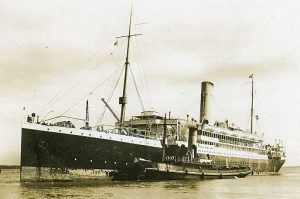
In a final two-day push, back in Ashton on Monday September 7th Lt. A.G. Birchenall and Sergeant Thomas Lord resurrected the paused recruiting effort and attested another 20 men who immediately left Ashton to join the battalion in Bury. After they arrived, seven men from the 5th East Lancs Regiment, (from Burnley), were transferred to the ranks of the 9th Manchesters at Chesham Fold and without the proper coordination with the recruiting effort in Ashton, duplicate service numbers were allocated causing much confusion 110 years later. Nevertheless, with the last-minute additions to the ranks completed, and after weeks of rumours and false starts, the battalion entrained for Southampton, bound for Egypt, on the evening of Wednesday September 9th. The following day they boarded HMS Aragon, leaving at midnight bound for Egypt.
Boy Soldiers of the Battalion
At least 28 members of the 9th Battalion Manchester Regiment who left for Egypt were, (or would have been), under the age of 17 when they landed in Gallipoli on May 9, 1915 and incredibly three of them were just 14 years old when they landed in Egypt on September 27, 1914. A detailed review of these boy soldiers can be found here.
Back in Ashton
Shortly after the 9th Manchesters left for Egypt a 2nd line battalion was formed in Ashton to receive recruits who would be trained in the UK before providing reinforcements for the overseas men. This new battalion was designated the 2/9th Manchesters and the overseas men became the 1/9th Manchesters.
Egypt 1914
The 1/9th Manchesters arrived at Alexandria on the 25th September but, due to the scale and complexity of disembarking an entire Division, did not land until September 27th. Once disembarked they were transported to the Citadel and Kasr-el-Nil barracks, Cairo. The day before they arrived at the port of Alexandria they suffered their first casualty when 18 years old Private 1705 John Bridge died of pneumonia and was buried at sea, (commemorated at the Chatby Memorial, Alexandria).
Back home in Ashton, recruiting continued at a healthy rate with more than 475 new recruits volunteering in October and November alone. These men were recruited into the newly formed 2nd line battalion, the 2/9th Battalion Manchester Regiment, whos purpose was to supply men to the 1/9th once they entered combat.
The Black Sea Raid
On October 29, 1914 two recently purchased ships of the Ottoman Empire’s navy, which were still crewed by German sailors and commanded by their German admiral, carried out the Black Sea Raid, a surprise attack against Russian ports. Russia replied by declaring war on November 1, 1914.
As a consequence, on November 1st martial law was declared throughout Egypt and Sudan. Egypt, which had been nominally part of the Ottoman Empire but under de facto British control since 1882, became a British protectorate, marking the end of the Khedivate and the establishment of the Sultanate of Egypt. On November 5th Britain and France declared war on Turkey.
Later that month the Battalion’s second death occurred when 15 year old Private 1845 Frederick Finucane died of dysentery on the 27th and was buried at the Cairo War Memorial Cemetery.
On December 14, 1914 the Battalion left Kasr-el-Nil for Abbassia main barracks.
On the 20th December the Khedive was deposed and Prince Hussein Kamel became the new Sultan of Egypt. British Troops stationed in and around Cairo lined the streets as an honour guard and a show of strength to the local populace. The contingent from the 9th Battalion taking charge of a section of Soliman Pasha Street, close to the Kasr-el-Nil barracks.
For months the Division had undergone strenuous training and by the end of 1914 the men were drilled, acclimated and thoroughly fit.
EGYPT 1915
From the beginning of 1915 the training became even more intense with long marches in the desert, in full marching order. And as part of their duties, from time to time, the East Lancs Divisional troops found themselves guarding the Suez Canal.
On January 30, 1915 the battalion moved from Abbassia and deployed to tents at Heliopolis in preparation for possible deployment to the Suez Canal.
In the early hours of February 3, 1915 12,000 Turks & Germans attacked the Canal defences South of Ismailia between Serapeum and Toussoum. They were repulsed and 1,600 prisoners taken by the Indians, Anzacs and East Lancs Division but the 1/9th were not directly involved in the hostilities. A contemporary newspaper report is provided here.
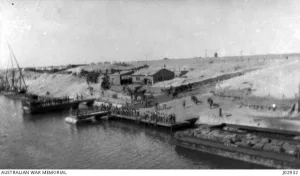
Ferry Landing at Ismailia. [Source: Australian War Memorial]
Sadly, in February and March the Battalion lost two of its senior Officers. Major WILLIAM HENRY ARCHBUTT suffered a heart attack on February 8, 1915 and Surgeon-Major ALBERT HILTON, the Battalion’s Medical Officer (M.O.), died of disease on March 4, 1915 while the 9th Battalion were under canvas at Heliopolis. Both are buried at the Cairo War Memorial Cemetery. Major Hilton was temporarily replaced as the battalion’s M.O. by Major Thomas Frankish, RAMC.
On Palm Sunday, 28th March 1915, General Sir Ian Hamilton, (the newly appointed commander of the Allied Mediterranean Expeditionary Force), reviewed the Division in Cairo. Verbal orders were received for the 9th Battalion (as part of the East Lancashire Division) to prepare to move to the Dardenelles at short notice.
According to the 126th Brigade War Diary, the 1/9th arrived, by train, at Kantarra from Cairo with 32 Officers and 912 men on April 16, 1915. They spent the rest of the month defending the Suez Canal from Turkish attack.
On the 2nd May, 1915 the 9th Battalion received their firm orders to leave for Gallipoli and were concentrated at Port Said by the evening of the 4th. On 5th May, the men of 9th Battalion (and 1/2 of the 10th Battalion) embarked on the HMT AUSONIA. The transport section which included horses, mules, one cart and two machine-gun carriages, along with the recently promoted Major RICHARD BOTTOMLEY NOWELL, Lt. JOHN BROADBENT and 26 other ranks of the 1/9th embarked on HMT COMMODORE.
Approximately two dozen men were discharged from service, (primarily due to sickness rendering them not physically fit enough to serve in combat), during the 3 months leading up to the battalion’s embarkation for Gallipoli.
Rank
No.
1st Name
MI
Surname
Discharged
Pte
2136
JAMES
DOOLEY
15-Mar-15
Pte
2213
ABRAHAM
J
HADGETT
15-Mar-15
Pte
2214
CHARLES
PARKER
15-Mar-15
Pte
2194
HARRY
SPEAKMAN
15-Mar-15
Pte
1699
ROBERT
THORNTON
15-Mar-15
Pte
1526
FREDERICK
WALLWORK
15-Mar-15
Pte
1349
ROBERT
BELL
23-Apr-15
Pte
2185
THOMAS
BOWDEN
23-Apr-15
Pte
1362
THOMAS
SMITH
23-Apr-15
Pte
2164
JAMES
ASHTON
03-May-15
Pte
2082
JOHN
A
BLACK
03-May-15
Pte
2157
SYDNEY
BURTON
03-May-15
Pte
1577
WILLIAM
CONSTANTINE
03-May-15
Pte
471
WILLIAM
FOGG
03-May-15
Pte
2023
WILLIAM
HUNTER
03-May-15
Cpl
2163
JOHN
IRVING
03-May-15
Pte
2017
ROBERT
KING
03-May-15
Pte
1912
JOHN
P
MILLWOOD
03-May-15
Pte
1707
HARRY
OLDFIELD
03-May-15
Pte
2114
BENJAMIN
RENSHAW
03-May-15
Pte
2144
LAWRENCE
SCHOFIELD
03-May-15
Pte
2233
WILLIAM
WHEATLEY
03-May-15
Pte
2215
WILLIAM
WHITTLE
03-May-15
Cpl
1992
JOSEPH
WILSHAW
03-May-15
And at least three more men were discharged after returning home from Egypt in the following months without ever serving in Gallipoli.
Rank
No.
1st Name
MI
Surname
Discharged
Pte
2188
WILLIAM
G
COLLIER
31-May-15
Col. Sgt
160
THOMAS
BURGESS
11-Jun-15
Pte
1932
JAMES
WATERS
28-Jun-15
Additionally, a member of the pre-war permanent staff of the Battalion, 2673 Col. Sgt. James Holt, returned from Egypt in March and did not land in Gallipoli. It is very likely that upon Col. Sgt. Holt’s departure, Sgt. John Alexander Christie, of the 5th East Lancashire Regiment, became permanently attached to the 9th Manchesters.
Note: First-hand, contemporaneous accounts of the battalion’s time in Egypt in late 1914 and early 1915 have been transcribed and are available here, here and here.
GALLIPOLI 1915
On the 9th May the 9th Battalion landed under heavy fire at Sedd-el-Bahr, (V Beach), and moved quickly from the beach into bivouac (the Commodore with the Transport section and Brigade HQ arriving on the 10th).
Context from Despatches:
The following short section seeks to put the landing of the 1/9th Manchesters into context from the selected despatches of Sir IAN HAMILTON, General, Commanding Mediterranean Expeditionary Force.
At the close of the ten days and ten nights described in my first despatch our troops had forced their way forward for some 5,000 yards from the landing places at the point of the peninsula. Opposite them lay the Turks, who since their last repulse had fallen back about half a mile upon previously prepared redoubts and entrenchments. Both sides had drawn heavily upon their stock of energy and munitions, but it seemed clear that whichever could first summon up spirit to make another push must secure at least several hundreds of yards of the debatable ground between the two fronts. And several hundred yards, whatever it might mean to the enemy, was a matter of life or death to a force crowded together under gun fire on so narrow a tongue of land.
The net result of the three days’ fighting had been a gain of 600 yards on the right of the British line and 400 yards on the left and centre. The French had captured all the ground in front of the Farm Zjimmerman, as well as a redoubt, for the possession of which there had been obstinate fighting during the whole of the past three days.
From nightfall till dawn on the 9th-10th efforts were made everywhere to push us back. A specially heavy attack was made upon the French.
On the 11th May, the first time for eighteen days and nights, it was found possible to withdraw the 29th Division from the actual firing line and to replace it by the 29th Indian Infantry Brigade and by the East Lancs Division, which had completed its disembarkation two days previously.
The Nominal Roll of men of the 1/9th Manchesters landing on that day included at least the following 915 men listed here.
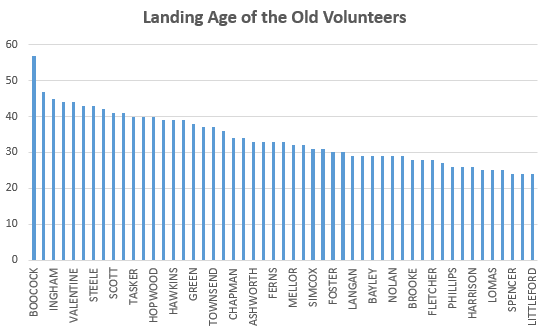
Amongst them were a number of “Old Volunteers” (men who had served with the Volunteer Force before April 1, 1908).
And the battalion’s Officers with the rank and seniority they held on landing, included:
2/Lt. J.M. Robson remained in Egypt commanding the base depot in Alexandria and did not land at Gallipoli until June 2, 1915.
Capt. F.W. Kershaw arrived with the Battalion at Gallipoli on May 9, 1915 but did not disembark and instead returned to Alexandria and was soon invalided to Malta due to sickness and did not rejoin them until June 20, 1915.
Major Thomas Frankish RAMC landed with the Battalion as their Medical Officer having been officially attached on May 5th.
Capt. F. Hamer had been assigned for duty as Adjutant and Quartermaster of the Turkish Prisoners’ Camp at Mahdi, Egypt but returned just before the battalion departed for Gallipoli and landed with them on May 9, 1914.
On May 11th, the East Lancs Division received orders to take over the front line. The 9th Battalion, as part of the 126th East Lancashire Brigade, were now in reserve positions behind the (127th) Manchester Brigade and the (125th) Lancashire Fusilier Brigade.
The 1/9th went into the line on May 21st and remained there until the 26th. At this time, the “line” was actually three lines; the firing line, the redoubt line and the support line each one further back from the Turkish trenches. Divisional orders for the 126th Brigade were to advance the line by digging new trenches under cover of darkness.
On May 23, Lt. Col. DOCTOR HERBERT WADE, commanding officer of the 1/9th, was shot by a sniper while stepping over some sleeping men. He was evacuated from the peninsula and did not return to the battalion until March 1916, when they were in Egypt. During his absence the 1/9th went through half-a-dozen temporary C.O.s. Major RICHARD BOTTOMLEY NOWELL temporarily assumed command on the 23rd. A list of all of the battalion’s COs throughout the war can be found here.
On the evening of May 23/24 the 1/5th East Lancs battalion on the right and the 1/9th Manchesters in the center both advanced 100 yards by digging a series of rifle pits but the 1/10th Manchesters on the left failed in their attempt. During the night’s digging 1358 L/Cpl. GEORGE JAMES SILVESTER saw that 1413 Pte. THOMAS PENNY had been wounded and brought him back to the trenches and then went back out and returned to digging even though he himself had been wounded. Pte. PENNY died of his wounds in hospital in Malta two weeks later.
The following day, on May 24, 2/Lt. FRED JONES was shot and killed and became the first of the 1/9th Battalion’s Officers to die in Gallipoli. He would not be the last. Also on that day, Lt. Col. ARTHUR FREDERICK EGERTON, DSO (9th Royal Scots) took over command of the Battalion.
The 1/10th Manchesters having failed to advance their line under cover of darkness were forced to try again during the day. The Divisional war diary reports that they were able to advance the firing line by 50 yards. The following day, on May 25, Lieut. ROBERT GARTSIDE WOOD brought back a wounded man of the 1/10th Manchesters but was seriously wounded in the leg. Evacuated by hospital ship to Malta, he declined to have his leg amputated en-route, and surgeons managed to save it after two operations. Lieut. WOOD was awarded the Military Cross in November 1915 for his actions that day.
On May 25th, the designation of the Division was changed and as the 42nd East Lancashire Division it took precedence in numerical order over the other Territorial Divisions since it had been the first to deploy overseas.
Meanwhile, on May 24, Lieutenant-General Sir Aylmer Gould Hunter-Weston was promoted to acting Lieutenant-General and placed in command of VIII Corps (29th Division, the Royal Naval Division, 42nd Division and the 49th Indian Infantry Brigade). On May 27 he issued orders to immediately and simultaneously advance the front line trenches across the whole of the British and French fronts to within assault distance (200 yards) of the Turkish trenches. This they mostly accomplished over the following days.
May Fatalities:
Rank
No.
Forename
MI
Surname
When
How
Pte.
1178
MATTHEW
REDFERN
23-May
DoW
Pte.
1524
JOHN
W
JENNEYS
23-May
DoW
Pte.
1809
ISAIAH
SMITH
28-May
DoW
Pte.
1690
ANDREW
GEE
30-May
KIA
Pte.
2175
FRANK
L
FAVIER
31-May
KIA
2/Lt.
FRED
JONES
24-May
KIA
Note: The primary difference between Killed in Action (KIA) and Died of Wounds (DoW) is that men designated as Died of Wounds were deaths recorded in the medical evacuation chain rather than on the battlefield. Also note that some of the men listed as Killed in Action were actually Missing in Action and their bodies were never recovered or otherwise identified.
May Casualties:
Note: The list of Casualties provided here (and in the tables below for each month) is the list of men appearing in the Times of London daily casualty lists published throughout the following month. Anecdotal evidence from local newspaper reports indicate that many more men were wounded but they are not listed here.
Rank
No.
Forename
Middle
Surname
Pte.
555
WILLIAM
BARKER
Pte.
1837
JOHN
ROBERT
NIELD
Pte.
781
HARRY
TAYLOR
Pte.
1727
ROBERT
ALLEN LEWIS
THOMAS
May Honors:
1358 L/Cpl. GEORGE JAMES SILVESTER, DCM For conspicuous gallantry and devotion to duty on the Gallipoli Peninsula. Although wounded on 20th May 1915, he continued to perform his duties, and showed the highest courage on 25th May in aiding the wounded under fire. [Gazetted Sept 15, 1915]
Additionally, 1904 Pte. J. E. TAYLOR, 1155 Pte. W. BURKE and Lt. R. G. WOOD were all recommended for gallantry for their actions on May 25th. Pte. Burke carrying Lt. RG Wood from the trench to the Field Ambulance and Pte. Taylor rescuing another man while under fire. All three men were subsequently mentioned in despatches, as reported in the London Gazette of November 5, 1915.
Field General Courts Martial:
32 enlisted men of the 9th Battalion Manchester Regiment were court martialed in Gallipoli, the first two of which were held on May 21, 1915. The range of offences was quite broad resulting in punishments ranging from the loss of one day’s pay to death. A full account of these cases is provided here.
Contradicting the implication that this group of men were somehow of low moral fiber it’s important to note that at least two of them were underage and four of them were subsequently decorated for bravery in the field. And nobody from the battalion was charged with cowardice or desertion.
June Operations:
Now that the 8th Army Corps front line had been painstakingly moved closer to the Turkish front lines, orders were issued to attack them on June 4th, the attack to be preceded by heavy artillery fire. This action was to become known as the Third Battle of Krithia. This action and the subsequent operations in June resulted in the deaths of at least 110 Officers and men of the Battalion.
Context from Despatches:
This brings the narrative up to the day of the general attack upon the enemy’s front line of trenches which ran from the west of the Kereves Dere in a northerly direction to the sea. Taking our line of battle from right to left the troops were deployed in the following order: -The Corps Expeditionnaire, the Royal Naval Division, the 42nd (East Lancs) Division and the 29th Division. The length of the front, so far as the British troops were concerned, was rather over 4,000 yards, and the total infantry available amounted to 24,000 men.
On the stroke of noon the artillery increased their range and along the whole line the infantry fixed bayonets and advanced. The assault was immediately successful.
The attack, timed for 3 p.m., was twice postponed at the request of General Gouraud, who finally reported that he would be unable to advance again that day with any prospect of success. By 6.30 p.m., therefore, the 42nd Division had to be extricated with loss from the second line Turkish trenches, and had to content themselves with consolidating on the first line which they had captured within five minutes of commencing the attack.
Although we had been forced to abandon so much of the ground gained in the first rush, the net result of the day’s operations was considerable- namely, an advance of 200 to 400 yards along the whole of our centre, a front of nearly 3 miles.
The Manchester Brigade of the 42nd Division advanced magnificently. In five minutes the first line of Turkish trenches were captured, and by 12.30 p.m. the Brigade had carried with a rush the line forming their second objective, having made an advance of 600 yards in all. The working parties got to work without incident, and the position here could not possibly have been better.
By 1.30 p.m. the whole of the captured trenches in this section had been lost again, and the Brigade was back in its original position, the ”Collingwood” Battalion, which had gone forward in support, having been practically destroyed. The question was now whether this rolling up of the newly captured line from the right would continue until the whole of our gains were wiped out. It looked very like it, for now the enfilade fire of the Turks began to fall upon the Manchester Brigade of the 42nd Division, which was firmly consolidating the furthest distant line of trenches it had so brilliantly won. After 1.30 p.m. it became increasingly difficult for this gallant Brigade to hold its ground. Heavy casualties occurred; the Brigadier and many other officers were wounded or killed; yet it continued to hold out with the greatest tenacity and grit.
The 1/9th went into the line on June 3rd and remained there until they were relieved on June 22nd.
June 7th:
The result of the recent actions were that on the morning of June 7th the 125th Brigade reported that the 1/6 Lancs Fusiliers were not able to be relieved due to a Turkish machine gun flanking their position. The Brigade proposed an attack, supported by artillery, along a line from the S.E. corner of the Vineyard to the Western Nullah. The objective of the 1/9th in the center was to capture trench G.11.
After dark on 7th June 100 men of C company of the 9th Battalion, along with two Companies of the Chatham Battalion of the Royal Marine Light Infantry, Royal Naval Division engaged in a frontal assault of the Turkish front line trenches. Although the 9th battalion succeeded in taking the Turkish trench, the Royal Naval Division failed to achieve their objective. Consequently, the 1/9th had to relinquish the trenches they had just captured at dawn.
Capt. GEORGE HAROLD OKELL and Lieut. ALBERT EDWARD STRINGER led the charge against one trench, and Capt. FRANK HAMER and 2/Lieut. JOHN (JACK) MAYALL WADE against the other trench. Capt. HAMER fell before reaching the trench. Lieut. STRINGER succeeded in reaching the trench but was subsequently killed by the enfilading fire from a machine gun. At least 20 men were killed and many more wounded.
Context from Despatches (Continued):
From the date of this battle to the end of the month of June the incessant attacks and counter-attacks which have so grievously swelled our lists of casualties have been caused by the determination of the Turks to regain ground they had lost, a determination clashing against our firm resolve to continue to increase our holding. Several of these daily encounters would have been the subject of a separate despatch in the campaigns of my youth and middle age, but, with due regard to proportion, they cannot even be so much as mentioned here.
On June 9th 2/Lt. PHILIP SIDNEY MARSDEN was reported wounded and on June 12, 2/Lt. ALLAN HARRISON HUDSON was reported missing (later reported to have been killed). Three days later Major MICHAEL HENRY CONNERY, the Battalion’s Quarter Master was slightly wounded when a Turkish shell hit his dug-out.
June 18:
An attack was planned to retake trench H.11 which had been partially re-taken by the Turks. However, 30 minutes before the attack the Turks heavily shelled the position causing the 88th Brigade to withdraw from the left. The allied attack was repulsed by the Turks who were already massed in the trenches for their own attack. They then counter-attacked causing trenches H.10 and H.11 to be entirely lost along with one machine gun and one trench mortar.
The initial attack was undertaken by B Company and included 2/Lt. JOHN MAYALL WADE and 2/Lt. ARTHUR WILLIAM FIELD CONNERY of C Company who had both volunteered to join them. Capt. HAROLD SUGDEN lead the attack and was mortally wounded. 2/Lt. WADE was seen jumping into a Turkish trench with six men and was never seen again.
The Turkish counter-attack was against a trench held by some men of C Company along with men of the 1/10th Manchesters. By the end of the fighting 2 Officers and 30 men had been killed, with dozens more wounded.
On June 22, 2/Lt. EDWARD BALMFORD and 16 men arrived from England, the first reinforcements to do so. An additional four men arriving on the 25th. The men from this draft are listed here.
The Battalion left the line on June 22nd but the next day the bivouac was heavily shelled requiring the 1/9th to move a further 600 yards back to their old bivouac but not before 9 men had been wounded. This just after they had suffered so heavily in the line.
July was a month of consolidation for the 42nd Division. The 1/9th were in the trenches from July 2 to July 18, then going to bivouac at divisional reserve. However, the number of deaths due to sickness and disease started to rise.
C company lost two Officers in early July. On July 5th 2/Lt. ARTHUR WILLIAM FIELD CONNERY was badly wounded in the mouth by shrapnel and went to hospital. Shortly after, on July 7th, 2/Lt. JOHN MATLEY ROBSON went to hospital with fever and died of enteric fever on July 17 in Egypt.
On July 10 2/Lieut. OLIVER JEPSON SUTTON and 969 Sgt. HARRY GRANTHAM made a reconnaissance at night, using string to measure their distance from their trench, and discovered that the Turks were digging to the S.E. of trench G12. They repeated their reconnaissance the following night to verify their observations.
On July 14, the recently arrived, 2/Lt. HARRY YORSTON DIXON was killed by shrapnel during an advance by 52nd Division and 2/Lt. EDWARD BALMFORD and 15 men were wounded. Two weeks later, on July 27, Lt. JOHN KNOWLES and 14 men were wounded.
On July 23, reinforcements arrived from England for all Infantry units of the 42nd Division. The 1/9th received 5 Officers and 222 men. The Officers arriving that day were:
The list of other ranks arriving that day is provided here.
July Fatalities:
Rank
No.
1st Name
MI
Surname
When
How
Pte.
2202
JACK
HAGUE
03-Jul
Fever
Pte.
1457
JOHN
BRADY
09-Jul
Fever
Pte.
419
FREDERICK
O
WYATT
12-Jul
DoW
Sgt.
1271
JAMES
TAYLOR
12-Jul
DoW
Pte.
1501
GEORGE
MARKHAM
12-Jul
KIA
Pte.
1922
EDWARD
KELLY
12-Jul
KIA
Pte.
1218
JAMES
HOLLINGWORTH
14-Jul
Fever
Pte.
1688
JAMES
WILSHAW
15-Jul
KIA
Pte.
2207
BEN
THOMPSON
15-Jul
Died
L/Cpl.
1957
JAMES
ROWBOTTOM
18-Jul
Died
Sgt.
31
THOMAS
LOMAS
22-Jul
KIA
Pte.
1557
ISAAC
WALKER
22-Jul
KIA
Pte.
1787
FRED
JONES
26-Jul
DoW
L/Cpl.
1155
WILLIAM
BURKE
28-Jul
Fever
Lt.
JOHN
M
ROBSON
17-Jul
Fever
July Casualties:
Rank
No.
Forename
Middle
Surname
Pte.
1972
GEORGE
BARRATT
QMS
5
GEORGE
BOOCOCK
Pte.
1576
WILLIAM
PETER
BRIERLEY
Pte.
2138
JAMES
GARSIDE
BROADHURST
L/Cpl.
1665
HARRY
BYROM
Pte.
2036
ALBERT
COMMERFORD
Cpl.
1120
THOMAS
FORREST
Cpl.
2127
SIDNEY
GARSIDE
Pte.
379
THOMAS
GHENTY
Pte.
1369
ALBERT
GIBSON
Pte.
1368
WILLIE
GIBSON
Pte.
1909
WILLIAM
SIMPSON
HALL
Pte.
2160
THOMAS
JACKSON
Pte.
1334
CHARLES
LEE
Pte.
2013
ARTHUR
LILLEY
Sgt.
1310
HERBERT
MORRIS
Pte.
512
JOHN
MORGAN
L/Cpl.
1313
JAMES
WILLIAM
RAMSDALE
Pte.
1271
JAMES
TAYLOR
Pte.
2086
TIMOTHY
TIPTON
Pte.
1688
JAMES
WILSHAW
Pte.
1150
FRED
ARMITAGE
Pte.
680
THOMAS
HARGREAVES
Pte.
1954
JAMES
ALBERT
TRUEMAN
Pte.
1597
ERNEST
HAWKRIDGE
Pte.
1388
WILFRED
LOCKWOOD
Pte.
1755
EDWARD
SPRAGG
Pte.
2197
SAMUEL
YARDWOOD
Pte.
2018
WILLIAM
WILLIAMS
July Honors:
969 Sgt. HARRY GRANTHAM, DCM For conspicuous gallantry and ability south of Krithia, Gallipoli Peninsula, on 10th and 11th July 1915, when making a reconnaissance of the enemy’s new trenches under very dangerous circumstances. He gained valuable information and located the hostile positions. [Gazetted Sept 15, 1915].
Capt. OLIVER JEPSON SUTTON, MC
The War Diary for the 1/9th Battalion notes that both Sgt. GRANTHAM and Capt. SUTTON were congratulated by the Division Major-General for their reconnaisance work. Capt. SUTTON was subsequently awarded the Military Cross. [Gazetted Feb 1, 1916].
August Operations:
August saw the Battalion heavily engaged in the Battle of Krithia Vineyard from the 7th – 9th August and the rigours of front line trench warfare throughout the rest of the month.
Context from Despatches:
Once the date was decided a certain amount of ingenuity had to be called into play so as to divert the attention of the enemy from my main strategical conception. This-I repeat for the sake of clearness-was: – (1) To break out with a rush from Anzac and cut off the bulk of the Turkish Army from land communication with Constantinople. (2) To gain such a command for my artillery as to cut off the bulk of the Turkish Army, from sea traffic whether with Constantinople or with Asia. (3) Incidentally, to secure Suvla Bay as a winter base for Anzac and all the troops operating in the northern theatre. My schemes for hoodwinking the Turks fell under two heads: First, strategical diversions, meant to draw away enemy reserves not yet committed to the peninsula. Secondly, tactical diversions meant to hold up enemy reserves already on the peninsula.
But upon the 6th of August attacks in the south were only to form a subsidiary part of one great concerted attack. Anzac was to deliver the knock-down blow; Helles and Suvla were complementary operations.
As the aim of my action in this southern zone was to advance if I could, but in any case to contain the enemy and prevent him reinforcing to the northwards, I persevered on the 7th with my plans, notwithstanding the counter-attack of the Turks which was actually in progress.
On the right and on the centre the first enemy line was captured, and small parties pushed on to the second line, where they were unable to maintain themselves for long. On the, left but little ground was gained, and by 11a.m. what little had been taken had been relinquished. But in the centre a stiff battle raged all day up and down a vineyard some 200 yards long by 100 yards broad on the west of the Krithia road. A large portion of the vineyard had been captured in the first dash, and the East Lancashire men in this part of the field gallantly stood their ground here against a succession of vigorous counter-attacks.
Two specially furious counter-attacks were delivered by the Turks on the 8th August, one at 4.40 a.m. and another at 8.30 p.m., where again our bayonets were too much for them. Throughout the night they made continuous bomb attacks, but the 6th Lancashire Fusiliers and the 4th East Lancashire Regiment stuck gamely to their task at the eastern corner of the vineyard. There was desperate fighting also at the northern corner, where the personal bravery of Lieutenant W. T. Forshaw, 1/9th Manchester Regiment who stuck to his post after his detachment had been relieved (an act for which he has since been awarded the V.C.), was largely instrumental in the repulse of three very determined onslaughts.
The 1/9th went into the trenches on Aug 7, remaining there until Aug 13, and were divided into two separate groups.
On Aug 22 a draft of 4 Officers and 145 men (formerly of the 2/9th Battalion) arrived from England as reinforcements for the 1/9th. The Officers arriving that day were:
Lt. WILLIAM THOMAS FORSHAW, VC For most conspicuous bravery and determination in the Gallipoli Peninsula from 7th to 9th August, 1915. When holding the north-west corner of the “Vineyard” he was attacked and heavily bombed by Turks, whoi advanced time after time by three trenches which converged at this point, but he held his own, not only directing his men and encouraging them by by exposing himself with the utmost disregard to danger, but personally throwing bombs continuously for 41 hours. When his detachment was relieved after 24 hours he volunteered to continue the direction of operations. At three times during the night of 8-9th August he was again heavily attacked, and once the Turks got over the barricade, but, after shooting three with his revolver. he led his men forward and recaptured it. When he rejoined his Battalion he was choked and sickened by bomb fumes, badly bruised by a fragment of shrapnel, and could barely lift his arm from continuous bomb throwing. It was due to his personal example, magnificent courage and endurance that this very important corner was held. [Gazetted Sept 9, 1915]
180 Cpl. SAMUEL BAYLEY, DCM For conspicuous bravery on the 7th and 9th August 1915, at Cape Helles (Dardenelles), Cpl. BAYLEY remained with Lt. FORSHAW, VC; holding a barricade for forty-one hours continuously. On the evening of 8th August his party was relieved by another unit, but he volunteered to remain on. He displayed the greatest gallantry and endurance under the most trying circumstances in repelling many severe attacks, and when the barricade was at last broken through he was the foremost in the successful counter-attack, led by Lt. FORSHAW, which regained it, and finally retained it. On being ultimately relieved he was utterly exhausted by his arduous and gallant work of bomb-throwing. [Gazetted Nov 16, 1915]
2148 L/Cpl. STANLEY PEARSON, DCM For conspicuous gallantry on the 7th and 8th August 1915, at Gallipoli, when acting as a look-out man and sniper. He displayed great bravery and skill and although enfiladed from both flanks he remained at his post and by his example gave great encouragement to all with him. [Gazetted March 11, 1916]
2103 L/Cpl. THOMAS PICKFORD, DCM For conspicuous gallantry on the 8th August, 1915, at Gallipoli, when he rallied his party, which had been driven back by bombs in the Barricade of the Vineyard, and by his bravery and example was largely instrumental in saving a precarious position. [Gazetted March 11, 1916]
1347 Pte. REGINALD POTTS
On August 12, Pte. POTTS volunteered to join the bombing party of the 1/4th East Lancashire Regiment and subsequently was issued a Congratulatory Card for gallantry. [War Diary Aug 26th]
2/Lt. CHARLES EARSHAM COOKE, MC
The Battalion War Diary notes that the Brigadier-General of the 126th Brigade personally congratulated the commanding officer of the 1/9th Manchesters on the gallant behavior of Lt. FORSHAW, 2/Lt. COOKE and the 2 platoons under them. 2/Lt. COOKE was subsequently awarded the Military Cross. [Gazetted Feb 1, 1916]
September Operations:
September brought a welcome relief from the intense fighting of previous months but for the first time the number of sick exceeded those of the killed and wounded. As the number of men reporting sick increased, the 126th Brigade began to record the numbers of sick per Battalion, starting on September 14th. In the second half of September 104 men of the 1/9th went onto the sick list.
On Sept 1, Capt. FRANK WOODHOUSE went to hospital sick.
On the evening of Sept 2, Lt. ARTHUR CLAUDE VYVYAN-ROBINSON and a party of 14 men were detailed to dig a trench joining the current Firing Line with the Northern Barricade. As they made their way in the dark they lost their bearings, going too far East, and were fired on by the Royal Naval Division. Lt. VYVYAN-ROBINSON was wounded, one man was reported missing and three were wounded. A court of enquiry was held and the details passed to the Division.
The next day, on Sept 3 at around 2pm, the Turks exploded a mine right under a sap known as FOUR HOLE POST in the Firing Line where the 1/9th were located. The explosion destroyed the Sap and 12 yards of the Firing Line, killing 2 men and wounding 3 others. Four additional men were extracted suffering from shock.
On Sept 10 Lt. Col. ROBERT WORGAN FALCON, temporary commanding officer of the 1/9th reported sick. He was replaced the next day by Major RODERICK LIVINGSTONE LEES of the 1/6 Lancs Fusiliers who had distinguished himself in August at the Battle of Krithia Vineyard.
The 1/9th went into the trenches on September 18th and remained there until October 1st. A few days later on Sept 20 Capt. GEORGE WILLIAM HANDFORTH reported sick. He was quickly followed by Lt. WILLIAM GILBERT GREENWOOD on the 22nd and by Lt. HAROLD EDWARD BUTTERWORTH on the 25th.
On Sept 27 Major RODERICK LIVINGSTONE LEES was awarded the DSO and on Sept 30 he relinquished command of the 1/9th and Major WILLIAM JAMES ANDERSON (of the 33rd Battalion Duke of Wellington’s Regiment) assumed command.
October saw the number of men reporting sick spike to 143 even as the number of killed and wounded dropped to the lowest levels of the campaign.
The 1/9th were relieved from the trenches on October 1st and moved to Divisional Reserve at GEOGHEGAN’S BLUFF. Here they were mostly engaged in fatigues supporting the extensive mining and digging work going on in the trenches. They later moved to Bivouac at GULLY BEACH.
On October 6th a small draft of 25 other ranks arrived. The following day a draft of 5 Officers from other regiments (Essex and South Lancs) arrived and were assigned temporarily to the 1/9th.
2/Lt. JOHN BROADBENT of the transport section also reported sick this day followed by Capt. DOUGLAS BUCHANAN STEPHENSON on October 10th.
On October 14th the Battalion moved back to the line; half the Battalion with the 1/10th Manchesters and half with the 1/5th East Lancs. The split made for tactical reasons to maximize the use of senior Officers and NCOs across the Brigade. A & C companies attached to the 1/5th East Lancs under Capt. FRANK WOODHOUSE and B & D companies to the 1/10th Manchesters under Capt. FREDERICK WILLIAM KERSHAW. The Battalion remained in the trenches until October 29th.
On October 16, Capt. ERIC RICHARDSON was appointed Staff Captain of the 126th Brigade and left the Battalion.
On October 19th Major WILLIAM JAMES V. ANDERSON was killed by a bomb while visiting the trenches. He was temporarily replaced by Lt. Col. GODFREY WALKER ROBINSON of the 1/10th Manchesters.
On October 22 a draft of 3 Officers and 139 men, of the 2/9th Battalion, arrived from England. The Officers arriving that day were:
The list of other ranks who landed that day is provided here.
And on October 26th a further 11 Officers arrived from England, (and 110 other ranks returning from hospital in Egypt). The Officers arriving this day were as shown below:
October brought only three fatalities at Gallipoli, Pte. Armitage dying at home from sickness contracted overseas.
Rank
No.
1st Name
MI
Surname
When
How
Pte.
1998
SAMUEL
ARMITAGE
3-Oct
Died
L/Sgt.
2139
GILBERT
HIGHAM
7-Oct
DoW
Pte.
2630
HARVEY
THOMPSON
17-Oct
KIA
Pte.
1343
TOM
HALL
20-Oct
KIA
October Casualties:
The only man listed in the following month’s London Times casualty lists was 1179 Pte. SAMUEL E. BOSNALL.
November Operations:
Disease, sickness and heavy rain that turned to snow blizzards and frost in November of 1915 created new hardships and claimed yet more casualties. The 9th Battalions numbers were dwindling fast despite three significant drafts of reinforcements from England arriving in July, August and October.
In November 117 men reported sick, a slight reduction from the previous month. Nevertheless, 3 Officers (Capt. FREDERICK WILLIAM KERSHAW, Lt. L. G. NASH, RAMC (attached) and 2/Lt. WILLIAM NEVILLE BROADBENT BURY) all reported sick on the same day, November 9th.
The Battalion moved into the line again on November 12th and remained there until November 26th. On the 15th a very heavy rainfall occurred filling some parts of the trenches to a depth of 3 feet. Despite the terrible conditions the Turks were relatively quiet until the 23rd when heavy shelling and a large number (40-50) stick grenades were fired at the trenches. 2/Lt. IRVINE DEARNALEY was killed this day.
On the 26th November the Battalion was relieved and went into Bivouac in GULLY RAVINE. A period of heavy fatigues followed for the remainder of the month. On November 29, 2/Lt. SYDNEY NAYLOR, recently arrived the previous month, was wounded.
Context from Despatches:
During the month of November, beyond the execution of very clever and successful minor enterprises carried out by Corps Commanders with a view to maintaining an offensive spirit in their commands, there remains little to record-except that an increased activity of the the Turkish artillery against our front became a noticeable factor.
On the 21st November the Peninsula was visited by a storm said to be nearly unprecedented for the time of the year. The storm was accompanied by torrential rain, which lasted for 24 hours. This was followed by hard frost and a heavy blizzard.
In December 54 men reported sick. 2/Lt. ARTHUR JAMES SOUTHCOTT reported sick on December 5th, returning to the Battalion (from 17th Stationary Hospital) on the 10th. The next day he reported sick again. In the meantime, 2/Lt. GEORGE FREDERICK BARKER, (who arrived with 2/Lt. SOUTHCOTT in November), also reported sick on December 8th.
2/Lt. LAIRD KIRWAN and 2/Lt. GEORGE GREENE-KELLY were transferred to the 1/10th Manchesters on the 8th December.
The Battalion went into the Line on December 10th and remained there until December 24th, moving to Divisional Reserve at GEOGHEGAN’S BLUFF. On December 17th Brigade Operational Order 28 was issued outlining a plan to explode a mine in front of the Turkish trenches with the objective of creating a crater. Men of the Brigade would go out the the crater and secure it by building barricades. The purpose of these small offensive operations carried out by the 52nd and 42nd Divisions was to act as a distraction during the evacuation of troops elsewhere on the peninsula.
Unfortunately, the mine that was exploded (600lbs at a depth of 40 ft) failed to produce a crater, the force of the explosion creating a ridge of earth only about 1 foot high. 16 bombers, a working party under 2/Lt. ALFRED GRAY and 26 men of B company dutifully went over the top and occupied the depression. With the Turkish trenches untouched, they were mercilessly shot at from the front and the right. Finding the position untenable the troops eventually were forced to retire. The casualties reported for the 1/9th on the day were 3 killed, 1 missing and 11 wounded. 2/Lt. GRAY, Sgt. GREENHALGH and Cpl. BARKER were mentioned in the Brigade war diary for showing “great courage and ability remaining out and covering the retirement of the parties although fired at from 12yds range.” Sgt. GREENHALGH and Cpl. DAVIS subsequently received DCMs for their acts of bravery that day.
A letter from Sgt. GREENHALGH was subsequently published in the Ashton Reporter on Saturday July 15, 1916 providing a version of the events in his own words:
“No doubt it came as a surprise at home when they heard that I had got theD.C.M. I can tell you it was a surprise to me also. The first I heard about it was in a letter I had from home, but the day following our commanding officer told me about it. As you are all wanting to know what I did to get it, I will try to tell you.
It was on the 19th December, 1915, I was ordered to take a party of men over the top, and we got to within ten yards of the Turkish trench. At the same time there was a mine blown up. It should have made a big hole in the front of the Turkish trench. The intention was for us to have got in this hole, but when we got to the place no hole had been made, and we had to lie in the open, and the Turks potting at us from ten yards away. It was a good job the Turks were nervous, or else there would have been none of us left to tell the tale.
The object was for us to get in the crater and build it up with sandbags, and then our bombers could have bombed the Turks out of their trench, but it didn’t come off as we expected. Anyway, we all got back to our trench except one poor lad who was killed.
Lance-Corporal Davies, D.C.M. was with the same party of men.”
On the 26th December, orders were received to leave the Peninsula, and on the 27th a Turkish shell made a direct hit on the Battalion bivouac killing a number of men in a cruel last minute reminder of the constant dangers they were leaving behind. Pte. Arthur Slater was buried alive and only survived because he was dug out by his comrades. The next day the 9th Battalion embarked on H.M.T. Redbreast bound for Mudros West.
Context from Despatches:
The following is taken from Sir Charles Monro’s Gallipoli Despatch, who was sent to replace the sacked Sir Ian Hamilton as Commander in Chief of the Mediterranean Expeditionary Force.
On the 8th December, consequent on your Lordship’s orders, I directed the General Officer Commanding Dardanelles Army to proceed with the evacuation of Suvla and Anzac at once.
Lieutenant-General Birdwood proceeded on receipt of his orders with the skill and promptitude which is characteristic of all that he undertakes, and after consultation with Rear-Admiral Wemyss, it was decided, provided the weather was propitious, to complete the evacuation on the night of the 19th-20th December.
On the 24th December, General Sir W. Birdwood was directed to make all preliminary preparations for immediate evacuation, in the event of orders to this effect being received.
The Divisional Order of Battle and Field State report for May 1-5t, 1915 indicates that 958 enlisted men of the 9th Battalion Manchester Regiment embarked for Gallipoli. During the campaign a series of small drafts brought and additional 524 men to replace those who had been killed or had left due to sickness or wounds. The Embarkation Return for the evacuation of the peninsula on December 27, 1915 listed just 469 remaining men. Acknowledging a handful of men who were repatriated towards the end of the campaign as time expired still leaves a staggering 68% casualty rate excluding those who were temporarily medically evacuated and returned after treatment and convalescence.
At least 192 men of the 1/9th Battalion died from the fighting, sickness or disease they were exposed to at Gallipoli. Many more men were wounded or otherwise hospitalised and approximately 100 men were awarded the Silver War Badge and discharged from service due to sickness or wounds they were unable to fully recover from.
Pte. 3765 Fred Dickinson serves as an example. He was discharged as permanently unfit for any kind of military service and awarded the Silver War Badge on March 23, 1916 suffering from Nephritis. His Service Record shows that his medical issues “originated on December 18, 1915 in Gallipoli. Sent into hospital in Cairo on account of general dropsy and discovered to be suffering from Nephritis. No history of previous illness of a similar nature. States that while on active service in the trenches he had to stand waist deep in water for a considerable time during a severe storm. Heart sounds fine but there is an accentuated sound heard at the apex. Urine contained albumen and blood is still present. Result of active service, exposure to cold and wet. Permanent [Disability].”
Pte. Dickinson only arrived in the Dardanelles on October 22, 1915 and was admitted to the Red Cross Hospital in Giza, just over two months later, on December 26 suffering from oedema to the legs (a swelling due to the accumulation of excessive fluid in the tissues). He was subsequently invalided to the UK leaving Alexandria on January 17, 1916 sailing on the Hospital Ship GLENGORN CASTLE. He was subsequently treated in the UK for 38 days at the 4th Scottish General Hospital, RAMC (Territorial Force) at Stobhill, Glasgow. He received a small, and decreasing, military pension over the next nine months following his discharge.
December Honors:
The Battalion War Diary on December 18 reports that three Congratulatory Cards from the Major-General Commanding the Division were received for:
No 5 QMS G BOOCOCK
400 Sgt. Mjr. Cook JOHN CHAPMAN
1659 Pte. P. WOODRUFF
And, in a rather belated recognition of their efforts, the Battalion War Diary for March 1916 reported that Cards of Congratulation were received from the Major-General Commanding the 42nd Division, for good work done in Gallipoli for the following men:
341 Sgt. JOHN LEE 2146 Cpl. PLATT A.
728 L/Cpl. GREEN A.
2826 Pte. SMITH A.
2231 Pte. WILLIAM SHEEKEY
2067 Pte. JOSEPH S. SWINDELLS