Lieutenant William Thomas Forshaw

William Thomas Forshaw was born in Barrow-in-Furness on April 20, 1890. His father, Thomas Forshaw, was an engineering pattern maker and by 1915 had become the head foreman pattern maker at Vickers Naval Shipyard in Barrow.

William Thomas Forshaw, V.C.
From The 42nd (East Lancashire) Division; by Frederick P. Gibbon, published 1920.

A pattern-maker was a highly skilled job, their task was to make wooden replicas (so called patterns) of a finished product. This required engineering, joinery and carving skills coupled with precision and experience in the manufacturing process. From the patterns, a sand mould was made and then iron was poured into the mould to form the finished product. By 1911, William’s younger brother, Frank Forshaw, was an apprentice engineering pattern maker at Vickers and was later employed at Vickers’ London office as a draughtsman.

William’s father, Thomas Forshaw, was also a locally well-known Rugby Union three-quarter playing for Barrow in his younger years, (the position normally filled by the fastest players in the team). William Forshaw inherited his father’s speed and strength and was a good all round athlete, playing Rugby and Tennis and competing in field athletics meetings at school and college. He ran in the final of the 100 yards sprint at the Westminster College Inter-Year Sports competition in 1909,1 competed in the Weight Throw competition at London Inter-Collegiate Sports meetings and won a solid silver champagne cup at the Territorial sports day, on Boxing Day, 1914 at the Khedivial Sporting Club, Cairo.

Khedivial Sporting Club Member Pass
Copyright Imperial War Museum

William was educated at Dalton Road Wesleyan School, and later at Holker Street School, from where he won a scholarship for the Barrow Municipal Secondary School, (1900-1906). At 18 he entered Wesleyan Westminster Training College, (1908-1910), and studied in London for two years before returning home to prepare for, and sit, his inter B.Sc. exam 12 months later. While completing his studies he taught evening classes at his former secondary school and at the Barrow Technical School. Curiously, while he was teaching at the Barrow Technical School he taught a small group of Turkish military officers who were stationed in Barrow to monitor the construction of a naval warship for the Ottoman Government.2

After he passed his intermediate B.Sc. he obtained a permanent teaching position at Dallas Road School, Lancaster, and also taught an evening class at the Storey Institute. William was then hired to teach Physics and Mathematics at the North Manchester Preparatory School for the Manchester Grammar School, at Higher Broughton, and consequently moved to Manchester.

William was a keen amateur singer and was a member of Mr. Aldous’ prize winning choir while he was teaching in Lancaster and joined the Ashton Operatic Society after he moved to Manchester, appearing in the comic opera the “Duchess of Dantzic” at the Ashton Empire Hippodrome in February 1914. Newspaper reports indicate that William was still performing publicly in the 1920’s after his return to England from Egypt.

The 9th Manchesters

Forshaw joined the Ashton Territorials primarily due to his friendship with George Makin, a fellow teacher at the North Manchester Preparatory School, and fellow member of the Ashton Operatic Society. George, and his older brother Frederick Arthur Makin, both joined the 9th Battalion Manchester Regiment as second lieutenants in 1913 after serving as cadets in the Officers Training Corps of Manchester University. Forshaw was himself commissioned as a second lieutenant into the 9th Battalion on March 13, 1914, three months after his friend George joined. Forshaw’s connection to the Makin family was evidently quite strong because he was staying with Richard Harold Makin (the middle of the three Makin brothers and fellow member of the Ashton Operatic Society) on a private visit to Ashton in October 1915 when he received notice to proceed immediately to London to receive his Victoria Cross medal from the King.

Forshaw qualified in examination “subject A”, (a pre-cursor for promotion to Lt.), at Ashton on June 24. After war broke out, William sailed with the 9th Battalion Manchester Regiment to Egypt in September 1914 and on November 13, 1914 was promoted to Lieutenant along with four of his brother officers. In Egypt, Forshaw drew the short straw and instead of commanding an infantry platoon was instead assigned as the assistant Quartermaster under the leadership of Major M. H. Connery.

Regimental Quartermaster-Sergeant George Boocock indicated in an interview with the Ashton Reporter that Forshaw filled that position “for practically nine months” before moving into a combat roll with A Company. This implies that he switched sometime in late June 1915, probably as a result of the casualties the battalion registered that month. This timing is corroborated by an article in the Ashton Reporter that indicates Lt. A.W.F. Connery became assistant quartermaster, (replacing Forshaw), after Lieut. Handforth took over command of “C” company on June 28. In fact, by the end of June 1915 the 1/9th Battalion was down to half the number of officers who deployed to Gallipoli from Egypt having lost 16 Officers in Gallipoli killed, wounded or sick and had replaced them with just one junior officer.3 Seeking to boost their low numbers, 4 new junior officers from the 10th South Lancs and 11th Yorks & Lancs Regiments were temporarily assigned to them on July 2nd and 5 officers from the 2/9th Manchester Regiment joined on July 22nd but despite these additions the battalion had lost another six officers by the end of July.4

The battalion moved into the trenches on July 2nd and remained there (spending 4 days in the firing line) until they were relieved and returned to bivouac on the 18th. Consequently, by early August, Lieut. Forshaw had spent just over two weeks of time in the trenches, under relatively quiet conditions, before he was once again called upon to lead his men at the Battle of Krithia Vineyard where he won the Victoria Cross.

W. T. Forshaw's Victoria Cross Citation
London Gazette, September 9, 1915

When Forshaw rejoined the battalion on the morning of August 9th he was badly bruised in his side from shrapnel, weak from exhaustion, with no voice and suffering from headaches and problems with his vision. Initially he was prescribed rest but after a few days with little improvement regimental records indicate that Forshaw was medically evacuated to hospital in Cairo on August 25, 1915.

Lt. W. T. Forshaw in Cairo 1915
Copyright Imperial War Museum

Staff Nurse Mollie S. Lee-Heppel joined the Queen Alexandria’s Imperial Military Nursing Service (Reserve), (Q.A.I.M.N.S.(R)), in late August 1914 and although she was initially assigned to Caterham Military Hospital, Surrey, by 1915 she had been re-assigned to work on the Hospital Ship Goorkha.

HS Goorkha
Built in 1897 by Harland & Wolff at Belfast with a tonnage of 6287grt, a length of 430ft, a beam of 52ft 2in and a service speed of 12.5 knots.

Meanwhile, William Forshaw had been recovering in hospital in Cairo but by mid-September had cabled his parents “Doing well: may come home”.  William was invalided back to the UK from Egypt on His Majesty’s Hospital Ship Goorkha,5 embarking at Alexandria on September 26, 1915 and arriving at Southampton in the early hours of Friday October 8th. It was on this two week voyage where he met and fell in love with Sadie Mollie Lee-Heppel.

Captain Forshaw and unidentified QAIMNS Staff Nurse on the Hospital Ship Goorkha, 1915
Photo Courtesy of Stephen Snelling

After arriving in the UK, Lt. Forshaw left the Goorkha. Spending the night, and making a speech, at his old school, Westminster College, before returning to his parents’ home at Barrow-in-Furness, arriving there on Tuesday evening. Needless to say, Lt. Forshaw was heavily engaged with public appearances in the Northwest throughout October and November at Barrow, Ashton, Manchester, Lancaster and Southport. The newspapers of the time dubbed him the “Cigarette VC” for the fact that he had constantly smoked cigarettes throughout the 41 hour ordeal, using them to light the fuses of the 800 improvised bombs they had thrown, which were made of jam tins filled with explosive and small pieces of scrap metal.

Date Forshaw’s Activity
Fri, Oct 8 Gave a speech and spent the night at Westminster College.
Tue, Oct 12 Arrived at his parents’ home in Barrow in the evening.
Wed, Oct 13 Visited Barrow Secondary School and was later received by the Mayor of Barrow.
Thu, Oct 14 Interviewed by the Guardian Newspaper.
Sat, Oct 16 Private visit to Ashton staying with R.H. Makin.
Mon, Oct 18 Investiture with the King at Buckingham Palace.
Wed, Oct 27 Given the freedom of the city of Barrow and presented with a Sword of Honour. Was later that day presented with watch, card case and binoculars by Barrow Secondary School.

Date Forshaw’s Activity
Fri, Oct 29 Visit to Manchester Grammar’s North Manchester Preparatory School and presented with an illuminated address and a silver tea service.
Sat, Oct 30 Visit to Ashton-under-Lyne. Awarded Freedom of the Borough and presented with a scroll in a polished silver casket.
Fri, Nov 5 Visit to Southport and received by the Mayoress. Dinner with the Mayor and speech to the cadets. Note that the 3/9th Battalion Manchester Regiment were in training at Southport and Forshaw’s good friend Capt. George Makin was with them.
Fri, Nov 20 Attended a dinner of the Westminster Club in his honor. At the Holborn Restaurant, London.
Mon, Nov 22 H. S. Goorkha, having earlier docked at Southampton on the 19th, underwent repairs. Medical staff disembarked.
Wed, Nov 24 Visit to Lancaster and sang with Mr. Aldous’ choir, (of which he was a former member), in the evening at the Mayoress’ fund raiser for the war.
Mon, Nov 29 Medical staff re-embark on the H. S. Goorkha.

Marriage

With much of the initial fuss behind him, on November 20, 1915 Forshaw was back in London when the Westminster Club held a dinner in his honour at the Holborn Restaurant. Meanwhile, the Goorkha had arrived back at Southampton on November 19th and from November 22-29 the medical staff disembarked while the ship underwent repairs. There can be little doubt that Lt. Forshaw and Staff Nurse Lee-Heppel spent much of that week together, possibly traveling to Lancaster together and meeting his parents, and sometime during that week, he proposed to her.

Shortly after she re-boarded the Goorkha, on December 4, 1915, Staff Nurse Lee-Heppel wrote a letter to her direct supervisor, Matron Christopherson6, requesting permission to marry and to be allowed to continue working onboard the Goorkha. The Matron and the Medical C.O. (Lt.-Col. Haig, IMS7) both agreed, but the final decision was to be made by the military authorities in England. Although they gave permission for the wedding, they denied the request to remain onboard, instead offering a transfer to home service. Nurse Lee-Heppel was notified of this decision in a letter dated January 20, 1916.

On January 31, 1916 the Goorkha once again arrived at Southampton and, during its short stay, Sadie Mollie Lee-Heppel married William Thomas Forshaw in a registry office in Barnet on February 5, 1916. On Nurse Lee-Heppel’s application for the Q.A.I.M.N.S.(R) she gave her home address as “Moss Bank”, North Finchley, London (in the borough of Barnet) which is undoubtedly why they married in a registry office there.8

William Thomas Forshaw & Sadie Mollie Lee-Heppel Marriage Certificate

There wasn’t to be much of a honeymoon though because the Goorkha, with Staff Nurse Lee-Heppel on-board, embarked the baggage of 32 British General Hospital and sailed for Marseilles on February 8, 1916. In her subsequent letters to the Q.A.I.M.N.S.(R), before she resigned for “urgent personal reasons” in August 1916, she referred to herself with her maiden name and provided a contact address “c/o Mrs. S. M. Forshaw”. The obvious conclusion is that she did not inform the authorities that she had married in February. Indeed, later in 1918, when she enquired about rejoining the service, while her husband served in India, she went so far as to state that she had left the service in September 1916 to get married.

When Staff Nurse Lee-Heppel left the Q.A.I.M.N.S.(R) in September 1916, (she arrived in England from Malta on the Acquitania on September 27, 1916), she gave her address as Kilworth, County Cork. Although Captain Forshaw, (and Lieut. Cooke,  his subaltern at the Vineyard), was at Codford with the 3/9th Battalion Manchester Regiment in mid-March 19169, by September 1916, Captain Forshaw was an instructor at the 7th Officer Cadet Battalion, Kilworth, County Cork, Ireland10 and he remained there until October 1917.

Indian Army Service

Army Order 206 of 1917 invited officers already commissioned into the Special Reserve, Territorial Force and New Armies to apply for transfer to the Indian Army as they were short of commissioned officers. This was largely because, at the time, Indians were barred from receiving the King’s Commission, the highest rank obtainable by them being that of Subedar. Although Forshaw was a decorated Captain in the Territorial Army, in order to transfer to the Indian Army in late 1917 he was subject to the terms and conditions of Indian Army Order 511 of 1917, which came into effect on May 14th of that year (replacing Army Order No 729 of 1916 and Army Order 126 of 1917).

I.A.O. 511 of 1917 stipulated that pensionable service in the Indian Army was to be calculated from August 5, 1914 and that “only service in the regular forces before that date will count for pension”, which did not apply to him. Furthermore, it stated that for the purposes of promotion service will be “the period of commissioned service which he is permitted to count for pension less nine months, and the date of his commission in the Indian Army will be regulated accordingly.” It went on to say that “an officer will be on probation for the first year in the Indian Army” and that he “will join the Indian Army on probation in the rank to which his length of service, adjusted as above, would entitle him under Indian Army rules of promotion, any higher rank being relinquished” and that such readjustments of rank will be effected “In the case of an officer sent from England to India, from the date of landing in India.”

This meant that Forshaw’s service in the Indian Army began on November 25, 1917, (when he landed in India), and that his service for promotion was set at approximately 3 years and 3 ½ months, falling short of the 5 years required to attain the rank of Captain. Consequently, he was forced to revert to the rank of Lieutenant and would not be eligible for promotion until May 5, 1919. This may seem a little harsh for such a decorated officer but at that time promotion in the Indian Army was governed strictly by tenure and forfeiting 9 months of service was intended to level up the transferees with those regular army officers joining from the Military Colleges at Quetta or Sandhurst.

But there was still one more hurdle for him to overcome. IAO 511 also stipulated that in order to be eligible to transfer, “an officer must be unmarried”.  But luckily for Forshaw there was a loophole. IAO 510 of 1917, stated that, “In exceptional cases of proved merit in the field, of which His Excellency the Commander-in-Chief in India shall be the sole judge, the conditions laid down … may be waived, each case being judged on its merits. No, application in respect of such a case should, however, be submitted unless the officer’s services have been not only meritorious, but exceptionally so.”  Forshaw’s application must have been submitted as such an exceptional case based upon his Victoria Cross and it was rightly successful.

On October 7, 1917 Forshaw left the UK and transferred to the Indian Army. There he was attached to the 1st battalion 76th Punjabis. The 76th Punjabis was one of the Indian infantry regiments which were besieged at Kut-al-Amara and captured by the Turks when Kut fell on April 29, 1916. During the Siege of Kut, between December 1915 and the end of April 1916, the Regiment suffered 171 casualties. Approximately 250 officers and men were taken into captivity after the fall of Kut and many would subsequently perish from ill-treatment, starvation and disease.

On January 1, 1917, the Depot of the 76th Punjabis received orders to reform the Regiment and they moved to Chaman, (near what is now the Afghanistan-Pakistan border). In November, a nucleus of men were sent to join the 2nd Battalion which was then being raised at Nasirabad.

Forshaw arrived in country on November 25, 1917 and just over a week later he joined the 1st Battalion 76th Punjabi Regiment as a company officer. On February 1, 1918 the battalion moved to Dera Ismail Kahn, North West Frontier Province, India, (in what is today Pakistan). Just prior to the move, the 1-76th Punjabis were reviewed by the brigade commander, Brigadier-General T. H. Hardy, Commanding Quetta 2nd Infantry Brigade. His report stated:

The regiment has suffered by frequent changes of officers, but in spite of this it has attained a standard of efficiency which is very creditable for so short a time, reflecting much credit on Lieutenant-Colonel Malcolm and his Officers. The Battalion now only requires more systematic training in Outpost, Attack and Defence on lines pointed out to be come a useful and efficient one and ready for war.

As a company officer, Forshaw was also reviewed by his commanding officer, Lt-Col. W. L. Malcolm, and by Brigadier-General Hardy. His C.O. stated “Should make a first rate officer in the Indian Army when he has acquired a colloquial knowledge of Hindustani.” and the Brigadier followed that with: “A very promising officer for the Indian Army. Keen and zealous.

Following his good review, Forshaw spent some time commanding a company and so was made acting Captain, and on November 25, 1918 he successfully completed his one year probation. On December 12, 1918 Sadie Forshaw sailed from Liverpool to Calcutta to reunite with her husband now that the war had finally ended. By April 1919 Forshaw had completed a junior staff course and was promoted to Captain on May 5, 1919 and attached to the Poona Brigade of the Southern Command as a Staff Captain. This move south meant that he missed the 76th Punjabis’ involvement in the 3rd Afghan War which began on May 3, 1919 when Afghan troops crossed the frontier at the western end of the Khyber Pass and captured the town of Bagh and ended with the Treaty of Rawalpindi on August 8, 1919. But things were far from settled on the North West Frontier and Forshaw was drawn into the revolt of the Wazir and Mahsud tribes when he was attached as a Staff Captain to the 67th Brigade of the Waziristan Force, serving with them with distinction from November 9, 1919 to July 26, 1920. During this time the 67th Brigade was part of the Tochi and Derajat Columns under the command of Major-General A. Skeen, C.M.G.

For his services on the Waziristan Force he earned the India General Service Medal with clasps ‘Mahsud 1919-20’, ‘Waziristan 1919-21’ and ‘Mentioned in Despatches’ oak leaf (for operations in Waziristan, 1919-20, by General Sir C. C. Monro, G.C.B., G.C.S.I., G.C.M.G., in his despatch dated August 1st, 1920).

A few weeks after completing his service with the Waziristan Force he took home leave in England, sailing from Bombay on September 4, 1920 on the P&O liner RMS Kaiser-I-Hind. He returned to India with his wife and rejoined the 1st Battalion 76th Punjabis Depot at Kirkee, the Battalion having left for overseas service in Egypt and Palestine in February 1920, (and remained there until April 1922).

Forshaw remained with the Depot, (now at Ballary), until September 14, 1921 when he was appointed General Staff Officer, 3rd Grade, Southern Command (Poona) as Inspector of Educational Training. He filled this post until the end of 1921 when a more senior officer from the Army Education Corps (AEC) was appointed to the position. Nevertheless, Forshaw remained attached to the General Staff of the Southern Command (Poona) officiating as Staff Captain until March 31, 1922.

On December 1, 1922, the 76th Punjabis were consolidated with the 62nd, 66th, 82nd and 84th Punjabis, and the 1st Brahmans to form the 1st Punjab Regiment, and were re-designated as the “3rd Battalion 1st Punjab Regiment”. The latter part of 1922 was a time of great organizational change within the Indian Army and perhaps related to this upheaval, Forshaw resigned his commission, retaining the rank of Captain. Accumulated home leave pushed out his official resignation date to November 3, 1922 but immigration records show that he and his wife, along with several of his brother officers, arrived at Plymouth from Bombay on August 25, 1922.

Civilian Life

Back in England, Forshaw had difficulty finding suitable employment as a schoolmaster. Although he had been a Certificated Teacher before the war, his Indian Army service did not count towards his teaching experience, (despite being assigned to Educational posts there), and so he found himself 8 years behind where he should have been had he not answered his country’s call to service.

In 1919 Lord Burnham chaired a parliamentary committee charged with developing a single national pay scale for teachers in elementary schools. Subsequently, the Burnham Committee was tasked with drawing up a scale for secondary school teachers and for those in further education. The reports were very specific about exactly what war service counted and what did not. Since Forshaw volunteered to join the Indian Army in 1917, and continued to serve after the end of the war, his entire military service was deemed inadmissible. Additionally, he was seeking employment four years after the end of the war which compounded the difficulty explaining why he had not taught for 8 years.

Consequently, he was forced to take an educational position in Egypt with the Royal Air Force helping to organize and administer more formal trade training courses for the airmen tasked with maintaining aircraft. A task which was rapidly becoming more technical as engines and aircraft systems increased in complexity, outstripping the knowledge and skills the RAF could reasonably expect from their recruits.

Immigration records show that he and his wife returned to England from Egypt on April 15, 1925. Upon their return they settled in Ipswich, where he briefly taught at s council school, later moving to Martlesham Hall, in Woodbridge, a few miles east of the city.

Martlesham Hall
Copyright Attribution: Andrew Hill / Martlesham Hall

In September 1927, he purchased an old golf clubhouse building and used it to start an all boys junior school called “Rushmere Heath School for Boys”, in the nearby village of Rushmere St. Andrew.11 Unfortunately, the school was not successful and just one year later he was forced to sell the school building at auction, in November 1928. Shortly thereafter, his creditors started legal proceedings against him which eventually forced him into bankruptcy in the middle of 1929. Forced to leave Martlesham Hall, he subsequently gave his parent’s address in Barrow as his residence in court documents.12 13

Forshaw was invited to the Victoria Cross dinner, held at the Royal Gallery of the House of Lords on Saturday, November 9, 1929. The dinner was chaired by the Duke of Windsor, the Prince of Wales, with 319 holders of the Victoria Cross present. Following a ballot held to determine place-settings, Captain W. T. Forshaw, V.C. was allocated seat 199, on Table 7, (this table seating 28 people including newspaper reporters from the Daily Express, Daily Sketch, Morning Post, and the Australian Press Association)14. Interestingly, his medal index card shows that his Victory, British and 15 Star medals, along with his India General Service Medal (with Waziristan 1919-21 clasp and MiD Oak Leaves emblem), were issued to him that month and since Forshaw’s original Victoria Cross medal had been lost, he was presented with an official duplicate, from Hancocks of London, on the same day as the dinner so that he could be properly attired.

Forshaw's Medals as worn to the VC Dinner
Courtesy of the Manchester Regiment collection (Tameside MBC)
[Victoria Cross; 1914-15 Star; British War Medal; Allied Victory Medal with ‘Mentioned in Despatches’ oak leaves; India General Service Medal with clasps ‘Mahsud 1919-20’, ‘Waziristan 1919-21’ and ‘Mentioned in Despatches’ oak leaf.]

After the setback of personal bankruptcy, he gave up his ambitions of ever teaching again and switched his focus to educational writing and film production. In July and August of 1930, after visiting Gallipoli himself, the Coventry Evening Telegraph published a series of nine short articles of his, published weekly, titled “Gallipoli Revisited”, which was also featured on the radio. And in September 1930 he published an article in the Illustrated Sporting and Dramatic News describing a Gymkhana on the North-West Frontier of India that he attended while serving there. This work eventually led to him, in 1933, being appointed as the Midlands representative for Industrial Film Productions of Gaumont-British Equipments, Ltd., a subsidiary of Gaumont-British. A short article in a trade magazine at the time reported that he:

“has had considerable journalistic experience. He has written scenarios and produced several commercial films. For some time he conducted Trade tests in the Royal Air Force, and has made a study of the application of films to the needs of industry and commerce.”

Evidently, he was still reasonably fit and athletic because he won the “100 yards veterans’ handicap” at the Gaumont-British Sports Day in June 1934. Despite this new sporting accolade, by September 1939 he had left Gaumont-British, but remained in the midlands, and was employed as a representative for a Shadow Aircraft Factory in Birmingham.

Home Guard

On the evening of Tuesday 14th May 1940, Sir Anthony Eden, The Secretary of State for War, made an urgent appeal on the radio for all men aged between 17 and 65, not already serving in the armed forces, to become part-time, unpaid soldiers and join the Local Defence Volunteers (LDV). Within 24 hours of the radio broadcast a quarter of a million men had volunteered and by the end of July this number had risen to over a million. On 22 July, 1940 the LDV was officially renamed the Home Guard and by the end of 1940 the Home Guard was organized into 1,200 battalions, 5,000 companies and 25,000 platoons. In February 1941, nominal ranks were introduced for Home Guard officers, to match those of the regular Army.

At 50, being too old to enlist in the Army, Forshaw joined the Home Guard in 1940 and was for some time stationed at the Murex Works at Rainham, Essex with the 11th City of London (Dagenham) Battalion. It was here that he was later involved in a tragic car accident that injured the driver and killed the pillion passenger of a motorcycle, when his car collided with it at the end of 1940. In February 1941, when nominal ranks were introduced for Home Guard officers, Forshaw was appointed Major. And in September 1941, he successfully petitioned the court to lift his bankruptcy judgement as he was hoping to take up a paid commission with the Army, although there is no evidence that he actually did so. In fact, by March 1942 he was still in the Home Guard assigned as a Staff Officer, (general branch, responsible for operations, intelligence and training), for the London North East Sub Area, K Zone, of which the 11th, 12th and 13th City of London Battalions were part of.

On November 11, 1942 his 86 year old father died and he traveled up to Barrow for his funeral that weekend, his mother Elizabeth Forshaw, (née Preston), having died earlier in 1931. Just six months later he was himself to die, suddenly, of a cerebral hemorrhage, while working in the garden at Foxearth Cottage in Holyport, Berkshire where he and his wife had moved around 18 months previously. Major William Thomas Forshaw, V.C., died on May 26, 1943. He was 53 years old.

William Thomas Forshaw Death Certificate

Sadly, William’s younger brother Frank would also die of a cerebral hemorrhage, 7 years later, when he was just 55 years old.

The newspapers of the day carried short desultory obituaries of just a few sentences focused on the briefest of details regarding his award and resurrecting the ‘Cigarette VC’ nickname; nothing more. In keeping with his Wesleyan roots he was buried in the graveyard attached to the Anglican Holy Trinity church at Touchen End Cemetery, at Bray, Berkshire. He was buried at Touchen End, rather than the Bray churchyard since it had been closed to burials since 1941. The Assistant Curate at Bray, Revd. E.S.C. Lowman, buried Forshaw on May 29, 1943.

Touchen End Cemetery
Copyright Mike Crane

Sadie Forshaw died just under 10 years later in 1952, aged 72.15

Commemoration

On November 16, 1964 his original, (as certified by Hancocks), Victoria Cross was put up for auction by Glendining & Co, London. Despite strong interest, the medal was purchased by Bt. Colonel John Edgar Rogerson, O.B.E. M.C. T.D. J.P., honorary colonel of the 9th Battalion Manchester Regiment, on their behalf for a record price of £1,150 and is today held by the Museum of the Manchester Regiment, in Tameside. To their enduring credit, shortly before the auction, a group of Barrow businessmen and old boys of Barrow Grammar School withdrew their offer to bid after learning that the Manchester Regiment were bidding. Likewise, Westminster College, Oxford also withdrew their offer when they too learned of the regimental interest.

Due to the exigencies of World War 2, Major Forshaw was buried without any official commemorative headstone and as a consequence the grave was for many years unknown to the public and the graveyard fell into some disrepair.

Original Condition of Forshaw's Gravesite at Touchen End
Copyright Iain Stewart
« of 2 »

But 51 years later, after the church had been deconsecrated and converted into a private residence, the grave was “rediscovered”, through the efforts of researchers in the Tameside area, and a new headstone was dedicated and provided by the Manchester Regiment at a dedication ceremony on Monday October 17, 1994.

W. T. Forshaw's Headstone, Touchen End Cemetery
Copyright Mike Crane

In November 1996, a blue plaque commemorating the life of William Forshaw was unveiled at the entrance to Ladysmith Barracks in Ashton.

Ashton Town Hall VC's Blue Plaque

« of 5 »

In 2005, on the 90th anniversary of the action in which Lieut. Forshaw won his Victoria Cross, a commemorative plaque was unveiled at the private residence Foxearth Cottage, Holyport where he and Sadie had lived.

Roy Johnson & Terry Nicolson Unveiling of the Plaque at Foxearth Cottage on August 12, 2005
Copyright Bayliss Media, Ltd.

And on Sunday August 9, 2015, to mark the 100 year anniversary of the action that led to the award of the Victoria Cross, a commemorative paving stone was unveiled in Barrow Park halfway up the hill leading to the town’s cenotaph. Members of Forshaw’s family, the Officer in Command of the Duke of Lancaster’s Regiment (into which the Manchester Regiment was absorbed through amalgamations in 1958 and 2006) and local dignitaries all took part.

Barrow Commemorative Paving Stone
« of 2 »

Post Script

Touchen End Cemetery as it looked in 2022:

Forshaw's Gravestone Closeup
« of 8 »

Notes:

  1. Westminster College Archives. Programme, ‘Westminster Training College, Fifth Inter-Year Athletic Sports, Tuesday, February 15th, 1910’. Link here. William was beaten in the final by another future Victoria Cross winner from Westminster College, Donald Simpson Bell, who was a noted athlete and went on to be a professional footballer for Bradford AFC. [back]
  2.  In 1911, there was no vessel in the Turkish Navy that could match the recently acquired Greek Navy cruiser Georgios Averoff. Consequently, Turkey resolved to buy dreadnoughts and the Ministry of the Navy placed an order with the British shipyard Vickers Ltd, in Barrow. The 27,500-ton ship was to be named Reşadiye and its price-tag was 2.3 million liras, to be paid in installments. In Turkey, a commission was appointed to monitor the construction of the dreadnought and this commission, led by Maj. Vasıf Ahmet Bey, went to Britain in 1912. More information here. [back]
  3. From May 9 – June 30, 6 officers were killed, 4 were wounded & evacuated and 6 were evacuated sick to hospital. Additionally, Lt.s Shaw and Hyde went to Kepha on June 15 and Lt. Lillie transferred to Brigade in June. Although Lt.-Col. Egerton was attached to replace Lt.-Col. Wade as battalion CO, Egerton only lasted 2 weeks and so Major Nowell assumed command from June 9 – July 16. Major RP Lewis was attached to the battalion on June 4th and 2/Lt. Balmford arrived from the UK on June 22nd. [back]
  4. Four officers joined on July 2nd and one officer was killed, three were wounded and evacuated and two were evacuated sick to hospital. Major RP Lewis was wounded and left the battalion on July 6th. On the plus side, Lt.-Col. Falcon arrived on July 16 freeing up Major Nowell. [back]
  5. Fifty Thousand Miles on a Hospital Ship by Charles Steel Wallis describes Forshaw as a passenger from Alexandria to England. Link here. Although Wallis does not name the ship directly, there is overwhelming circumstantial evidence pointing to the Goorkha such as: the “Norwegian Matron” (Matron Fredrikke Christopherson was born in Lyngor, Norway), the Scottish Colonel with “the Kaiser-i-Hind decoration, wears the colours for the South African and North-West Frontier campaigns”, the gross tonnage referenced in the book, and the fact that the dates from the book match the dates in the war diary. [back]
  6. Matron Fredrikke Wilhelmine Christopherson’s service record can be found at the National Archives here Link here. [back]
  7. Lt. Col. Patrick Balfour Haig. Ancestry link here. [back]
  8. “Moss Bank”, North Finchley was the home address of Dr. and Mrs. Robert Houle French and on her QAIMNS (R) application papers Ms. Lee-Heppel listed Mrs. (Dolina) French as her “nearest relative”. Dr. and Mrs. French were the two witnesses to the wedding. [back]
  9. 1205 Corporal Samuel Eyre, was invalided to the UK from Gallipoli due to enteric. After he recovered, he was posted to Codford with the 3/9th Battalion Manchester Regiment where, on March 15, 1916, he was court martialed for smoking on parade. Lieut. Forshaw and 2/Lieut. Cooke were listed members of the court martial panel. Cpl. Eyre was found guilty and lost his stripe; a little harsh considering his service record. Ancestry link here. [back]
  10. Westminster College Archives. A/4/a/i, Roll of Men in the King’s Forces. Link here. [back]
  11. In 1895, Ipswich Golf Club was formed when it leased some common land on Rushmere Heath. In 1927, Ipswich Golf Club moved to Purdis Heath but some members wished to remain at Rushmere, and so formed the Rushmere Golf Club. The original clubhouse, standing next to the heath, was sold to William Thomas Forshaw of 19 Fonnereau Road, Ipswich on September 29, 1927 for £1,200. It was advertised as being suitable for an institution, school, club, etc. On November 29, 1928 it was again advertised at auction but now as Rushmere Heath School, a boys school. It was sold for £1,450 to the Rushmere Golf Club and became their new clubhouse. [back]
  12. A petition of bankruptcy was filed against him by an unnamed creditor on April 20, 1929, (a bankruptcy petition is an application to the court for someone’s assets to be taken and sold to pay their debts). A receiving order was subsequently issued on June 14, (a receiving order places the debtor’s property under the control of the official receiver). The official receiver in this case being Harry Scotchmer Gotelee, the Official Receiver of Ipswich. The Adjudication Order was issued on July 6, 1929 making him legally bankrupt from that date forward. [back]
  13. In September 1941, when William Forshaw successfully petitioned the court to lift his bankruptcy judgement, he told the judge that his financial troubles began when he borrowed money from a native firm while serving in India. [back]
  14. Information regarding the seating arrangements at the 1929 VC dinner is available here. [back]
  15. The Civil Registration Death Index record from 1952 indicates Sadie’s age at death to be 72. This squares with her 1891 and 1901 census records which also infer that she was born in 1879/80. However, in her Q.A.I.M.N.S. (R) application in 1914 she gave her date of birth as May 25, 1884 and passenger records from ships she sailed on in the 1920s consistently infer her year of birth to be 1888. Thus, by her own account, the older she got, the younger she became. If we assume that she was not Benjamin Button then we have to stick with the official numbers. It’s my belief that she was born on May 25, 1879. [back]

References:

  1. Collected newspaper articles for William Thomas Forshaw. Link here.
  2. Fifty Thousand Miles on a Hospital Ship by Charles Steel Wallis. Link here.
  3. Lines of Communication Troops, Hospital Ship, Goorkha (WO 95/4145/5), National Archives. Link here.
  4. Queen Alexandra’s Imperial Military Nursing Service, Name Heppel, Mollie (WO 399/3768), National Archives. Link here.
  5. Victoria Cross details of Forshaw, William Thomas (WO 98/8/196), National Archives. Link here.
  6. http://www.victoriacross.org.uk

Other Biographies:

  1. VCs of the First World War: Gallipoli, by Stephen Snelling. (October 4, 2010). ISBN-13 ‏ : ‎ 978-0752456539.
  2. VCs of the North: Cumbria, Durham & Northumberland, by Alan Whitworth. (October 30, 2015). ASIN ‏ : ‎ B0189PTX82.
  3. Volunteer Infantry of Ashton-Under–Lyne, by Robert Bonner. (2005) ISBN-10: 1873907141.
  4. Key Military, The Chain Smoking VC. by Stephen Snelling.
  5. Museum of the Manchester Regiment, Men Behind the Medals.
  6. The Oxford Centre for Methodism and Church History (OCMCH), Archives & Library – William Thomas Forshaw, V.C. (1890-1943).
  7. The VC Online, William Thomas Forshaw VC.

Acknowledgements:

I would like to thank the author Stephen Snelling for providing permission to use the photograph of Lt. Forshaw and (who I believe to be) Nurse Lee-Heppel on the hospital ship Goorkha, Iain Stewart for permission to reproduce two newspaper articles and for supplying the photos of Touchen End Cemetery as it was when Forshaw’s grave was discovered. Thanks also go to Mike Crane for his photographs of Touchen End cemetery.

Gilbert the Filbert

Basil Hallam
© National Portrait Gallery, London

Basil Hallam Radford was born on April 3, 1888. He attended Charterhouse School and went on to become a well known actor and light comedian performing under the name ‘Basil Hallam’. In early 1914 he created and played the character of a privileged young “Knut”, Gilbert the Filbert, for The Passing Show which opened at the Palace Theatre, London, on 20 April 1914. The composer was Herman Finck and the lyrics were written by Arthur Wimperis.

Hallam became an overnight sensation and the whole country was singing the song and young men of a certain station started to refer to themselves as “Knuts”.

I’m Gilbert, the Filbert,
The Knut with a “K”,
The pride of Piccadilly,
the blasé roué.
Oh, Hades! the ladies
who leave their wooden huts
For Gilbert, the Filbert,
The Colonel of the Knuts.

The widespread popularity can be glimpsed in letters from the front, published in local newspapers, where men refer to themselves as ‘Knuts’ and further evidenced by a short article, written by P. G. Wodehouse, about the “Knuts O’ London” in the September 1914 edition of Vanity Fair.

Knuts O' London
Vanity Fair, September 1914

But, as for many others, the war got in the way of his success and on September 14, 1915 he was gazetted a probationary Second Lieutenant in the Royal Flying Corps.

On August 20, 1916 he was a temporary Captain and a member of No 1 Army Kite Balloon Section, stationed in France. On that day, the balloon broke away from its moorings and began to drift towards enemy lines. Following protocol, the three man crew proceeded to throw out their instruments and maps before planning to save themselves. Basil Hallam Radford did not survive the jump and is buried in the Couin British Cemetery. He was 27 years old.

References:

The September 1914 Vanity Fair article by P.G. Wodehouse can be found here.
Details regarding the death of Captain Basil Hallam Radford can be found here.

Convalescent Hospitals

MOTTRAM OLD HALL AS A HOSPITAL

Open for Public Inspection on Whit Friday

Saturday, May 15, 1915:

With reference to the closing of Early Bank Hospital, which was announced last week, and the taking of Mottram Old Hall for the purpose of treating wounded soldiers, we have received the following letter from Miss Harrison, of West Hill, vice-president of the Dukinfield Division, Cheshire Branch B.R.C. Society: –

Will you kindly afford me space to state that on the 26th April I received a letter from Dr. Talbot to say that Early Bank House would probably shortly be closed for hospital purposes, owing to inconveniences which rendered it difficult for a residence. While sincerely thanking Dr. and Mrs. Talbot for the use of the house during six months, I wish specially to testify to the most excellent work done in the hospital by the SJA Detachment and the six RRC units attached. The latter are Miss H. Bottomley, Quartermaster Mrs. F. Thompson, Assistant Quartermaster Miss Gibson, Miss [illegible], Miss Rawlinson and Miss Schofield. By the desire of my Divisional Committee, I at once applied to Colonel Sir E. Cotton-Jodrell, K.C.B., the Cheshire hon. County director, B.R.C., to have the hospital removed to the Old Hall Mottram, which the owner, Mr. Hill-Wood, M.P., had some months ago offered for BRC. The Military Authority has permitted the transfer, so it simply means that the hospital is being moved to a beautiful situation, little over a mile from its former, and, where it will be quite easy for Stalybridge people to visit. On Whit Friday and Saturday, the house will be probably on view to visitors at a small charge. A definite statement of this will be given in next week’s paper. Our gratitude ever remains very strong to all Stalybridge people, who by their sympathy and kind gifts of money and many more useful articles have so wonderfully helped on the work of nursing wounded soldiers. I venture to hope that many of those who loaned furniture will very kindly permit it to go on to the Old Hall, and we should be grateful for more as the house is very large. Will any one so kindly disposed let me know.

The following are among the gifts to the B.R.C. Hospital, Early Bank: Rev. C. Sutcliffe, by sale of work, £1 1s; from Mr. Titterington, share of an Ashton entertainment is benefit of five hospitals, £6, Mrs. Summers £2 10s; Miss Radcliffe from St. Paul’s Day school scholars 13s 6d; Mr. Sutcliffe and weavers, Old Shed, Messers. Leach’s mill, 11th donation 3s 6d.

Band at Hospital

SUNDAY MORNING ENTERTAINMENT

RICHMOND HOUSE

Saturday, July 3, 1915:

On Sunday morning the members of the Ashton Orchestral Society gave an open-air concert in the grounds of the Richmond House Hospital to the wounded soldiers. A great crowd of friends also availed themselves of the pleasure of hearing the splendid music provided. The items included: – March, “Under the Stars”; overture, “Pique Dame”; selection, “The Grand Duchess”; overture, “French Comedy”; selection, “The Mikado”; piccolo solo, “the Wren”; intermezzo, “Secrets”; selection, “Il Travatore”; National Anthems. The band, under the able conductorship of Mr. John Bacon, rendered the items with the musical taste always associated with the society, and received the appreciation they so richly deserved. The wounded men greatly enjoyed the entertainment. A collection amongst the assembled friends resulted in the magnificent sum of £9 10s 1d, which will be expended in hospital comforts.

By permission of the matron, (Miss S. E. Duncan-Neil), the hospital was thrown open for inspection, and many friends took the opportunity of seeing the excellent arrangements made for the comfort of our gallant men sent home for medical reasons. Ordinary visiting days are Wednesdays and Saturdays, 2-4pm.

Soldiers’ Gratitude

The seven soldiers discharged from the Richmond House Hospital, on Wednesday, have asked us to state that they are all very grateful to the people of Ashton and the staff at the hospital for the excellent treatment they have received while recovering their health and strength from injuries received in action. Their names are: Private Anderson, Private Sutcliffe, Private Grogan, Private Osborne, Private Mackanroyd, Private McQuinn, and Private E. Ellis.

For the Sick and Wounded

PROPOSED CONVALESCENT HOME FOR TERRITORIALS

Saturday, July 3, 1915:

An appeal has reached us which should awaken a responsive chord in every heart. Week by week we have read of the gallantry, and alas! The heavy losses in killed and wounded amongst the East Lancashire Territorial Brigade now proving its worth in the Dardanelles.

Major Garside, the recruiting officer of the 3/9th Battalion Manchester Regiment now at the Ashton Armoury, has received an appeal from Mrs. Prendergast, wife of Brigadier-General Prendergast, commanding the East Lancashire Territorial Brigade, asking for funds for the establishment of a convalescent home in Alexandria. Mrs. Prendergast wrote in the first place to Mrs. Garside, with whom she was acquainted, as follows: –

Regina Palace Hotel, Alexandria, Egypt
June 15th, 1915

Dear Mrs. Garside, – I am writing to ask you if you could ask your husband if he could collect some funds for me, as I am starting a convalescent home for the East Lancashire Brigade, which is so badly needed here, as they have suffered so badly in the Dardanelles.

We can get lots of lovely houses quite suitable for it (German, of course), but it will cost about £300 to start it, and about £200 a month to run.

It would indeed be kind if you could, and any funds can be sent to me at the Anglo-Egyptian Bank, Alexandria, and any comforts also you may able to collect.

If you can collect any funds could you cable out to me at once so as to save time, and let me know, as we want to start it without any delay.

Yours, very sincerely,
FLORA PRENDERGAST

The appeal only needs to be read to realise what it actually means. One can picture the soldiers who have been wounded in the terrible onslaughts in the Dardanelles, and taken to hospital; recovered from their injury, and then, because the beds are urgently wanted for new casualties, being compelled to regain convalescence in the arid, sun-baked streets and stifling camps. Convalescence after injury is a most trying period, and a relapse too often proves fatal.

Major Garside has already received substantial financial help and promises towards the convalescent home – which will have to shelter many soldiers from Ashton district – and it is to be hoped that the general public will take up the matter, and see to it that there is an immediate response in money or comforts.

Major Garside will be pleased to receive any amount, no matter how small, towards the convalescent home, and he has made arrangements whereby sums can be paid into an account which has been opened at the Manchester and County Bank, Ashton. Comforts, etc. will be gladly received and forwarded by Mrs. Garside, at Mayfield, Taunton Road, Ashton.

Lieut.-Col. D. H. Wade

IN WHITWORTH STREET HOSPITAL, MANCHESTER

Lieut.-Colonel D. H. Wade, commanding officer of the 1/9th Battalion Manchester Regiment, has returned wounded from the Dardanelles, and on Tuesday night was admitted to the Whitworth Street Hospital, Manchester, where he is now under treatment. Yesterday (Friday) he was reported to be progressing satisfactorily. He was visited on the night of his arrival by his wife, and also by Captain R. Lees, who is in charge of the Depot, Ashton Armoury. He was visited on Thursday night by his father-in-law, (Mr. John Neal), who found him to be in the best of spirits.

[2nd Western General Hospital: Manchester became a major centre for dealing with wounded servicemen during the First World War. The main military hospital was the 2nd Western General Hospital. The Hospital had been planned by the East Lancashire Territorial Association and was mobilised in August 1914. The staff of the 2nd Western General Hospital mostly comprised of honorary staff of Manchester Royal Infirmary and medical teaching staff of Manchester University. Its size was originally defined at 520 beds, but this was later greatly extended. The hospital was originally based in Central Higher Grade School, Whitworth Street, and the Day Training College, Princess Street. It later had a branch at the School of Domestic Economy on High Street (Hathersage Road). The Hospital had over 800 beds and also used additional beds in the civil hospitals. By November 1918 there were 5,239 beds and 220,548 patients been treated. The Hospital was decommissioned in 1919.]

Richmond House Hospital

Saturday, August 7, 1915:

On Sunday afternoon next – weather permitting – the soldiers at Richmond House Hospital are anticipating another musical treat, where the Ryecroft Vocal Society (musical director, Mr. Jack Ramsden), are to give a promenade concert in the hospital grounds. The choir were the first prize winners at the Openshaw festival, and under their previous name won contests at Buxton and Belle Vue in 1913. The concert will commence at 2:45pm, and as friends are invited a good crowd is expected. A collection will be taken on behalf of the men’s equipment fund.

The visiting days at the hospital are Wednesday and Saturday at 2 to 4:30.

Visitors to the Barracks Military Hospital

Saturday, August 14, 1915:

Lieutenant-Colonel D. R. Paton, commanding the Depot, Manchester Regiment, asks us to state that admission to visit the Military Hospital, Depot Manchester Regiment, can only be obtained by written application to the officer in charge of the Military Hospital, on or before Friday of each week. Passes will not be sent to intending visitors. They are simply requested to send in their written application and come to the gate on visiting day (Staurday, 2pm to 4:30pm).

IN THE HOSPITAL

Saturday, December 11, 1915:

Private Tom Taylor, whose home is in Haughton Road, and who belongs to the 1/9th Ashton Territorials, arrived from the Dardanelles last week, and was taken to Booth Hall Hospital, Blackley, suffering from the effects of enteric fever. He is making good progress.

FROM PAUPER WARD

Wounded Ashton Soldier Removed to Infirmary

Saturday, September 2, 1916:

Immediate action has been taken with reference to the case of Lance-Corporal Frank Barker, an Ashton Territorial, wounded in the fighting in Gallipoli, who, as stated in the “Reporter” last week, was placed in a pauper ward at the Ashton Workhouse Hospital.

Lance-Corporal Barker, who is 23 years of age, lodged at 144 Guide Lance, Hooley Hill. He was a fitter at the Great Central Railway Company’s Works at Gorton (Gorton Tank). He had been for a year or two a member of the Ashton Territorials and when war broke out he volunteered for active service abroad. He was wounded on May 15th last year, being badly injured in the left thigh, and after being in hospital in Alexandria he was brought to England and was in Netley Hospital until March this year, when he was discharged. Recently his wounds had troubled him again, and he had to walk about on crutches.

Then somehow he was taken to hospital, but instead of being taken to a military hospital he was placed in a bed in the pauper ward at the Workhouse Hospital – surely the last place to which a man who had risked his life for the country, and been badly wounded and suffered gross pain and months of inconvenience ought to have been taken.

However, since the case was made public in the “Reporter” steps have been taken to have the matter put right. The members of the Hospital Committee were called together, and arrangements made for removing Lance-Corpl. Barker to the Ashton District Infirmary, and he was taken to that institution on Tuesday.

3/9th Battalion Manchester Regiment

ASHTON NOTES

Saturday July 3, 1915:

The Ashton Territorials, who are now being trained at the Armoury are to be billeted at Southport. Major Garside, his staff, and the men will leave Ashton for Southport on Wednesday. The total number is about 650, but 820 men are required before the 3/9th is up to the strength at present required, so that another 170 men have yet to be recruited. Captain R. Lees, with two N.C.O.s and six men, will remain behind temporarily at the Armoury to enlist and equip recruits, who will then be sent to Southport in drafts. The whole of the men who are now at the Armoury have been fully equipped, and their training is well advanced. They look quite as capable as the men who went away with the first and second battalions, and are quite eager at the chance of a change of training quarters. The ozone of Southport will give their faces the requisite tanning, and the pure air bring them to that pitch of physical health which the Army demands, and which has surprised our adversaries as well as our Allies. On Monday, Acting-Adjutant Birchenall leaves for Southport with six N.C.O.s to get the Billets ready for the Territorials.

3rd Ashton Territorial Battalion goes to Southport

TERRITORIALS AT SOUTHPORT

The Departure from Ashton

Saturday, July 10, 1915:

There were scenes of great enthusiasm in Ashton on Wednesday morning when the 3/9th Manchester Regiment Territorials left the town for Southport. Despite the rain, large crowds of people had assembled in the vicinity of the Armoury, in Old Street, to get a glimpse and a last word of good-bye to the men. It was a very cheerful crowd, which talked and joked and laughed, and consisted for a great part of mothers, wives and sweethearts, who plainly showed they were proud of their sons, or husbands, or “boys”, who were willingly doing their “bit” for the country.  As the men swung out of the Armoury into the street they were heartily greeted, and hands and handkerchiefs were waved, the men returning the greetings and good-byes with cheerful words and smiles.

There were in all 666 men on parade. Every man was fully equipped to the last detail. The battalion are not quite up to full strength, and another couple of hundred men are required. The requisite number it is anticipated will be soon forthcoming. As the recruits come in they will be sent on to Southport immediately to join the battalion and undergo their training by the sea-side.

The battalion presented a smart, well set-up, soldierly appearance, and looked absolutely fit. They have had a very smart training during the few weeks the battalion has been in course of formation, and were in the pink”. The average height of the battalion is 5ft 3in, and the men average 33 1/2in. round the chest. They have gone to an ideal spot to continue their training, and, while not far from home, will be by the seaside, in one of the loveliest towns of the country, in the height of the summer season. What more do they desire. It should add a great stimulus to recruiting for this favourite battalion. Letters already received speak of the delight with which the men have got to their new quarters.

The prospect of the change afforded great pleasure and satisfaction to the men. They were early astir on Wednesday, putting the finishing touches to their accoutrements, and came to the Armoury spick and span. They were drawn up in open order, inspection made by the officers of each man, and when all were ready Major Garside, the officer commanding the battalion, addressed a few words to the men.

Major Garside said that probably when they got to Southport they would be subject to some amount of criticism, but they should bear themselves like soldiers. He asked them to be careful about the manner in which they gave the salute. The salute was not given to the man, but was a recognition of the commission of the officer. The salute should be done in a smart, soldierly manner, and it would then do credit to those who had been trying to teach them to do the right thing. The men would be billeted close to the station, and each man would have a bed to himself, and not be overcrowded, as on former occasions. Lights would be at 10 o’ clock and every man would be expected in his billet at 9:45pm. If any man did not observe this rule he would be dealt with. If the men conducted themselves as they ought to do as soldiers, and as he believed they would, they would be a credit to themselves, to their officers, and to the town from which they came.

The word was then given, “slope arms”, “forward march”, and the men swung out of the Armoury, led by major Garside, and proceeded along Old Street and Warrington Street to Charlestown Station, between lines of cheering spectators, and departed by special train at 10-15. At the station there was an enormous crowd of people to give them a hearty send-off.

At the Armoury there were present Mr. Garside, Miss Garside, Master Roy Garside, Mrs. Scholes, Mrs. Robinson, Miss Robinson and Dr. Corns.

NAMES OF THE OFFICERS

ENTHUSIASTIC SEND-OFF FROM ASHTON

The officers are as follows: –

Major EDWARD GARSIDE              (Commanding Officer)
Captains A. G. BIRCHENALL, G. MAKIN and THORNE
Lieutenants J. P. GROVES, N. WILKINSON, and R. H. JACKSON. Second-Lieutenants AINSWORTH and HAYWARD.
Captain R. LEES is the officer commanding the Administrative Centre (Ashton Armoury).

THE TERRITORIALS

Popularity of the Ashton Battalions

There are still at least 200 recruits wanted for the 3/9th Battalion Ashton Territorials to complete the establishment. Recruits have been coming in at a steady pace up to this week, and it should not be long before the battalion is at full strength. Recruits who now join will be sent on immediately to Southport to undergo their training with the battalion. The Armoury in Old Street, Ashton, is an administrative centre, with Captain Ralph Lees in charge, and it will act as a sort of feeder for the battalion. Recruits could not join in more favourable circumstances than at present. The battalion is billeted at the seaside, on the Lancashire coast, in the best part of the summer season. The conditions are in fact ideal. The men will undergo their training amid the most lovely and healthful surroundings.

Ashton has done wonderfully well in supplying men for the forces at this time of national crisis, and it is a tribute to the great popularity of the Territorials that no less than three battalions are now in being, that is to say, nearly 3,000 men. Even more men have offered themselves than these figures indicate, as there has been a large percentage of rejections. The men of Ashton and district are eager to serve their country in helping to defeat the country’s enemies and crush the unspeakable Huns.

Many of the brave boys who were Territorials when war was undreamed of willingly offered themselves for war service when hostilities broke out, and have nobly sacrificed their lives on behalf of the loved ones at home. Their places need filling, the gaps in the ranks require to be closed. There are not wanting those who are ready to take their places. Some of the 2/9th Battalion, which was formed as soon as the first battalion had left for Egypt, and have been in training in Southport, and more recently in Sussex, have left this country for the front, fully trained, and anxious to strike a blow for the dear old country. Now the third battalion will soon be completed, and in the course of time will themselves be ready.

There is yet time to join this gallant body of citizen soldiers, the brave Territorials who have received such high praise from General Sir Ian Hamilton, the commander-in-chief of the Mediterranean Expeditionary Force, for their gallant conduct. Those who are desirous of “doing their bit” should apply at the Armoury, Old Street, at once.

ASHTON RECRUITS

3/9th Territorial Battalion Filling Up

Saturday, July 24, 1915:

Recruiting for the 3/9th Battalion, Manchester Regiment, Ashton Territorials, has been fairly good during the week. The men are no longer kept waiting for clothing and equipment, but are fully clothed and equipped immediately on joining. They are then sent off to Southport, where the 3/9th are in training under ideal conditions. More recruits are still wanted. Men are accepted who are between 19 and 40 years of age, and 5ft 2in. and upwards. There are now less than 200 required to complete the battalion. Recruits should apply at once to the Armoury, Old Street. Captain Ralph Lees is the officer in command of the administrative centre, and the office is open all day and at night, and on Sundays.

3/9 Ashton Battalion

Saturday, July 31, 1915:

Another batch of recruits for the 3/9th Battalion Manchester Regiment, Ashton Territorials, is to be sent to Southport to-day (Saturday) to join the battalion for training. Recruiting still keeps fairly steady, but there are still more men wanted to complete the battalion. Recruits may join at the Armoury at any time.

TERRITORIALS AT SOUTHPORT

Rapidly Becoming Fit

More Recruits Wanted

“When the war is nearly over,
When the war is nearly over,
We’ll be there!”

Saturday, August 28, 1915:

So sang a number of Territorials as they marched in the sunshine along the spacious promenade at Southport. Every man looked fit and healthy, and as they tramped along the hearts of the beholders were stirred with pride. The song, which was sung to the tune of “When the Roll is Called Up Yonder”, showed the eagerness of the men. “By gum but Southport’s a rare place” said a Territorial to a “Reporter” representative who met him in Lord Street, Southport. “It will take a lot to get me back to the spinning room again when the war’s over. The open-air life and training is doing me a world of good.”

“We have got a champion billet”, he continued; “Our landlady, or ‘Ma’ as we call her, feeds us like fighting cocks. Of course, all the chaps are not so well looked after as we are, but on the whole there is not much complaint.”

It is delightful to watch the thousands of Territorials stationed in Southport training on the spacious sands. Here and there can be seen groups of them, with their tanned throats bare, clad but in shirt, trousers and boots, going through Swedish drills like packs of schoolboys. Others are busy “flag-wagging”, or learning the intricacies of the Morse code. Others are having patiently explained to them the mysteries of a rifle, and being taught how to take aim correctly.

It is remarkable how soon a pale-faced youth from the town, who has just managed to pass the required standard, soon develops under the careful training at Southport into a ruddy well-set-up soldier. He walks with his head erect, and feels the exhilaration which accompanies perfect health.

Many a young man who has joined the Territorials will be thankful in after years for the training and physical development he received just at the right time in his youth.

There are still about a hundred more recruits wanted for the 3/9th Battalion. All men who enlist at the Armoury, Old Street, are immediately equipped and drafted off to join their comrades at Southport.

Saturday, September 25, 1915:

Lieutenant Arthur Connery, who has come home wounded from the Dardanelles, has rejoined the 3/9th Battalion Manchester Regiment at Southport.

Saturday, October 16, 1915:

Major E. Garside, officer commanding the 3/9th Battalion, Manchester Regiment, now at Southport, was in Ashton last week on leave.

3/9th Ashton Battalion

A DETATCHMENT RETURNS HOME ON SHORT LEAVE

Saturday, September 11, 1915:

A detachment of about 150 N.C.O.s and men of the 3/9th Battalion Manchester Regiment, Ashton Territorials, returned on Wednesday from Southport, where they have been  in training, to Ashton on a short leave. The detachment was in command of Captain Thorne. The men had a hearty reception, and thoroughly enjoyed their stay.

They returned to Southport on Thursday night, departing from Charlestown station by the 7-9pm train. They marched from the Armoury to the station between lines of hundreds of spectators, and had an enthusiastic send-off from an enormous crowd which had gathered at the station.

It was stated that the detachment is shortly to leave Southport for foreign service.

ASHTON TERRITORIALS

Saturday, November 20, 1915:

It is pleasing also to record a distinct improvement in the recruiting of men for the famous 9th Manchester Regiment, the Ashton Territorials, whose men have gained military glory in Gallipoli. The number of men enrolled during the past week has been larger than for several weeks past, and the men are of a good and military? Type. Intending recruits should note that after the men are attested they are clothed and equipped within a few minutes.

The men are being drilled at the Armoury by Quartermaster Sergeant Burgess and are making good progress. Today, Saturday, a draft of about 70 men, consisting of recruits and Territorials who have returned from overseas, are being sent on to Southport to join the 3/9th Manchester Regiment.

On Monday, a number of men from the Manchester Regiment came over from Southport to Ashton on a short furlough prior to being sent abroad.

Saturday, November 27, 1915:

Lieutenant Colonel D. H. Wade, is at present at Southport on light duty attached to the 3/9th Manchester Regiment.

Saturday, December 11, 1915:

Captain G. H. Okell is now at Southport with the 3/9th Manchester Regiment, who are on the point of removing to huts at Codford, Salisbury Plain.

Lieutenant A. Connery, of the 3/9th Battalion Manchester Regiment, visited Ashton on Wednesday, prior to proceeding from Southport to Aldershot with the Battalion.

Saturday, January 1, 1916:

The Ashton Territorial Overseas Men.

TO THE EDITOR OF THE “REPORTER”

Sir,-Being a reader of the “Reporter,” I have this week come across a statement in regard to the overseas men which I would like very much to correct. The first batch left here for leave last Tuesday, the 21st inst., and there were only 22 of the overseas amongst them who would be able to spend Christmas at home. A further batch of 88 men left on Sunday, the 26th inst., and only another 22 overseas men amongst them.

I can safely say that instead of the majority of the overseas men being home for Christmas and the New Year the majority of them are here. As there are about 280 men from the Dardanelles attached to the 3/9th Manchester Regiment, and we are only allowed 22 men every week for leave, it looks like being a great way on in the next year before we have all been home on leave.

ONE OF THE OVERSEAS.
Codford St. Mary’s, Wiltshire.
Sunday, Dec. 26, 1915.

Some Members of the Overseas Company at Codford
Copyright Manchester Regiment Image Archive. Ref No: MR00559
Saturday, January 29, 1916:

ASHTON TERRITORIALS.

Sergeants’ Farewell Concert at Codford,

On Monday evening a farewell concert was given by the Manchester Regiment (Ashton Territorials) Overseas Company to Sergts, T. Tym and Cropper, who have now left Codford to take up other military duties at Heaton Park. The chair was taken by Sergt. Grantham, D.C.M. The following took part in the programme:- Sergt. W. Mason, song, “Vanity Fair;” Sergt. T Cropper, recitation, Kissing Cup;” Sergt. S. Wood, songs, “Aberfoyle” and “Sailor’s Grave;” Sergt. D. Lees, ballad, “Fisherman and His Child;” C.S.M. J. Sayers, song, “Silver Bells;” Q.M.S. G. Boocook; ditty, “Clancy’s Wedding;” C.Q.M.S. R. Jackson, cornet solo; C.S.M. Finch, recitations, “Young Williams” and “The Manchesters;” Sergt. Spencer, comic song, “Now I Have to Call Him Father;” Sergt. Harrison, song, “Barley Mow;” Sergt. Knight, comic song, “Billy Devine;” C.S.M. J. Chadderton, song, “One Touch of Nature.” Sergt. Fearns and C.S.M. Whittaker officiated at the piano. The Tissa Apollo Glee Party delighted the company with selections from the “Merry Widow” and the “Chocolate Soldier.” A few appropriate words were spoken by Sergt. Inhgam, who afterwards proposed the toast of the evening, which was seconded by Sergt. W. H. Martin. A very enjoyable evening was brought to a close by the singing of “Auld Lang Syne” and “God Save the King.”

Saturday, February 19, 1916:

3/9 MANCHESTER REGIMENT.

Farewell Concert at Codford.

A farewell gathering was held at the sergeant’s mess, on Monday evening, to bid farewell to four of the overseas sergeants who were leaving for Heaton Park, C.S.M. Chadderton, Sergeant Ingham, Sergeant Turner, and Sergeant Hodgson. The gathering was well attended, and during the evening a good number of officers were present. The Tissa Apollo Glee Party ably assisted by members of the 3/9th provided a first-class concert. Sergeant Major Balance occupied the chair, and in the course of his opening remarks spoke very highly of the departing friends. The following highly pleased the large company present with the following items:- Glee, “Let the Hills Resound,” The Tissa Apollo Glee Party; song, “Nirvana.” Sergeant Wood; song, Vanity Fair,” Sergeant Mason; recitation, Young Williams, C.S.M. Finch; song, “The Ghost of the Violin,” Sergeant Beal; song, “Little Grey Home in the West,” Sergeant Grantham; song, “The Jew,” Sergeant Beresford; song, “The Silvery Moon,” Sergeant Hollinshead; song, “When You Come Home,” Sergeant Wood: glee, “Pratty Flowers,” Tissa Apollo Glee Party; song, “Aberfoyle,” Sergeant Wood; recitation, “The Landing at Sedd-el-Bhar,” C.S.M. Finch; song, “Ride On, Old Deegan,” Sergeant Moores; song, “Wakes Time,” Sergeant Grantham; song, “If I Were King,” Sergeant Mason; song, “ ’Some’ Hymns,” Sergeant Moores: song, “How Laddy Stole the Rope,” Q.M.S. Boocock; song, “Skenning Twins,” Sergeant Moores; song, “Long Live the King,” C.S.M. Seyers. C.S.M. Chadderton, in the course of a few interesting remarks, thanked all sergeants on behalf of himself and his departing comrades for the good wishes which had been extended to them. A vote of thanks to the chairman, ably moved by Sergeant Spencer, and seconded by Sergeant Knight, brought a very pleasant evening to a close.

Sammy Bonsall Convalescent.

Private Samuel Edward Bonsall, 1179, C Company, 1/9 Manchester Regiment, writes from General Hospital, San Stefano, Alexandria, Egypt, to the Editor of the “Reporter” :-

“Just a few lines to let you and my friends know that I am quite well again, and I hope to go into a convalescent home for a week or so. Then I shall be returned back to duty with my regiment. I may say that I am going to have a return match with Sergeant Leeves in about a month’s time. Well, I hope to come home with the 1/9 Manchesters, and my time expires in May, but I shan’t sign on again in the infantry; I will have a go at the artillery. Best luck to all.”

Saturday, March 18, 1916:

Farewell Concert at Codford.

A grand concert was held in the sergeants’ mess on Tuesday, 14th inst., to bid farewell to C.S.M. Buckley, Sergeant Grantham, D.C.M., Sergeant Ferns, Sergeant Bashforth, Sergeant Knight, and Sergeant Spencer, all 1/9th, who are again going out to join the battalion. The gathering was attended by practically every officer, including Lieut. Colonel Nowell and Major Broadbent and Lieut. Abblitt, who are the officers going out with the draft.

Captain Platt, in proposing the toast of the evening, spoke of the fine comradeship which existed between the officers and sergeants of the 3/9th Manchesters. Sergeant Knight ably replied on behalf of the sergeants going out.

S.M. Balance occupied the chair, and the following highly pleased the large gathering with their vocal efforts:- Sergeant Mason, Quarter Master-Sergeant Taylor, Sergeant Spencer, Sergeant Beal, Sergeant Grantham, Quarter-Master- Sergeart Boocock, Sergeant Moores, Sergeant Knight, Dransfield, Lieut. Waring, Lieut. Shannon. Staff-Sergeant Easthy gave an exhibition of slack wire walking, for which he was loudly applauded.

During the evening refreshments were provided. A vote of thanks to the chairman and the singing of “The King,” brought a very pleasant evening to a close.

Saturday, April 1, 1916:

Farewell Concert at Codford

A concert was held in the corporals’ mess to the comrades of the 9th Manchesters who were going out to the front, some of them for the second time. Corporal Shawcross presided, and Corporal Rimmington opened the concert by rendering a song entitled “Proud You Are Fighting for England.” Then Corporals Hobson and Gossford gained much appreciation by giving a duet, “Life’s Dream Is O’er.” Sergeant Freeth sang “Give Me a Cottage Door by the Sea” with much effect. Corporal Gossford sang “A Soldier’s Song”; Corporal Hadfield “You Are Going to Leave the Old Home, Jim,” which was very appropriate, and gained much applause. Then came Corporal Jackeman with a fine recitation, “Gunner Deane.” Corporal Hobson again obliged with a good old song, “My Old Shako.”

An interesting incident happened at this point of the programme. Four of the corporals of the East Lancashire Regiment walked in, and joined the merry throng, amongst them Corporal Cooke, their D.C.M. Following them a few minutes later came the sergeants of the 1/9th and 3/9th Manchesters who were to go out with this draft, and amongst them were Sergeant Grantham, D.C.M. The two D.C.M.’s shook hands, and had a rousing cheer. Company Sergeant-Major Finch gave a great recitation, “The Manchester Regiment,” which was received with great applause. Sergeant Grantham, D.C.M., sang “When Wakes Time Comes Round Again.” Corporal Moon sang “Till the Sands of the Desert Grow Cold” in grand style. C.S.M. Finch recited “The Feather Bed Soldier.” Corporal Hobson and Corporal Goss ford gave another duet, “Comrades in Arms,” which went very well indeed. The party finished well with an imitation of John of John Lawson’s Humanity,” which every man seemed to enjoy to the full extent. The boys left Codford about 1-15 a.m. with a rousing cheer and many farewell greetings.

Acknowledgements

The Manchester Regiment Image Archive photo above is reproduced here with kind permission of the Tameside Local Studies and Archive Centre and the Trustees of the Manchester Regiment Archive and remains under their copyright.

2/9th Battalion Manchester Regiment

NEW BATTALION

Men Coming Forward for Fresh Territorial Unit

HOME AND FOREIGN SERVICE

Saturday, October 3, 1914:

Over 150 recruits have been secured for the new battalion of the Ashton Territorials which is intended for home and foreign service. The new recruits are of a high class character and the officer commanding has expressed himself as highly satisfied with their physique and general bearing. Another 850 are still wanted to complete the strength. It is a big task for Ashton to reach that number, considering how heavily it has contributed to the Regular and Territorial force, but the men are coming in steady.

On Sunday, the men paraded and attended services at the Parish Church, Lieutenant Broadbent being in command. The Rector, (the Rev. F. R. C. Hutton), preached and the lesson was read by the Rev. T. F. Mayes.

The men are being drilled morning and afternoon, and route marches have been arranged. As the new recruits have marched through the town they have earned commendation from all passers-by. On Wednesday afternoon they were marched from the Armoury along Katherine Street to the Barracks, and round Hazelhurst and Hurst, back to the Armoury. In the evening they again paraded, and were taken round Charlestown, Stamford Street and Bentink Road. The men were in high spirits and sang lustily as they marched.

Practically the whole of the new battalion have volunteered for service abroad. As an example of the spirit they are displaying, four of them who had to be left behind when the first battalion departed, as they were not quite old enough to go, are learning the bugle and practicing assiduously in order that they might qualify as buglers, and so be permitted to go with the rest.

RECRUITS FOR NEW BATTALION

Over 300 Have Joined Ashton Territorials

VOLUNTEERS FOR SERVICE ABROAD

Saturday, October 10, 1914:

Recruits for the new Ashton Battalion of Territorials are coming forward at a splendid rate. Up to date over 300 have joined and recruits are being received at the rate of 25 a day which is as many as the staff at the Armoury, with their other important duties, are able to deal with. All the recruits are of an excellent character. During the week the men have been paraded every day and taken on a daily route march led by drums and bugles, their appearance attracting much public attention and favourable comment. They receive a guinea a week. Practically all the recruits have volunteered for foreign service.

The following are the names of the recruits who have joined – they are Ashton men except where otherwise stated:

Forename Surname Residence
Hy. Aspinall
A Adams (Dukinfield)
W Allen
H A Ashton (Audenshaw)
H Archer (Dukinfield)
F Ashworth
G H Ambler
F Allott (Mossley)
J H Andrew
A Ash? (Dukinfield)
T Atherton (Hurst)
A Barnes
F Baskwell
A Booth (Hurst Brook)
J Broadbent (Stalybridge)
E Buckley
F Briggs (Dukinfield)
J W Bardsley
J Bradley (Audenshaw)
T Boardman (Woodhouses)
S Broadbent
T Baskwell
W Boulton
P Bray (Ryecroft)
J Bennett
W H Bennett
W Bradley (Denton)
J Broadbent
S Bata
James Barrett
T Brown
David Baldwin
J Beckett
H Bradshaw
G Bennett (Dukinfield)
E Brown
F Broadbent
A Bailey (Dukinfield)
W G Baker
A Butterworth
R Bennett
L Butterworth
N Brooks (Dukinfield)
Jas Burgess (Hooley Hill)
S Bennett (Stalybridge)
W Calverly
J Crabtree (Hurst)
W H Crane (Dukinfield)
W P Chalmers
H Chapman (Dukinfield)
J Clayton
P Crossland (Dukinfield)
J W Chapman (Dukinfield)
J Corbishley (Dukinfield)
T Carroll
F Cummings
J W Campbell (Hurst)
A Coxon (Dukinfield)
J Commerford
G Carr (Dukinfield)
R Cheetham
H Chadwick
H Chadwick (Dukinfield)
A Chadderton (Dukinfield)
H Charnley (Rochdale)
A Collins
C Connolly (Dukinfield)
H Collins (Dukinfield)
H Christian
R Chadderton
J Clayton
G Devany (Hurst)
George Dilley
W Daniels (Hurst Brook)
G Davies (Droylsden)
W Davies (Stalybridge)
H Dawson (Dukinfield)
F Duckworth
V Dyson
John Doran
W Delaney
G Elwood
W Elly (Hooley Hill)
R Ellis (Dukinfield)
George E Evans (Hurst)
J Ellison (Hurst)
J Fletcher
A Finch
J H Fern
T A Felton (Stalybridge)
J Frith (Stalybridge)
S Fidler (Denton)
John Finucane (Bardsley)
R Fletcher (Dukinfield)
J Garforth (Waterloo)
J Grundy (Stalybridge)
A Green
J Goodall (Hurst)
W Greenwood (Dukinfield)
W S Goddard (Stalybridge)
R Gartside
H Greenhalgh (Dulinfield)
E Harrison
Hy Howarth
J Hargreaves (Smallshaw)
H Harrison (Dukinfield)
H Heywood (Millbrook)
R Harding
A Harding (Hyde)
J Hough (Dukinfield)
J Hibbert
A Hipwell
J W Haltwell
T Hanson (Dukinfield)
W Hardy (King’s Lynn)
A Heygood (Stalybridge)
P Harrop
W Hill (Dukinfield)
J Hall (Hurst Brook)
W Harwood (Dukinfield)
H Hodgkin (Hurst Brook)
T Hynes
J Howard
W Howarth
F Halkyard (Hyde)
J W Harlock
E Hague (Hyde)
V Hurley (Denton)
A Hayne (Stalybridge)
J Howard
A Hadfield
A Howarth
R Hagerty (Denton)
R Hall (Hyde)
C W Jolly
J E Jeffrey (Dukinfield)
H Jackson
H Johnson (Rochdale)
S Jones (Dukinfield)
F Kershaw
G H Kershaw
H Kinder
S Kenyon
Fred Keen (Newcastle)
T Kilshaw (Stalybridge)
R Kershaw
E Lee
E Lowndes
F Latchford
T B Legh
Walter Leech
A Leech (Openshaw)
J Leech (Parkbridge)
E J Lewis
J Lester
J Mellor (Hurst)
J H Mills (Dukinfield)
E Marlor (Denton)
W Mellett (Dukinfield)
H Mould (Hooley Hill)
H Mills (Stalybridge)
J O Marsland (Hurst)
J McDonald (Dukinfield)
L Millin (Taunton)
D R Morris (Stalybridge)
A Marshall (Mottram)
Allen Millward (Taunton)
L Molyneux
George Monday
John Moss
S Mather (Dukinfield)
E Melia (Hooley Hill)
W Martin (Hurst)
R Moss
H McGarry
P Nicholson (Droylsden)
J Ollerenshaw (Stalybridge)
R O’Donnell (Dukinfield)
D Ogden (Hazelhurst)
J Outram (Dukinfield)
J N Oulton
J W Oates
C Proctor (Hyde)
C Pollard (Stalybridge)
F H Potter (Dukinfield)
W Payne (Hurst)
H Powell
F Powell
W Pemberton (Dukinfield)
Jas Porter (Dukinfield)
J Postle
J Quinn (Dukinfield)
A Robinson
J Reeds
S T Riley
H Reeves
C W Riley (Hurst)
J Regan (Hooley Hill)
A Rodgers (Hurst)
A Redfern
P Richardson (Bardsley)
P Ridings (Hurst)
James Rourke (Oldham)
E Rawlings
H Rhodes (Hurst)
G W Reeves
F Smith
G H Slater (Dukinfield)
W Smalley (Stalybridge)
A Sidebottom (Stalybridge)
T Smith
T Smith (Waterloo)
L Stafford (Dukinfield)
H B Sidebottom
A C Smith
H B Smith
J L Schofield (Blackpool)
H Stafford (Dukinfield)
F Scrambler (Dukinfield)
A Staley (Waterloo)
R Smith
W Sewell
H Sheldon
J Suttle (Hazelhurst)
R Speers
J Starkey
R Swindells (Dukinfield)
E Shelmerdine
C Shaw
W Shaw
J R Thornton (Higher Openshaw)
W Taylor
M Thomas (Waterloo)
Percy Taylor
Tomas Tobin
W Thorpe (Hurst Brook)
J Thompson
W Taylor
S Taylor (Oldham)
J W Tilbury
Joseph Taylor (Hooley Hill)
R Tassaker
J H Taylor
H Tolson
J Vickers (Greenfield)
W Vare (Mossley)
G Willock (Hurst)
T Wellings (Dukinfield)
A Williamson (Hyde)
R Wilde
E Whitehead (Hyde)
A Whitworth
H Warhurst
Tom White
J Williamson
P A Wallace
H Wells
E Walmsley
G H Walker (Hurst Nook)
D Webb (Stalybridge)
W Walsh

AN ASHTON TERRITORIAL’S DEATH

Saturday, October 10, 1914:

We regret to announce the death, which took place on Friday last week at the 1st Western General Military Hospital, Fazakerley, Liverpool of Private Frederick Pennington of the 9th Battalion Manchester Regiment, fourth son of Mr. and Mrs. Thos. Pennington, of The Hollies, Newmarket Road, Waterloo, Ashton. It is only three months since he was married to Miss Violet Jones, of Dukinfield.

Private Pennington was a member of the F Company of the Ashton Territorials and was with the Battalion from the time of mobilisation until they left Bury for Egypt. He remained behind with the home service section who were transferred to Mossborough Camp, Rainford. Whilst there he was drafted to the transport section where his sterling qualities were favourably commented upon by his superiors, who frequently entrusted responsible duties to his supervision. He was of fine physique and gave promise of a useful career.

On Wednesday week, whilst walking out with several comrades, symptoms of a serious nature revealed themselves. He was unable to return to camp and the following morning was conveyed to the Military Hospital, where later in the day he was operated upon for appendicitis. The operation was skillfully performed but a relapse followed and he gradually sank.

The funeral took place on Monday at the Liverpool Crematorium, Anfield. The proceedings were of a semi-military character and extremely impressive. Lieutenant G. Makin sent an escort of Ashton Territorials from the camp to the Military Hospital. Four of their number carried the body down the pathway to the hearse, the coffin being covered with the Union Jack and beautiful floral tributes. A large crowd had assembled outside the gates in the hospital and paid reverent respect to the cortege as it slowly proceeded on its way to the crematorium. The last rites were performed in a very impressive manner, the officiating minister making appropriate reference to the soldiers and sailors who have responded to the nation’s call.

Sympathy from the King and Queen

Lord Kitchener has sent the following message to Mr. and Mrs. Thomas Pennington: –

“The King commands me to assure you of the true sympathy of His Majesty and the Queen in your sorrow.”

ANOTHER 130 RECRUITS IN ASHTON

Saturday, October 17, 1914:

During the week another 130 recruits have been added to the new Ashton Territorial Battalion, making a total of about 450. Recruits are being enrolled as fast as the staff at the Armoury can deal with them. Below we give the names of the recruits who have been accepted since we published the list last week.

The following have this week been accepted for the new Ashton Battalion of Territorials: –

Forename Surname Residence
I. Abbott Hyde
J. Ashworth Hooley Hill
J. Bardsley Ashton
H. Birtles Dukinfield
T. Boardman Woodhouses
J. Broadbent Ashton
F. Brady Ashton
W. Braddock Ashton
F. Brayshaw Dukinfield
W. Bramington Ashton
W. Bradley Denton
T. Beswick Ashton
H. Burke Ashton
A. Broadhurst Ashton
W.H. Brown Hurst
H. Brazewell Hurst
E. Barker Ashton
J.A. Buckley Ashton
H. Bishop Stalybridge
J.W. Boon Millbrook
W. Burton Newton Heath
J.W. Collins Hurst
H. Coupe Ashton
A. Chadderton Dukinfield
F. Cummins Ashton
H. Collins Ashton
O. Connolly Dukinfield
J. Cryer Hurst
J. Dale Ashton
George Dilley Hurst
R. O’Donnell Dukinfield
H. Dunkerley Ashton
A. Dinsdale Ashton
J.H. Dunstan Ashton
H. Eaton Dukinfield
R. Fairbrother Ashton
F. Fernley Droylsden
C. Finnan Oldham
H. Fell Denton
W. Garlick Marple
W. Garside Stalybridge
J. Horrocks Ashton
A. Hadfield Ashton
C. Hindle Waterloo
J. Hadfield Dukinfield
E. Hodgkinson Ashton
W. Harrott Ashton
JE Hartigan Dukinfield Hall
H. Harrison Ashton
A. Harrott Ashton
P.H. Green Dukinfield
E. Hindley Dukinfield
Reg. Hague Ashton
S. Hampson Dukinfield
G.H. Hunt Stalybridge
W. Hulme Hyde
J. Hulme Hyde
G. Herod Ashton
G. Hesketh Ashton
J. Horrocks Droylsden
RD Hall Ashton
L. Herod Ashton
S. Johnson Clayton
R. Kimlin Dukinfield
A. Jones Dukinfield
T. Kitching Broadbottom
R Lee Ashton
R. Lee Ashton
T Lowe Denton
A.E. Lloyd Ashton
A. Law Stalybridge
A Lewin Ashton
H Lawler Stalybridge
E. Margerison Ashton
C. Matley  Ashton
W. Matley Waterloo
H. Marshall Ashton
T. Mellor Denton
F. Mellor Dukinfield
H. Monton Dukinfield
John Marland Waterloo
W Newton Hooley Hill
J. Oulton Ashton
A. Patting Ashton
F.C. Pearson Ashton
J. Pownall Hooley Hill
R. Perry Ashton
H. Perks Dukinfield
A. Rodgers Hurst
J. Rourke Oldham
T. Redfern Hurst
J. Rayner Ashton
J. Rhodes Ashton
J.H. Rose Manchester
J. Ridings Ashton
M. Regan Oldham
H. Rowe Ashton
J. Smith Ashton
F. Sawyer Ashton
N. Smith Hooley Hill
F. Seville Oldham
A. Spencer Droylsden
E. Shaw Marple
H. Stiff Ashton
J.H. Taylor Ashton
P. Taylor Ashton
S. Taylor Oldham
J. Thorpe Ashton
G.H. Thornley Ashton
E. White Dukinfield
T. Whitehouse Dukinfield
H. Walmsley Dukinfield
F. Wade Stalybridge
F. Ward Ashton
H. Wainwright Stalybridge

ASHTON TERRITORIALS

Saturday, November 7, 1914:

The following are the names of the men who have joined the Ashton Territorials this week: –

Name Residence
Ernest Hammond Hurst
Joseph Dransfield Mossley
Ernest Andrew Ashton
John Maloney Ashton
John M Knowles Ashton
George Walton Dukinfield
Ernest Rawlinson Dukinfield
Harry Sharpley Ashton
Fred Hill Ashton
William Thomas Lomas Ashton
Thomas Morrison Dukinfield
William Edward Russell Denton
William Brooks Ashton
Henry Courtney Mossley
Asa Lees Hurst
Fred Oulton Hurst
Ernest Ashcroft Hurst
Albert Stopford Denton
Harry Thomason Hurst
George Bowker Hurst Nook
Sidney Rowbotham Ashton
George Starkey Ashton
Albert Lee Ashton
George Morris Ashton
Victor Bramall Audenshaw
Harold Cookson Millbrook
William Doxey Stalybridge
James Glynn Ashton
George Glynn Moston
Fed Young Chorlton
Joseph Walker Hartshead
James Osborne Ashton
Francis Peter Hawkins Dukinfield
Robert Andrew Stalybridge
Harry Knowles Ashton
Reginald Graham Openshaw
Ernest Siddall Ashton
James Darey Newton
James Oldham Ashton
James Owen Millbrook
Edward Murphy Dukinfield
John Dennis O’Brien Stalybridge
Harry Wharton Ashton
Robert Dobbs Hyde
John Latimer Ashton
Joseph Broome Hurst
John Hunt Hurst
William Dunstan Ashton
Thomas Stevenson Ashton
Charles Henry Wood Ashton
James Slater Ashton
Herbert Pearson Ashton
Rowland Bromley Ashton
Harold Chatterton Ashton
Thomas Cross Ashton
John Taylor Sharp Ashton
Walter Mottram Ashton
Leonard Bailey Ashton
Robert Hurst Ashton

TERRITORIALS IN SOUTHPORT

The New Ashton Battalion’s Departure

MEN TO BE BILLETED AT THE SEASIDE

The Battalion Almost at Full Strength

Saturday, November 14, 1914:

Ashton has now provided two battalions of Territorials. The first battalion is now in Cairo and the new battalion, numbering nearly 900, yesterday (Friday) left the town for Southport where they are to be billeted and undergo training to fit them, if necessary, for foreign service. Their departure was witnessed by great crowds of people who gave them a hearty send-off. The scene was one of joyous animation. Recruiting during the past few days has been very brisk and this second battalion will soon be at its establishment strength. The men will be billeted in King Street and neighbourhood, not far from the Hippodrome, in Southport. The spacious sands should form an ideal training ground and the ozone in the sea breezes will do much to improve the physique and harden the men for any eventuality.

THE NEW RECRUITS

The following have this week joined the new battalion of the Ashton Territorials:

Forenames Surname Residence
Johnson Adshead Dukinfield
John Ashworth Dukinfield
Edward Adam Newton Moore
George Allen Ashton
John R Alcock Ashton
Arthur Brazewell Limehurst
Frank Beard Ashton
William Bentley Dukinfield
Ernest Bennison Hurst
Arthur Brooks Stalybridge
Edward Bailey Ashton
Percy Bradley Dukinfield
Eli Bradley Ashton
William Butler Ashton
Herbert Bennett Dukinfield
William Ball Forrester Fairfield
James Henry Brown Ashton
Harry Barrett Ashton
James Belfield Hurst
Ellis Bowker Hurst
Colin Barett Hurst Nook
Wilfred Brown Ashton
Hugh Baxter Ashton
S Booth Hyde
C Bowker Hyde
John Brooks Ashton
Walter Barker Stalybridge
Frank Charlesworth Hyde
Albert Crabb Werneth
Harry Clegg Ashton
Richard Grainger Ashton
Thomas Critchley Dukinfield
John Cassidy Waterloo
Frank Cockayne Mottram
G Chapman Hyde
William Catlow Hyde
Harold Carter Ashton
George Wilfred Chandler Ashton
Joseph Davies Hyde
John Draycott Ashton
James Davies Ashton
John Dunford Ashton
Joseph Downs Stalybridge
A C Dewsnap Ashton
Robert Edwards Ashton
Edwin Edge Ashton
Harold Eastwood Dukinfield
Ernest George Ellis Waterloo
William Ellin Ashton
William Foster Hyde
Bertram Fell Ashton
George Gordon Ashton
B Garside Droylsden
T Griffiths Guidebridge
Frank Goodwin Newton
William Gill Ashton
George Galley Oldham
A G Harling Ashton
Archibald Harrison Bradford
Ellis Hibbert Ashton
Harold Harrison Hurst
Arthur Hindle Ashton
John Hague Stalybridge
Harold Halliwell Newton
Lees Albert Hall Ashton
J Hulley Hurst
Arthur Harrop Stalybridge
R Hampson Denton
William Hullett Stalybridge
Harry Holden Ashton
William Holland Dukinfield
W Jenkinson Hyde
Samuel Jones Newton
H Kenyon Ashton
John Kendall Stalybridge
Robert Kane Dukinfield
George Knowles Hyde
Frank Kershaw Ashton
Albert Loader Ashton
Fred Leech Dukinfield
Fred Lee Ashton
Harry Lees Dukinfield
Thomas Henry Lee Ashton
Fred Mellor Newton
Vernon Millward Waterloo
Harry Mason Ashton
Edward McLaughton Newton
Sydney Mathewman Ashton
John Metcalfe Stalybridge
George Macgregor Droylsden
John Mosley Ashton
George Nolan Ashton
Charles W Newcomb Hurst
Thomas H Neal Hyde
James William Nash Ashton
Harry Newman Gorton
John Pinkerton Dukinfield
John Payne Hurst
John Pennington Ashton
John W Peagram Ashton
H G Pearcey Ashton
James Parry Ashton
Joseph Charles Robinson Stalybridge
Oliver Ratcliffe Hurst
John Samuels Hyde
William Spidding Ashton
Albert Stott Ashton
Edward W T O’Sullivan Waterloo
Thomas C Scott Ashton
George W Simons Ashton
John Sidebottom Stalybridge
Ernest Stafford Droylsden
Douglas Simister Stalybridge
Joseph C Sanderson Ashton
Joseph Sh???? Ashton
William Stott Hurst
Frank Thorp Dukinfield
Albert Taylor Ashton
Robert Thewils Hurst
Isaac Thompson Ashton
H Taylor Waterloo
Thomas K Thomason Stalybridge
W Taylor Hooley Hill
Thomas Watson Ashton
John Wild Dukinfield
John Whitehead Ashton
Percy Wilde Stalybridge
Edward Williamson Stalybridge
Ernest Whitehead West Gorton
William Williamson Dukinfield
Joseph A Wilson Hurst Brook
Ernest Wood Ashton
Richard Wool?dale Stalybridge
Frank White Dukinfield
Henry Frederick Wilde Stalybridge

TERRITORIALS IN SOUTHPORT

Saturday, November 21, 1914:

The 9th Reserve Battalion Manchester Regiment, after their auspicious farewell last Friday, arrived in Southport in the afternoon, the two trains practically running together. The men formed up and marched to King Street, where they were billeted. From all accounts the men are very comfortable in their lodgings, although discipline has been strictly enforced. The men fall in for parade every morning at 6:45 and with intervals for meals they are kept busy all day, drilling on the sands and route marches being thoroughly undertaken. All the men have to be in by 9:30 and “lights out” at 10pm. The general opinion is that the Southport landladies are looking after the men well. Some of the old red uniforms, which were discarded for khaki, have been forwarded from Ashton to Southport pending the arrival of sufficient numbers of the new uniforms.

At the Ashton Armoury the recruiting still progresses steadily. The following have joined this week: –

Forename Surname Residence
A Hadfield Hurst
W Turner Ashton
N O Shaw Ashton
S Hollingworth Hurst
W Walker Hyde
Fred Kenworthy Stalybridge
C Wallwork Hurst
S Barber Waterloo
Thomas Quinn Ashton
W L Spencer Stalybridge
W H Potter Ashton
Albert Greenwood Hurst
John Kelsall Silverdale
E Alcock Newton
John Scanlon Ashton
Herbert Fairbrother Ashton
Joseph Dolan Ashton
Albert Plant Stalybridge
Robert Doyle Dukinfield
George Greatwich Audenshaw
Edward T Minshull Dukinfield
Albert Hardy Hurst
Abraham Barker Dukinfield
L Bailey Stalybridge
Frank Meadowcroft Hurst
H W Orme Ashton
Samuel Cooke Dukinfield
J Lawton Dukinfield
John Morris Hyde
James Burrows Ancoats
Leonard Harrop Stalybridge
Willie Crabtree Ashton
J Mutter Hurst
E Ashworth Hooley Hill
Fred Bromley Ashton
George Andrew Stalybridge
William B Monday Hurst
James Airey Dukinfield
A Pemberton Hooley Hill
William Ball Droylsden
John Harrop Dukinfield
George H Thornley Dukinfield
Harry Smith Dukinfield
Harry Wild Dukinfield
W Ratcliffe Hurst
F Thorpe Oldham
Robert Swift Ashton
J Will Jevons Dukinfield
J Whitehead Ashton
F Bottoms Dukinfield
Herbert Holt Dukinfield
J More Bee? Newton Heath
Samuel Ford Alt
W Hanvy? Dukinfield
W Ogden Ashton
W Booth Hurst Brook
G Critchley Ashton
H Johnson Ashton
Ernest Charnock Oldham
S Batty Dukinfield
E Hodson Stalybridge
W Hague Stalybridge
W Hunt Ashton
H Gledhill Dukinfield
F Taylor Audenshaw
G Dodd Ashton
Matt Winterbottom Bardsley
Joseph Aplin Godley
J Davenport Hyde
S Bennett Hyde
F Gee Compstall
W Dolan Waterloo

ASHTON TERRITORIALS AT SOUTHPORT

An Appeal by the Wife of the Commanding Officer

Saturday, December 19, 1914:

We have pleasure in publishing the following request by Mrs. Cunliffe, wife of Lieut.-Col. Cunliffe, commanding the 9th (Reserve) Battalion Manchester Regiment, at present stationed at Southport: –

As Christmas is fast approaching, with the usual damp and cold conditions, I wish to bring to the notice of your readers that it is at this [time?] that we should especially think of our soldiers who have volunteered for foreign service, and I ask all who are interested in the 9th (reserve) Battalion Manchester Regiment to do their mission to ensure that something in the way of a small gift shall be sent to each man at Southport.

 May I suggest that socks, cuffs, mufflers, shirts and body belts would be especially useful.  Parcels should be addressed to Officer Commanding 9th (Reserve) battalion Manchester Regiment, Southport.

Gifts to Ashton Territorial Reserve

Saturday, December 26, 1914:

Mrs. Frances M. Cunliffe, wife of the Commanding Officer of the Ashton Territorial Reserves [Lt.-Col. Thomas Hethorn Cunliffe], whose appeal was published last week, writes from Southport.

“To the unknown person or persons that sent three body belts I beg to thank you most sincerely for your generous gift to the 9th (Reserve) Battalion Manchester Regiment. It will add greatly to the comfort of our men and will be much appreciated by them.”

Life Saved at Southport

Saturday, January 9, 1915:

We have received the following communication from Colonel Cunliffe, the officer commanding the Ashton Territorial Reserve at Southport: –

“I have the honour to bring to your notice the fact that, during training on the shore this (Wednesday) morning, a boy was noticed to be sinking in a quicksand, the tide being within a short distance, and approaching rapidly. The men of “H” Company of my battalion immediately took action, but as they were themselves sinking, Mr. Naylor, the subaltern in command, ordered them to form a chain, and thus saved the boy from what the local fisherman say would have been certain death. Although this is only what any other men would have done, still I think the unhesitating manner in which they carried out the rescue is worthy of note.”

RECRUITING RECORD IN ASHTON

The New Double Company System

240 ENLIST IN JUST OVER A WEEK

Saturday, January 9, 1915:

Ashton has achieved something in the nature of a record recently in regard to rapid recruiting for the Territorials. The advent of the new double company system of training in platoons, instead of sections, constituted a re-arrangement of the 9th (Ashton) Reserve Battalion Manchester Regiment, stationed at Southport, as a result of which an order was received by Captain R. Lees, commanding the depot of the 9th Battalion at the Ashton Armoury, to obtain recruits for two companies, which meant an additional 240 men. On Wednesday evening recruiting ceased, the requisite number of men having been obtained in a little over a week. They will form one company, and until further orders are received, they will remain in training at Ashton. They are a fine body of men, and among the applicants very few were rejected on the grounds of physical fitness by the medical officer, Dr. Corns The standard of height is 5ft 3in and the recruits were 19 years of age and older. They were required to sign a declaration for service abroad.

Facilities have been provided for training the men at Ashton golf links at Hr. Hurst, and the Secondary School playing field near the Infirmary, whilst the Brushes shooting range will be available for firing practice. Captain [George] Makin and Lieuts. A. Conner and Wilkinson have been transferred from Southport to assist Captain Lees in the training of the men. On Sunday morning the new recruits will parade at the Armoury, and will attend divine service at Albion Congregational Church.

The Territorials at Southport

Saturday, February 27, 1915:

The Reserve Territorials of the east Lancashire Division at Southport have now been three times inspected by officers of high rank – Generals Bethune, Pole-Carew and Sir Henry MacKinnon have each in turn marked the progress of the division’s training.

All the infantry battalions at Southport are now organized in the new formation of double companies and platoons, which supersede the old formation in single companies. The new arrangement gives each subaltern a definite command and reduces the section to a size more easily manageable by a non-commissioned officer.

Within the last few days a rumour spread in Southport that the whole division had been detailed by the military authorities for Home Service only. This has now been dispelled by an official communication, which is heartily welcomed by all ranks.

LIEUT.-COL. CUNLIFFE

Death of Ashton Territorial Officer

Saturday, May 29, 1915:

We regret to announce that Lieutenant-Colonel T. H. Cunliffe, commanding officer of the 2/9th Battalion, Manchester Regiment, Ashton Territorials, died suddenly at Haywards Heath, Sussex, on Tuesday. Colonel Cunliffe, who was a comparatively young man, was taken ill about seven o’ clock on Monday evening. Colonel Patterson, Major Heywood and Lieutenant Whitehead, RAMC, were called in, but despite every attention Colonel Cunliffe breathed his last at 12:40am. He only went to Haywards Heath last week, and had a house on Muster Green. On Sunday he attended the drum-head service on the Green and his fine bearing made a marked impression on the crowd. He was out riding on Monday afternoon, and later watched his men play football on Muster Green.

Apoplexy was the cause of death. He was an architect by profession and leaves a widow and two children. He was extremely popular with his brother officers, and with the men of all rank, for he possessed sound judgement, a genial disposition, and much tact. His death is a great loss to the Battalion.

Lieutenant Colonel Cunliffe was formerly in command of the 6th Manchester Battalion, but he had been on the retired list from 1911 until his appointment to the Ashton command. He resided at Whalley Range, Manchester. Since the outbreak of the war he had been acting inspector of hospitals for East Lancashire. Under his command the strength of the new reserve battalion at Ashton quickly grew to the requisite 1,000 men, his genial personality winning the esteem and respect of all ranks. All classes flocked to the colours in response to his appeal, and the battalion was described as the finest body of men ever recruited in Ashton.

During the time he was at Stretford Road he was highly popular with all ranks and he was recognized as a thoroughly efficient officer.

Though he went on the retired list some time ago, when war broke out he again decided to make sacrifice; and he was gazetted temporary Lieut.-Colonel on September 28, 1914 and given the command of the 2/9th Battalion Manchester Regiment whose headquarters are at Ashton.

Along with Lieutenant-Colonel D. H. Wade, in command of the 1st Battalion in Egypt, and Major F. Garside, in command of the depot at Ashton, Colonel Cunliffe played a commendable part in recruiting of close upon 1,000 “Terriers” from the Ashton district for active services.

Enjoyable camp Life in Sussex

ASTHTON TERITORIALS

Sylvan Beauties Produce Poets and Musicians

Saturday, July 24, 1915:

Never was a camp more happily situated than the 2/1 East Lancashire Brigade, which includes the 2/9th Battalion Manchester Regiment, Ashton Territorials, and battalions from Oldham, Blackburn and Burnley. It is at Pease Pottage, in the heart of Sussex, far away from a railway station, and no doubt was selected for its seclusion. Tents have been pitched on a large plateau, which is completely surrounded by a forest of trees, principally firs, giving protection to the men against boisterous winds. The encampment for a short distance runs parallel with the main London and Brighton road, and makes quite an arresting study in gaunt preparations for war set in the midst of picturesque and old-world scenes.

The arrival of the Lancashire lads a month ago in the peaceful hamlet caused some uneasiness among the villagers. They were possessed of some extraordinary ideas, but soon realized that there was no occasion to for alarm, and are now doing all they can to make their visitors feel at home.

A representative paid a visit to the encampment, and ascertained from Major C. C. Heywood, of the 9th, and Colonel Patterson, of Oldham, of the 10th, that the health of Canvas City is remarkably good. The sanitary arrangements are of an up-to-date character, and are regarded as a model for other camps. The 9th is principally composed of men from Ashton, Stalybridge, Dukinfield and Droylsden, who in private life are mechanics and textile workers, and the 10th have been recruited from Oldham. Notwithstanding the vicissitudes of the English weather and the open-air life, these Tommies have adapted themselves to their new surroundings in a patriotic manner, and give their officers little trouble.

As a non-commissioned officer put it to our representative, “there is no snobbery in the Pease Pottage Camp. We are all good pals, who share and share alike, and stand or fall together”. Football, with a little cricket as a diversion, sustains its hold, and tops the evening’s bill of entertainment.

The 9th Battalion do not boast of a football team. Sergeant Major Craig claims that the sylvan surroundings and the warble of the nightingale have produced poets and musicians. They are as plentiful as green peas, and the evenings are spent in a way “I never thought it was possible to settle down to”, added the sergeant-major. Company Sergeant-Major Fairbrother and Q.M.S. Travis share the honours at the piano. Sergeant-Major Craig gets a big line on the bill. Sergeant Dickenson, of Dukinfield, is the humorist with his “Tan-tell”, Sergeant Hickenbotham never tires of singing some of Sims Reeve’s songs, and Sergeant Thornley, who is attending a course of machine gun instruction at the present time, has never failed to give them something new when called upon to oblige. The 9th is also famous for its mules, and Sergeant Dean has got them into working order, and they are docility itself. Boxing is not overlooked, and Corporal Reeves and Privates Watson and J. Barton have been nominated to uphold the prestige of the battalion at the next Divisional Boxing Tournament.

Hidden away in the fir trees is the Y.M.C.A. marquee, and here the men of the whole brigade assemble when off duty to be entertained by London artists, who periodically visit the camp.

2/9th MANCHESTERS.

Battalion Sports at Peas Pottage.

Saturday, September 18, 1915:

The 2/9th Battalion Manchester Regiment, at Peas Pottage, Sussex, had an enjoyable field day at their camp on Saturday, when an excellent programme of sports was organised. There was a large attendance on the battalion ground, which is situated near the London and Brighton road, and the spectators included visitors from the neighbouring villages and members of other regiments who occupy adjacent camps. The programme, which consisted of 21 items, had been arranged by a committee of sportsmen, consisting of the following:- President, Major C. Heywood, commanding officer; chairman of committee, Captain Brister; secretary and treasurer, Second Lieut. Hampson; assistant secretary, Sergt. P. Wallace; starter, Lieut. B. Robinson; judges, Capt. Scott, Capt. I Dearnaley, and Capt. Brister.

The 100 yards sprint and the 200 provided some keen contests. A specially interesting item, and something of a novelty, was the band race, which caused a good deal of amusement. Each competitor had to play his instrument as he ran, the men being handicapped according to the weight of the instrument. Each man played any tune ne wished, and the result was an amusing discord.

A good deal of preparation had been made for the obstacle race, and apparatus was kindly lent by the East Lancashires. Among other attractions were the water jump, the competitors having to crawl under tarpaulin, jump hurdies, and pass beneath buckets filled with water with no chance of escaping a drenching. Tilting the bucket provided some fun, and the men, whether they were skillful or not, were unable to escape a shower bath.

In the tug of war companies pulled against one another. A competed against C and B against D, with the result that A and D qualified for the final, which A Co. won. The N.C.O.s met the commissioned officers, and beat them after a strenuous struggle.

Tea followed, and the officers entertained their visitors, and the warrant officers and N.C.O.’s of the battalion attended to the wants of their friends in a large marquee specially erected for the purpose.

There was an excellent smoker in the evening, and well-appreciated contributions to the programme were given as under:- Sergt. Major J. Craig sang “The Bandоlero; Sergt. Higginbottom song; Sergt. Broadbent, song. The quartette party, famous throughout the regiment, and consisting of Sergt.-Major Craig, Sergt. Dickinson, Sergt. Higginbottom, and Q.M.S. Travis, rendered several quartettes, which were greatly enjoyed, and aroused much enthusiasm. Sergt.-Major R. Fairbrother was the pianist, and was assisted by Q.M.S. Travis.

Appended are the results of the various events:

100yards Flat Race:-  Private Abbott, 2 Corpl. Spruce 3 Lance-Corpl. Mason.
Three-legged Race:- Privates Hulme and Walker, M.S. Whitworth and Sergt. Chadderton, 3 Privates Allen and Lee.
Tug of War:- 1 A Co., 2 D Co.
Sack Race:- 1 Lance-corp. Law, 2 Private Harrison, 3 Private M. Smith.
Relay Race:- D Co.
Sack Bumping:- D Co.
Veterans, 100 Yards:.– 1 Private Crabtree, 2 Private Hughes, 3 Private Donal.
High Jump:- 1 Private Spiby, 2 Sergt. Percival, 3 Corpl. Monday.
Sergeants’ Race:- 1 Coy. Sergt.-Major Fairbrother, 2 Sergt. Riley, 3 Sergt. Chadderton.
Mile Race:- 1 Private Carr, 2 Private Dinsdale, 3 Private Slater.
Officers’ Race:- 1 Lieut. Gray, 2 Lieut. Needham, 3 Lieut. Beard.
Long Jump:- 1 Private Spiby, 2 Corpl. Monday, 3 Private Rowe.
Alarm Race:- 1 Private Jervis, 2 Sergt. Bradshaw.
Obstacle Race:- 1 Private Bromley, 2 Private Wilcox. 3 Sergt. Martin.
Consolation Race:- 1 Private Henshall, 2 Private Lambert, 3 Private Starkey.
Tug of War (Officers v. Sergeants):- Sergeants won an easy bout.

Pears, apples, and blackberries are very plentiful in the neighbourhood of Peas Pottage, and the local people are extremely generous to the men. and while on route marches the inhabitants frequently distribute among them baskets of fruit. The Y.M.C.A. tent is a great boon, and at concerts held there well-known London artistes often give their services.

Captain W. T. Forshaw, V.C.

Below are excerpts of articles relating to Captain William Thomas Forshaw, V.C. listed chronologically. Unless otherwise noted, they are from the Ashton Reporter.

WON THE D.C.M

A Lance-Corporal of Stalybridge.
HELD A TRENCH.
“Stuck it Like Glue” in Spite of Bombs.
AN ASHTON TERRITORIAL.
The Captain Recommended for the VC

Saturday September 11, 1915:

The announcement in our last issue that one of the Stalybridge soldiers has been honoured with a Distinguished Conduct Medal has given great satisfaction in the town. Lance Corporal Samuel Bayley, 180, No. 1 Platoon, A Company, 1/9th Battalion, Manchester Regiment, Ashton Territorials, serving in the Dardanelles, is the first one to receive official recognition.

The story of how he won the D.C.M. is simply told by himself in a letter which he has sent to his sister, Miss Etty Bayley, with whom he resided at No. 8, Lowe’s Buildings, off Booth-street, Stalybridge. Writing on August 16th he says:-
“We have had it rough again for two nights, but I am proud to tell you I am quite safe, although I have had many now escapes. I have the pleasure to tell you that I have had a bit of honour attached to my name. Myself and a few men and the captain held a trench which was almost impossible to hold, but we stuck it like glue, in spite of the Turks attacking us with bombs. I can tell you I accounted for a few Turks.

“Our captain has been recommended for the V.C., and I hope he gets it, because he was determined to hold the trench till the last man was finished. But we did not lose many. Our captain has not got over it yet, but it is only his nerves that are shattered a bit, and he will soon be with us again.

“I have had the pleasure of seeing George Topham. He has been telling me about going to our house, and telling you he would look me up. We are always together only when we go into the firing line, and, of course, we meet occasionally there.”

This letter was followed by another from Lance- Corporal Bayley, saying:-
“I have been congratulated by Sir John Francis Davies, commanding the 8th Corps. You will find it enclosed. You can show it to all my friends. They will be pleased to see it as it is a great honour for a soldier to get on the battlefield. I only hope I shall get home, and be able to wear it; then I shall be a proud man.

“I am pleased to tell you that we are doing well out here at the time of my writing this letter, and I hope it will soon be over.”

The congratulations of his General that Lance-Corporal Bayley refers to was enclosed in the letter, and reads as follows:-

“To No. 180 Corpl. Bayley, 1/9th Manchester Regiment.
I congratulate you heartily on being awarded Distinguished Conduct Medal for your gallant conduct in the field. – Lieut.-General Sir Francis Davies, commanding 8th Corps.”

What His Mother Thinks of V.C. Hero

Smoked While Raining Bombs on Turks

Saturday September 18, 1915:

Captain W. T. Forshaw, of the 1/9th Battalion Manchester Regiment, Ashton Territorials, who has been awarded the Victoria Cross, has cabled from Cairo to his parents this week: “Doing well: may come home”.

According to an eye witness of the deed that won him the Cross, Captain Forshaw was magnificent. He treated bomb-throwing as if it were snowballing. Captain Forshaw, they say, looked thoroughly happy all the time. When interviewed, the captain said he was terribly excited and had never enjoyed anything better than the desperate fight, which lasted forty-four hours. All through that time he smoked continuously for the purposes of lighting the fuses of the bombs, which were made out of jam tins. This, coupled with the fumes of the bombs, brought on sickness and a complete loss of voice lasting several days.

“It was a strange feeling suddenly to see large Turks facing you”, declared the young hero. “There is nothing like a revolver in such circumstances”.

“I shot my first man as he was attempting to bayonet a corporal [Bayley], a second as he was running for our ammunition, and a third as he was attempting to bayonet me. All was over in a few seconds, but the Turks had fled”.

When Captain Forshaw came up with his company to the post allotted him he realised that he had to hold on at all costs to his position to save the line.

Captain Forshaw is a native of Barrow, where the announcement of his award caused intense excitement among the town’s seeming thousands of munition workers.

MRS. FORSHAW DELIGHTED

When a representative visited the house of Lieut. Forshaw in Fairfield Lane, Barrow he met Mrs. Forshaw beaming with smiles over the official announcement. At the beginning of last week word was received through the barracks at Ashton-under-Lyne that Lieutenant Forshaw has been recommended for the Victoria Cross, but Mrs. Forshaw particularly requested the representative not to publish any announcement until it was received officially.

It is just twelve months since Lieutenant Forshaw left for Egypt, and in the drawing-room where his mother was seated were trophies from the Near East. On the sideboard was a solid silver champagne cup which Lieutenant Forshaw won at the Territorial sports at Cairo before he crossed over to Gallipoli, and on another table stood a table lamp, with a half-used candle, which he used in his tent in Egypt. On the walls were two fine pictures of Egyptian scenes which had also been sent from Egypt.

“We have had no word beyond what appears in the morning papers,” said Mrs. Forshaw, “but we now know that it is true”.

Mr. T. Forshaw, the father, is head foreman pattern maker at Messrs. Vickers’ Naval Construction Works at Barrow, and is well known in the town. He won fame on the sports and football fields of Lancashire in his younger days. He comes of a Preston family, and his wife used to reside at Kirkby-in-Furness.

Lieutenant W. T.  Forshaw is the elder of two sons, the second being a draughtsman in the employ of Messrs. Vickers in their London office. He was an assistant master at a preparatory school at Broughton, Manchester, when the war broke out, but some months prior to that he had joined the local Territorials. He was a second Lieutenant and in November last year was promoted lieutenant. Since then he has been acting as captain, but this promotion has not yet been gazetted. Unfortunately, he is now in hospital in Cairo. He is, however, not wounded, a telegram received the other day by his parents intimating “Not wounded, nearly fit again.” Previously, an official report stated that he was in hospital suffering from shock. A letter was anticipated from him to-day, but at the time of writing one had not arrived.

The Mayor of Barrow is particularly gratified at the high honour which has fallen on a townsman, and when Lieutenant Forshaw returns home he will receive a very warm reception.

Mrs. Forshaw, whose husband is the head foreman pattern maker at Messrs. Vickers Limited, lives at Hillside, Fairfield Lane, a charming residential quarter of Barrow. She showed to a representative of “Thompson’s Weekly News” a telegram which had just arrived that morning from her son, briefly saying, “Not wounded; nearly fit”.

“You can say anything good about him,” she told me, “but you can’t say anything wrong.” Such is the spirit in which this national hero is held by a loving mother.

“As an infant,” she said, “he went to Dalton Road Wesleyan School, and later to Holker Street School. From there he won a scholarship for the old Higher Grade School in Barrow (now the Municipal Secondary School). He was a boy who was always full of life and fond of mischief, like most boys, but all the same he was a very good boy.”

“He was healthy and active, and seemed to take naturally to study. The first time he left home was about seven years ago, when at the age of 18 he entered Westminster Training College. For twelve months after leaving college he stayed at home, studying for his inter B.Sc. exam, and during this time he taught an evening class at the Higher Grade School, and also had a class at the Barrow Technical School.”

“It is rather a remarkable thing, too, that he should have won this honour for bravery against a Turkish foe. It recalls to my mind the fact that whilst he was teaching during those twelve months at the Barrow Technical School he was instructing about half a dozen Turks, who were stationed in the Town at that time. Messrs. Vickers Limited were building a battleship for the Ottoman Government, and those Turks were here in connection with the work.”

HELPED BY TENNIS PLAYING

“Ultimately he sat for his intermediate B.Sc. examination and he passed. He has not yet sat his final examination. He obtained his first permanent position at Dallas Road School, Lancaster, and here, again, he had an evening class in the Storey Institute. This work he kept on even after he went to Manchester, for he travelled one evening each week from the city to take one of the evening continuation classes at Lancaster.”

“He was always keen on sports, and was a prominent figure in the Higher Grade School sports.”

“No,” said Mrs. Forshaw, in reply to a query, “He has never written anything whatever about the nature of this exploit. He merely told us that he had been recommended for the honour, but that he was not sure of getting it. He kept the whole thing to himself, and the first news we had of it was when it was published in the papers.”

“There is one thing,” she concluded, “about which we are a bit anxious. We are concerned over his health. He is not in perfect health, and we not really know how he is. I have been rather disappointed that I have not had a letter before this.”

Mr. A. C. Foster, president of the Rampside Tennis Club, who knew Lieutenant Forshaw very well, told me that nothing reminded him more forcibly of the saying that “England’s battles were won won on the playing fields of Eton”.

“Young Forshaw was a member of our club,” he said, “and apart from his genial personal disposition, he was well known as a good sport, and one who could play the game with a deal of skill.”

“The use of the racquet on the tennis court in which he was not a little expert has no doubt proved very useful to him in this bomb-throwing feat. The strain on the wrist necessitated in the sport is an exercise which must have helped him to continue with such determination his trying task.”

Returning From the Dardanelles

Saturday, October 2, 1915:

Captain William Thomas Forshaw, the Manchester schoolmaster V.C., is on his way to England in a hospital ship.

This most welcome news to his parents at Barrow was contained in a telegram received on Thursday from the Records Office at Preston. The gallant soldier has enthusiastic receptions awaiting him at Manchester, Ashton and Lancaster, as well as Barrow, where he was born and received his early education.

The Mayor of Barrow intends arranging a fitting welcome on behalf of the borough, whose crowds of munition workers are anxious to do honour to the worthy son of a popular head foreman in Messrs. Vickers’ naval instruction works.

The Captain’s arrival is expected towards the end of next week.

ASHTON PREPARING TO DO HIM HONOUR

Saturday, October 9, 1915:

The General Purpose Committee of Ashton Town Council have appointed a sub-committee with Mayor (Colonel C. R. Wainwright) as chairman, to arrange a civic welcome to Captain W. T. Forshaw, V.C., who will land in England this week from the Dardanelles.

Captain Forshaw, who is an officer in the Ashton Territorial Battalion 1/9th Manchester Regiment is the first V.C. in the East Lancashire Territorial Division. The Ashton Council have marked their sense of the honour he has brought to the town by deciding to make him a freeman of the borough. Saturday, October 30th, has been fixed for the date of the reception, and the freeman’s scroll, which will contain an account of the officer’s heroic deed in bombing the Turks, will be contained in a silver casket.

The Barrow Town Council have decided to present Captain Forshaw, V.C., with a sword of honour and to erect a tablet in the Town Hall setting forth his brave deeds.

LIEUT. FORSHAW V.C.

THE STORY AS TOLD BY HIMSELF

HIS TRIBUTE TO HIS BAND OF ASHTON MEN

The London Guardian, Thursday October 14, 1915:

Lieutenant Forshaw, V. C., who arrived at Barrow from Egypt on Tuesday evening found his first day at home almost as trying as the extraordinary achievement which has brought him fame. All his friends were eager to shower congratulations upon him, and before the end of the day he contemplated a great heap of letters and telegrams with growing doubts about his ability to reply to all of them individually.

In a brief period of relaxation, writes a representative of the “Manchester Guardian”, he talked to me very modestly about the gallant deed in the performance of which, to quote the words of Major General Douglas, he exhibited “magnificent courage, great endurance, and supreme force of character.” Lieutenant Forshaw, who is 25 years of age, would have it that this praise is too high for the work he did, but his friends rightly think otherwise. Although well set up he has not the powerful physical build which one looked for after reading the official story of his prowess in the trenches, and it is obvious from the effects which still remain that he was sustained during those critical hours by sheer power of will and determination not to yield the ground which he and his men were called upon to hold.

He has been described as bronzed and physically fit, but he is still suffering from severe shock to his nervous system, and it is with difficulty that he can recall the episodes of the long vigil and constant bombing by which the attacking Turks were kept at bay. The tenacious and vigorous defence offered by him and his detachment of Ashton Territorials is all the more remarkable because it was their first serious experience of trench warfare. During the previous three months he had been undertaking the duties of quartermaster to his battalion on the peninsula, and although he had been frequently under shell-fire he had not participated in the actual fighting.

What the Resistance Meant

Owing to casualties in his battalion (the 9th Manchesters) he assumed the duties of acting captain, and immediately after the successful attack of August 8 he and his company were hurried up to reinforce the advanced line. The situation at this point was for a time highly critical. Progress had been made along a sap parallel to a gully, and the whole of a trench which ran at right angles from each side of the saphead had been captured and occupied. Lieutenant Forshaw and about twenty men were instructed to hold a barricade at the head of the sap. Facing them were three converging saps held by the Turks, who were making desperate efforts to retake this barricaded corner, and so cut off all the other men in the trench.

The Turks attacked at frequent intervals along the three saps from Saturday afternoon until Monday morning, and they advanced into the open with the object of storming the parapet. They were met by a combination of bombing and rifle fire, but the bomb was the principal weapon used by the Turks and the defenders. Lieutenant Forshaw led the bomb throwing without regard to his own safety, and frequently exposed himself to danger in order to direct the aim of his men.

Ashton Men’s Magnificent Support

“I was far too busy to think of myself or ever to think of anything,” he said. “We just went at it without a pause while the Turks were attacking, and in the slack intervals I put more fuses into bombs. I cannot imagine how I escaped with only a bruise from a piece of shrapnel. It was miraculous. The Ashton men supported me magnificently. They adapted themselves very quickly to this method of fighting, and they stuck to the work doggedly, notwithstanding our losses.”

“The attacks were very fierce at times, but only once did the Turks succeed in getting right up to the parapet. Three attempted to climb over, but I shot them with my revolver. On the Saturday evening a young officer came to the parapet and held up his hands. He seemed to be perfectly dazed, and we took him prisoner. All this time both our bomb throwing and shooting had been very effective, and many Turkish dead were in front of the parapet and in the saps. The attack was not continuous, of course, but we had to be on the watch all the time, so that it was impossible to get any sleep. Thanks to the courage of two of our cooks, the men were kept supplied with hot food. For myself, I could take very little, as I was so chocked and sick with the smoke and fumes from the bombs.”

Refusal to be Relieved

At the end of 24 hours the Ashton men were relieved by a detachment drawn from other battalions, but Lieutenant Forshaw volunteered to continue to lead the resistance. His offer was accepted, and Corporal Bayley remained with him. More attacks were repulsed during the Sunday afternoon and night, and at the end of the struggle Lieutenant Forshaw rejoined his battalion in a condition of almost complete exhaustion. He was afterwards told that the number of bombs thrown by his men and two other detachments in the trench during the weekend was no fewer than 800.

He remained on the peninsula for several days in the expectation that complete rest would restore his strength, but it was soon apparent that the effects of his great ordeal were more serious than mere physical weariness. He suffered intensely from headache, and his eyes were very painful. He was taken to Egypt, and after examination by a medical board he was invalided home. He has benefited considerably from the sea voyage, but is still affected by headache and eye trouble.

Prospective Public Honours

Lieutenant Forshaw is naturally gratified by the numerous letters of congratulation which he has received, but he rather shrinks from the public honours which are being arranged in Barrow, Lancaster, Manchester and Ashton. Yesterday morning, he paid an unexpected visit to the Barrow Secondary School, where he was formerly a pupil, and in the afternoon he was received by the Mayor. The boys of his old school intend to present him with a gold watch, and the Corporation of Barrow will probably ask him to receive a sword of honour. Towards the end of the month he hopes to attend receptions at the North Manchester Grammar School, where he was an assistant master, and also at the Grammar School. The Ashton Council propose to confer the freedom of the borough upon him, and his old college club at Westminster has invited him to a dinner. Before these events, however, he hopes to visit both Manchester and Ashton in order to meet personal friends.

A Letter from General Douglas

The following letter from Major General Douglas was received by Lieutenant Forshaw’s father, Mr. T. Forshaw, a day or two ago: –

“Dear Sir, – I was unable to get your address until today, or I should have written sooner. I hope that I may be allowed to congratulate you on your son’s distinction. The Victoria Cross is the coveted prize of every soldier, and it does not fall to the lot of many to win it. It gave me great pleasure in recommending him for it. He showed the most superb gallantry. The fumes of the bombs, after fighting with them for 41 hours, affected his throat, and this, as well as the strain on his nerves, necessitated he being sent to hospital. I hope we may soon see him back here again.”

HOW LIEUT. FORSHAW WON THE V.C.

THE STORY AS TOLD BY HIMSELF TO THE “REPORTER.”
FINE TRIBUTE TO ASHTON TERRITORIALS

Saturday, October 16, 1915:

A THRILLING STORY.

Lieutenant Forshaw’s own story of the deeds which won him the V.C. are thrilling in the extreme. In response to our representative’s request to describe what occurred on those two exciting days, Lieutenant Forshaw told very modestly of his gallant feats which have thrilled not only this and his own district, but the whole country. He said: “As far as I can remember, on the morning of August 8th progress had been made along a sap parallel to a gully, and the whole of a trench which ran at right angles from each side of the saphead had been captured and occupied. I and about twenty men were instructed to hold a barricade at the head of the sap. Facing us were three con- verging saps held by the Turks, who were making desperate efforts to retake this barricaded corner, and so cut off all the other men in the trench.
“The Turks attacked at frequent intervals along the three saps from Saturday afternoon until Monday morning, and they advanced into the open with the object of storming the parapet. They were met by a combination of bombing and rifle fire, but the bomb was the chief weapon used both by the Turks and ourselves.”

ASHTON MEN’S MAGNIFICENT SUPPORT.

“I was far too busy to think of myself or even to think of anything. We just went at it without a pause while the Turks were attacking, and in the slack intervals I put more fuses into bombs. I cannot imagine how I escaped with only a bruise from a piece of shrapnel. It was miraculous. The Ashton men supported me magnificently. They adapted themselves very quickly to this method of fighting, and they stuck to the work doggedly, notwithstanding our losses.”
The attacks were very fierce at times, but only once did the Turks succeed in getting right up to the parapet. Three attempted to climb over, but I shot them with my revolver. On the Saturday evening a young officer came to the parapet and held up his hands. He seemed to be perfectly dazed, and we took him prisoner. All this time both our bomb throwing and shooting had been very effective, and many Turkish dead were in front of the parapet and in the saps. The attack was not continuous, of course, but we had to be on the watch all the time, so that it was impossible to get any sleep.

REFUSAL TO BE RELIEVED.

At the end of 24 hours the Ashton men were relieved by a detachment drawn from other battalions, but Lieutenant Forshaw volunteered to continue to lead the resistance. His offer was accepted, and Corporal Bailey remained with him. More attacks were repulsed during the Sunday afternoon and night, and at the end of the struggle Lieutenant Forshaw rejoined his battalion in a condition of almost complete exhaustion. He was afterwards told that the number of bombs thrown by his men and two other detachments in the trench during the week-end was no fewer than 800.

BIG, DARK-SKINNED WARRIORS

“We decided that we would hold on to the position whatever it cost us, for we knew what it meant to us. If we had lost it the whole of the trench would have fallen into the hands of the enemy. I had half of the men with me, and the other half I placed along the trench with a subaltern. The Turks were t it for all they were worth, and they had sap heads right up to my position; but I had a fine supply of bombs, which, by the way, had been made out of jam tins by our Engineers. Oh, ingenious fellows, those Engineers! Fortunately we had no fewer than 800 of those bombs, but we got rid of the lot during the greatest week-end I have ever spent.

The lieutenant described how the Turks managed to climb over the parapet of the trench. “Three times during the one night the Turks made tremendous efforts to get over the parapet, and once they succeeded, but not one of them got back again. We were too busy during the night to look after their dead bodies, but we found them lying at the bottom of the trench next morning. They were armed with rifles and bayonets, and huge men they were.

“Three of these big, dark-skinned warriors appeared. Immediately one made a move for a corporal who was digging a hole from which to fire during the night. I saw the Turk make for him with his long bayonet, and I straight away put a bullet through aim from my useful Colt revolver. My weapon was a very fine friend to me during those thrilling minutes, A second Turk came for me with his bayonet fixed, evidently with the object of covering his pal, who was making for the box of our bombs, but I managed to put them both out of action. They never came over the barricade again; but, realising as they did what position meant, they kept up a fusillade during the whole of the night.”

USE FOR THE “FAG.”

An extraordinary feature of this 41 hours’ bombing is that throughout Lieut. Forshaw smoked continuously for the purpose of lighting the fuses of the bombs. He had practically nothing to eat and no sleep during the whole period.
“One can hardly remember all that did happen. We kept firing the bombs at the Turks. My lads fought splendidly-just like heroes. Lieut. Sutton – who, by the way, richly deserved the Military Cross, and for which he was recommended – had charge of half my company. I was acting as temporary captain at the time, He was shot in the head as soon as he reached the other side of the trench. Lieut. Cooke also fought well and cheered on the boys.

“I cannot praise sufficiently the way the boys fought, and I must mention the way the two cooks, Shaw and Holden, both of the 9th Manchesters, brought hot food to us in the trench amidst the heaviest of the fighting. The food was well appreciated, as you may guess, but I couldn’t eat much because I was sickened by the fumes of the bombs.

My personal impressions? It was more like a big game,” added Lieut. Forshaw. “I knew it was risky, of course, but in the excitement one loses all sense of personal danger. You get frightfully excited, and I think is was the excitement that held me up. You see men knocked out, dead and dying, all around you, but it doesn’t trouble you in the least, except when you see good men and chums hit you feel determined to have revenge. That was why I volunteered to keep on after being relieved. Corporal Bailey remained i with me.

THE DEAR OLD “NINTH.”

“The dear old Ninth have earned fame for themselves. They have great reputation out there. At first they did not lose anything like the number of men the other battalions lost, but during the last few months the casualties have been heavy.

“We greatly missed Colonel Wade, and were all deeply grieved when he had to leave us so soon after our arrival in the Peninsula. He had trained us splendidly, and I don’t think there was a more efficient battalion than ours. We were up to a fine pitch of efficiency. The men soon adapted themselves to the new conditions. They never quailed at any risk, and went forward in the charges cheering and shouting.

“Major Connery is the idol of the 9th. He has been absolutely great. He looked after us like no other battalion was looked after. He was always ready with a joke and a smile, and took the same risks as anybody else. I acted as his assistant for some time, and I have the greatest admiration for him. He is a fine old soldier, every inch !”

As the Reporter” representative was bidding good-bye to Lieut. Forshaw, Mrs. Forshaw came into the room and said to her son, “A little boy has called to see you. He wants to know what a Victoria Cross is like.”

Lieut. Forshaw fingered a little bit of maroon ribbon on his tunic breast for a moment, and said, Well, I can’t show him my Victoria Cross, for the King has not given it to me, but I will come and tell him,” and with a smile be went off to satisfy the little chap’s curiosity.

THE GENERAL’S CONGRATULATIONS.

The following is a copy of the special order by Major-General W. Douglas, C.B., D.S.O., commanding the 42nd (East Lancashire) Division, dated September 10th, which was issued after the official award of the Victoria Cross to Lieut. W. T. Forshaw:-
“Victoria Cross. The Major-General is proud to notify the award of the Victoria Cross to Lieut. Wm. Thos. Forshaw, V.C., 1/9th Batt. Manchester Regt. In the name of the whole division he congratulates Lieut. Forshaw most heartily on the well-merited distinction. We are proud of him.”

Writing to Mr. T. Forshaw (Lieutenant Forshaw’s father), Fairfield-lane, Barrow, who holds an important position at the works of Messrs. Vickers, Ltd., Major-General Douglas says:-
Dear Sir,-I was unable to get your address until to-day, or I should have written sooner. I hope I may be allowed to congratulate you on your son’s distinction. The Victoria Cross is the coveted prize of every soldier, and it does not fall to the lot of many to win it. It gave me great pleasure in recommending him for it. He showed the most superb gallantry. The fumes of the bombs after fighting with them for 41 hours affected his throat, and this, as well as the strain on his nerves, necessitated his being sent to hospital. I hope we may soon see him back here again.

AN ASHTON D.C.M. HERO RETURNS HOME.

Sergt. Harry Grantham on Furlough.
BRAVE TERRITORIAL.
Was With Captain Forshaw Who Won the V.C.
HOW HE GOT THE D.C.M.
Escaped Snipers By Concealment Among Dead Turks.

Saturday, October 16, 1915:

Sergeant Harry Grantham, of the 1/9th Battalion, Manchester Regiment (Ashton Territorials), who has been awarded the Distinguished Conduct Medal for conspicuous gallantry and ability on the Gallipoli Peninsula, returned to Ashton on Saturday, and was heartily welcomed. The houses in the immediate neighbourhood of his home, 41, Raynham-street, Ashton, were gay with bunting.

Sergeant Grantham gave a Reporter representative a graphic account of the way he earned his distinction, and of the gallantry and courage of Captain W. T. Forshaw, V.C., whom he was with in the celebrated ** Vineyard during 41 hours’ continuous bomb-throwing and fighting.

“It feels fine to be back in Ashton once again,” said Sergeant Grantham. “It was nothing that anybody else could not have done that I was given the DCM. for.
“Lieut. Sutton and myself went out two nights in succession, July 10th and 11th. We each took a piece of rope with us, attached to our wrists and to the parapet of our trench. We pulled it along with us until we reached the Turkish trenches, and so were able to measure the distance between our trenches and theirs.

“The Turks saw us, but we ran about five or ten yards, and then lay flat on the ground among dead Turks. It was somewhat exciting, especially when they fired at us, but luckily we were missed. Both General Prendergast and General Douglas congratulated us.”

Sergeant Grantham related the story of the brave deeds which won for Captain Forshaw, of the Ashton Territorials, the V.C. He was in the same trench-the “Vineyard trench”-so called because there is a vineyard at the end of the trench-which is an advanced trench, and helped in the bomb-throwing which lasted for 41 hours.

“There were all sorts of bombs,” said Sergt. Grantham. “Round bombs, and bombs made out of jam tins and filled with explosives and bits of iron, lead, needles, &c. It was lively while it lasted. We could see the Turks coming on at us, great big fellows they were, and we dropped our bombs right amidst them. Capt. Forshaw was at the end of the trench. He fairly revelled in it. He kept joking and cheering us on, and was smoking cigarettes all the while. He used his cigarette to light the fuses of the bombs, instead of striking matches. Keep it up, boys,’ he kept saying. We did, although a lot of our lads were killed and injured by the Turkish fire! bombs. It was exciting, I can tell you.

“There was another brave man there that day, Colour-Sergeant-Major Chadderton. I believe he lives in Dukinfield. He not only fought well, but cheered the lads.

“I’ll give the Turks their credit, they are clean fighters, compared with the Germans, The Ger- mans do all the dirty work,” said Sergeant Grantham.” There are not so many snipers now as there were at first. Everybody says the Ashton lads have done well, and they have earned the praise. We have had good officers, and the men have backed them up. Major Connery has been like a father to the boys. He has looked after them well. Lieutenant Wade was very popular. I saw him jump into the Turkish trench, but I never saw him again.
“I have lost a lot of my pals,” said Sergeant Grantham. Sergeant Lomas, my best friend, was killed by shrapnel whilst completing the work of digging in which we started in the night. I miss Tom very much. Ashton lads are wanted to fill up the gaps in the ranks of those who have done so well.”

Sergeant Grantham was shot in the neck by a bullet in the “Vineyard.” He can just remember being taken on a stretcher to a French hospital ship, and thence on another hospital ship to Alexandria, and from there to the New Zealand hospital at Port Said. Although the bullet was extracted soon after the injury, the poison from the bullet got into his gums, and caused a number of abscesses, and he had to undergo an operation and have the abscesses treated, and five teeth extracted. He arrived at Devonport last week. He was taken on to Birmingham, where he arrived on Wednesday night, and was given permission to return home on Saturday.

Lieut. Forshaw Receives His V.C. From the King

SCENES AT THE PALACE

His Majesty Chats With Ashton Territorial

V.C. HERO’S VISIT TO ASHTON

Accorded Tremendous Ovation at the Hippodrome

Saturday, October 23, 1915:

Lieut. W. T. Forshaw, the Ashton Territorial V.C. hero, paid a private visit to Ashton last Saturday, and was the guest of Mr. R. H. Makin, of the Haddens, Taunton Road. The time of the arrival was known but to his friends. Lieut. Forshaw was met at Charlestown Station by Mr. R. H. Makin, with whom he intended to spend the week-end.

During Saturday evening Lieut. Forshaw called upon Mr. Harold Burgess, the conductor of the Ashton Operatic Society, but unfortunately Mr. Burgess had gone to Hyde, and did not see him. After trying over a song in the shop Lieut. Forshaw, still unrecognized by the many who had thronged Stamford Street, called at the Picture Pavilion, Old Street, just near the close of the first performance, and had a chat with the manager, Mr. Downes.

Together with his friends, Lieut. Forshaw next visited the Ashton Hippodrome, where he was heartily greeted by Mr. Boyle, (the manager), an old friend of Lieut. Forshaw’s. The party occupied a box, but Lieut. Forshaw “took cover”, as it were, and his presence was not made known to the audience until one of the “Mastersingers”, a Mr. Probyn (who had made Lieut. Forshaw’s acquaintance at Morecombe prior to the war) intimated to the audience that the hero of the Ashton Territorials was present.

Instantly there was a scene of enthusiasm. All the soldiers in the audience stood to attention, whilst the people cheered lustily. Lieut. Forshaw acknowledged the ovation, and bowed to the audience.

Shortly afterwards Lieut. Forshaw and his friends returned to The Haddens, and were enjoying a little music when a telegram arrived summoning him to appear before the King at Buckingham Palace on Monday, and he had to curtail his visit, and hurriedly arrange for a taxi, in order that he might get back to Barrow and proceed to London.

A singular coincidence has been recalled. Mr. K. Entwistle, of the Ashton Operatic Society, before Lieut. Forshaw departed with the Territorials from Ashton, said to him “If you come back with the V.C. you shall have the finest part in our next opera”. It is up to Mr. Entwistle to see that his promise is fulfilled, for Lieut. Forshaw has fulfilled his part of the bargain.

THE INVESTITURE

The King’s Interest and Congratulations

Lieut. Forshaw had the Victoria Cross pinned on his breast by the King at Buckingham Palace on Monday. Lieut. Forshaw and another V.C. got the function practically all to themselves, and the King was able to chat with them about their exploits in a much more detailed and satisfactory fashion than would have been possible had his visitors been more numerous. Moreover, they got their decoration to the accompaniment of musical honours, and a crowd of several hundred persons thronged the Palace railings when they arrived and departed.

The V.C.’s went to the Palace under the most appropriate circumstances, says the “North Western Daily Mail”, and those who had assembled to watch the military evolutions and listen to the band did not fail to give the young officers a warm welcome when they learned the errand on which they were bent.

Lieut. Forshaw and his companions arrived at about 10-30, and were driven to the grand entrance in the quadrangle. The young heroes were conducted to one of the smaller State Rooms on the ground floor, and almost immediately the King appeared, attended by Captain Bryan Godfrey Faussett, R.N. (Equerry in Waiting) and Major Seymour (Assistant Secretary to the King).

PRESENTED TO HIS MAJESTY

His Majesty, who was not accompanied on this occasion by any other member of the Royal Family, was in civilian attire, and none of those in attendance were uniformed. It was a purely informal ceremony. The C.M.G.’s, D.S.O.’s and Military Crosses were quickly disposed of, and then Lieut. Forshaw was presented.

Although His Majesty had made himself familiar with all the details of this officer’s exploit, an official record was read over to him by Captain Godfrey Faussett. Permission is given to state the following particulars: –

Lieut. Wm. Thomas Forshaw belongs to the 1/9 Battalion Manchester Regiment. He displayed most conspicuous and determined gallantry on the 7th-9th August in the Gallipoli Peninsula.

His detachment was holding the north-western corner of a position known as “The Vineyard”, and they were most heavily attacked by the Turks, who advanced time after time upon the gallant defenders, under cover of three trenches which converged on the point.

Lieut. Forshaw held his own splendidly, and it was largely, if not entirely, due to his pluck and resource a very critical situation was saved. For forty-one hours at a stretch he persistently bombed the foe, and when his detachment was relieved after twenty-four hours’ continuous fighting he continued to direct and participate in the operations. Three separate times during the night of August 8-9 did the Turks attack with the utmost determination and disregard of danger, but all assaults were repulsed. Once, when the enemy got a temporary lodgment in part of the British trenches, Lieut. Forshaw shot three of them with his revolver, and then encouraging and leading his men, regained and held the temporary endangered position. When ultimately relieved, the gallant Lancastrian was sick and giddy with the fumes thrown off by the bombs which had been constantly exploding at close quarters, and could hardly lift his arms, particularly the left, from fatigue of his prolonged exertions. He was moreover, badly bruised by a fragment of shrapnel. Throughout the whole of the trying time he had displayed fearlessness, discretion and determination beyond all praise, and his very important corner was held successfully against all attacks by a foe which has few equals in determination, and fewer, perhaps in valour.

THE KING’S INQUIRIES

The King listened with marked attention to the recital and then stepped forward, pinned the Victoria Cross on to Lieut. Forshaw’s breast, and cordially shook hands with him.

His Majesty started the conversation with the gallant fellow, and asked him many questions. The V.C. hero displayed modesty in proportion to his pluck and endeavoured make as light of his achievement as possible.

The King said he could not understand how it was physically possible to keep up the bomb throwing for so long a period, and the new V.C. contented himself by declaring that it naturally made him very tired, but that “of course it had to be done”.

His Majesty inquired how Lieut. Forshaw felt now, and expressed keen satisfaction at learning that he was fairly fit and well. The King again shook hands at the close of the interview, told Lieut. Forshaw that he and his Army were proud at such gallant and resourceful soldiers, and added that he hoped he would live long to enjoy his well-won honour.

The Lieutenant, who was dressed in khaki, and looked particularly smart and gallant, saluted and withdrew.

LIEUT. FORSHAW V.C. IN MANCHESTER

A WELCOME FROM HIS OLD SCHOOL

The Guardian (London), Saturday October 30, 1915:

Lieutenant W. T. Forshaw, V.C., of the 1/9th Manchester Regiment, and some time drawing master at the North Manchester Preparatory Grammar School, paid a visit to the school yesterday to rejoice the hearts of the boys and a good many older people as well.

A procession was arranged to escort him from Victoria Station, and it marched, with a band at its head and pipers following, through two miles of streets that were thronged with an admiring and enthusiastic crowd. Troops of Boy Scouts were in the front ranks and the Grammar School’s Officers’ Training Corps was in the rear. As it moved along the procession seemed to typify the stages of the development of the Boy Scout, from the recreative unit to training unit, and from that, through some unindicated degrees, to the final test of valour which wins the Victoria Cross. Lieutenant Forshaw rode in an open brougham drawn slowly along by a pair of horses. It was not exactly a dashing equipage, but it served the purpose of making him conspicuous, provided the crowd could distinguish him from the captain who rode at his side. The cheers provoked an answering salute now and then, and for most people that was the only sure sign that they had seen the right man.

But everyone knew that this fair young man with the amiable countenance and the friendly blue eyes, smiling a universal greeting as he passed along, was the same young man, only three months older, who had held for two days and two nights the corner of a vineyard upon which three lines of Turkish trenches converged. With “most conspicuous bravery and determination”, (as the official account said), and “with the utmost disregard to danger,” he animated the defence which repelled attack after attack. He was throwing bombs continuously for 41 hours, and though he had the chance of being relieved after 24 hours he volunteered to continue the direction of the operations. During the second night the Turks got over the barricade. Lieutenant Forshaw shot three with his revolver and, leading his handful of men in the counter-attack, he recaptured the post. When it was all over he was badly bruised by fragments of shrapnel, so stiff with throwing bombs that he could not raise his arm, sick with the fumes of the bombs, and voiceless. Yet a month afterwards he was saying that he never enjoyed anything better than this desperate fight which lasted 41 hours.

The Value of Games

Yesterday, Lieutenant Forshaw told the boys he used to teach – “those to whom I used to think I spoke so eloquently,” he said, “and before whom I am almost now dumb” – that he was sure it was the games he played with them on the playing field in Broom Lane that enabled him to endure in that fight for so long as he did endure. He did not think it mattered a great deal what game they played. It was the qualities brought out by the game that carried men through the hardest hours at the front. If they “played the game” while they were at school, there would be no doubt about their playing it when they left school. Lieutenant Forshaw was replying to an address which said: “Your heroism has brought on our school high honour and an enviable distinction. You have set an example of loyalty and devotion which will ever remain a priceless heritage of the school and a stimulus to all who teach and all who are taught within its walls.” Along with the address Lieutenant Forshaw received a silver tea service.

Colonel Clapham, the chairman of the Committee of the school, spoke of the double value of Lieutenant Forshaw’s achievement – its value in the military operations of the day and its value in provoking the emulation of others. Mr. J. L. Paten, the high master of the Grammar School, said Lieutenant Forshaw’s deed reminded them of the epic heroes – of stubborn Ajax holding the Trojans at bay, and of the brave three who held the bridgehead –

“A frame of adamant, a soul of fire. No dangers fright him, and no labour tire.”

And when the speakers had finished, and the Dean and Sir Edward Donner were shaping a vote of thanks to the Chairman, a man in the uniform of a military hospital patient stepped forward with a salute and said, very simply, “I am a bomb thrower myself, and I know what it measn. I think Lieutenant Forshaw deserved the Victoria Cross”.

The Address

The address presented to Lieutenant Forshaw had been illuminated by T. J. Mansbridge, a pupil who left the school in July last. The full text is as follows: –

“To Lieutenant W. T. Forshaw, V.C., we present and past members of this school, desire to offer you our warmest congratulations on the wonderful bravery and endurance you displayed from August 7 to August 9, 1915, in holding trenches at the Dardanelles under conditions of the greatest danger and difficulty, for which service his Majesty King George V. has been pleased to decorate you with the highest military award, the Victoria Cross. Your heroism has conferred on our school high honour and an enviable distinction. You have set an example of loyalty and devotion to duty which will ever remain a priceless heritage of the school and a stimulus to all who teach and are taught within its walls. We therefore ask your acceptance of this address and the gift accompanying it. We wish you many years of happiness, enriched by the knowledge that, in your country’s hour of greatest need, you bore a noble part.”

Engraved one of the pieces presented with the address was the following insertion: –

“North Manchester School to Lieutenant W. T. Forshaw, V.C. A memento of August 7 to August 9, 1915, in the trenches at the Dardanelles. “Who comprehends his trust, and to the same; keeps faithful … he is the happy warrior.”

LIEUTENANT FORSHAW, V.C.

PUBLIC WELCOME AT SOUTHPORT

The Guardian, Saturday, November 6, 1915

Lieutenant W. T. Forshaw, V.C., of the 9th Manchester Regiment, received an enthusiastic welcome on his visit to Southport yesterday. The main thoroughfares through which he was driven were lined by thousands of people, who cheered heartily as he passed by. Troops were drawn up along Lord Street from the Municipal Buildings to Manchester Road. At the Town Hall Lieutenant Forshaw was received by the Mayoress (Miss Willett). He was the guest of the Mayor (Alderman Willett) at dinner in the evening, and subsequently addressed a crowded meeting at the Cambridge Hall in connection with the cadet movement.

LT. W. T. FORSHAW HONOURED

FREEDOM OF ASHTON CONFERRED ON TERRITORIAL OFFICER

THE PROCESSION AND CEREMONY

Saturday, November 6, 1915

Lieutenant W. T. Forshaw was feted in Ashton on Saturday, when it was Ashton’s turn to honour him – and through him the Ashton Territorials – for his gallant deed which gained for him the Victoria Cross. Amidst the detonation of a number of fog signals which had been placed on the steps just outside Charleston Station the train carrying Lieut. Forshaw, and his parents Mr. and Mrs. T Forshaw (who had made the journey from Barrow), steamed in the station about 3:45pm on Saturday afternoon. The salvo of fog signals must for the moment have reminded him of the incident in the Vineyard trench, when he and his gallant men upheld the honour of Ashton in a 41 hours’ continuous fight.

The Mayor of Ashton, (Lieut.-Col. C. R. Wainwright) and Mrs. Wainwright were waiting on the platform to welcome Lieut. Forshaw, together with the aldermen and councilors of the borough, the Town Clerk, and Col. D. H. Wade and many officers of the 9th Battalion. There was no ceremony on the platform, and after Lieut. Forshaw had saluted the Mayor and Mayoress and his colonel, Mr. and Mrs. T. Forshaw were introduced to the Mayor and Mayoress, and Lieut. Forshaw shook hands with the members of the Council. A large number of people viewed the proceedings from Albemarle Street, which overlooks the platform, and from the bedroom windows of the surrounding houses.

The Mayor and Lieut. Forshaw led the way down the approach to the door of the station, where carriages were in waiting in readiness to join the procession which had already been formed. When the figure of Lieut. Forshaw, V.C., his breast decorated with the coveted medal of honour and the bit of maroon ribbon, was seen a loud cheer went up from the thousands who were assembled in the open space opposite the station.

Mr. and Mrs. T. Forshaw rode in an open carriage with the Mayoress, and Lieut. Forshaw, V.C., entered a carriage drawn by four horses accompanied by the Mayor and Deputy-Mayor (Alderman H. Shaw) and the Town Clerk.

On one side of the square were the guard of honour furnished by the 143rd battery of Heavy Artillery, in command of Captain J. F. Leacroft, and ready to join in the procession, and the mounted constables (in charge of Inspector Diston), detachments of nurses, boy scouts, girl guides, etc.

The band of the 1st Manchesters struck up a stirring march, and the procession moved away along Wellington Road, Penny Meadow, Mosley Road, Lees Square, Stamford Street, Chester Square, Richmond Street, Katherine Street to the Town Hall, amid cheers from the spectators, and much waving of handkerchiefs and flags, and many appreciative comments regarding the modest demeanor of Lieut. Forshaw, V.C.

Many householders and shopkeepers along the route of the procession had hung out flags, but the most striking display of bunting was seen in the market Avenue and in Wellington Street. Lines of streamers and flags were crossed in a very pretty fashion. Whilst the procession was wending its way along the route, the crowd in front of the Town Hall increased to a large extent, and the arrivals of those who had secured the privilege of witnessing the ceremony inside the Town Hall were the source of much interest.

AT THE TOWN HALL

Speech by Lieut. Forshaw

The presentation of the Freedom took place in the large upper room of the Town Hall. The platform was reserved for the members of the members of the Council and their wives, and for Mr. and Mrs. Forshaw. On the table lay the silver casket, and the Freeman’s Roll open, ready for signature by Lieut. Forshaw. The band of the Manchesters played several harmonious selections pending the arrival of the procession, and when the Mayor appeared, followed by Lieut. Forshaw, the hall rang with the cheers and plaudits. Half the room was taken up with reserved seats, and of the other half a portion was occupied by the band of the Manchester Regiment. The room was crowded.

THE SPEECHES

The Mayor presided, and first called upon the Town Clerk to read letters: –

The Town Clerk read letters of apology for inability to be present from the Lord Mayor of Manchester (Alderman McCabe) and Sir Frank Forbes Adams, chairman of the east Lancashire Territorial Association, and Mr. James Harris, headmaster of the Barrow-in-Furness Municipal Secondary School.

Mr. Harris wrote: “I should like to say how glad I am that you are doing one of my old boys honour in such a worthy fashion. I knew him for five years in this school. I remember well his loyalty and devotion to his school. He always placed the interests of his school first, and if he had to stand down in the footer teams he did it always without a murmur and thought of the position of his side rather than his own. In the gallant deed which has gained him the Victoria Cross I see the same spirit. No sudden spasm or impulse moved him, but the balance of mind was his which saw that his side would lose if he did not hold ‘The Vineyard’. Today his town and school have honoured him. He has borne himself as a modest, high-minded gentleman, and I feel quite sure that our school and Barrow have given Ashton Territorials an officer of the best quality. You Ashton men must have ‘played up’ well, too, to their leader.”

“It is with real sorrow that I cannot be with you just to see how Forshaw bears himself amidst praise and adulation. I wish you successful functions, and may you have many clean-minded, clean-limbed young fellows as he is in your regiment, which Lieutenant Forshaw spoke of with pride this afternoon.”

COUNCIL MEETING

The proceedings were then for the time being resolved into a meeting of the Town Council in order formally to pass the necessary resolution.

The Mayor moved that the Freedom of the Borough be conferred upon Lieutenant William Thomas Forshaw, V.C., of the 1/9th Manchester Regiment, headquarters, the Armoury, Ashton-under-Lyne, in recognition for which his Majesty the King awarded him the Victoria Cross – (Applause).

The Deputy-Mayor, Alderman H. Shaw, seconded the resolution.

The Mayor having formally put the resolution and declared it carried unanimously, asked Lieutenant Forshaw to sign the Freeman’s Roll. This the gallant officer did whilst the audience looked on with the keenest interest. The band of the 1st Manchesters struck up “See the Conquering Hero Comes”, and the whole assembly sprang to their feet. The young lieutenant, gazing at the hundreds of people in front of him, was deeply touched by this manifestation of enthusiasm.

The Town Clerk read the scroll, which contains the official account of the gallant officer’s stirring defence of the “Vineyard”.

The scroll read as follows: –

BOROUGH ARMS

BOROUGH OF ASHTON-UNDER-LYNE

Colonel Charles Richard Wainwright, D. L., Mayor

Aldermen Coop, Heap, Heginbottom, Kenworthy, Oldham, Waterhouse, A. Shaw, and H. Shaw.

Councillors Andrew, Baguley, Bickerton, Bowman, Broadhurst, Broadbent, Corns, Crawshaw, Crossley, Cryer, Fisher, Greenwood, Judson, Kitchen, Morison, Pollitt, Price, Rothwell, Scholes, Sheard, Thompson, Wild and Wood.

At a special meeting of the Council of the Borough of Ashton-under-Lyne in the county of Lancaster, held on Saturday, the 30th day of October, 1915 at 4:15pm, it was moved by the Mayor, Seconded by the Deputy-Mayor, Alderman Henry Shaw, and Unanimously resolved: –

That this Town Council heartily congratulates Lieutenant William Thomas Forshaw, V.C., 1/9th Battalion the Manchester Regiment, Headquarters, The Armoury, Ashton-under-Lyne, upon the distinguished honour conferred upon him by His Majesty the King by awarding him the “Victoria Cross” for conspicuous bravery and determination in the Gallipoli Peninsular from 7th to 9th August, 1915 and hereby confers upon him the HONORARY FREEDOM OF THE BOROUGH OF ASHTON-UNDER-LYNE, in recognition of his daring and brilliant feat-of-arms, the official record of which in the “London Gazette” is as follows: –

When holding the north-west corner of the “Vineyard”, he was attacked and heavily bombed by Turks, who advanced time after time by three trenches which converged at this point, but he held his own, not only directing his men and encouraging them by exposing himself with the utmost disregard to danger, but personally throwing bombs continuously for 41 hours.

When his detachment was relieved after 24 hours he volunteered to continue the direction of operations.

Three times during the night of 8th-9th August, he was again heavily attacked, and once the Turks got over the barricade, but, after shooting three with his revolver, he led his men forward and recaptured it.

When he rejoined his Battalion he was choked and sickened by Bomb fumes, badly bruised by a fragment of shrapnel, and could barely lift his arm from continuous bomb throwing.

It was due to his personal example, magnificent courage and endurance that this very important corner was held.

War Office
9th September, 1915
SEAL

In witness whereof the Seal of the Corporation was hereunto affixed in the presence of:

C. R. WAINWRIGHT, Mayor
F. W. BROMLEY, Town Clerk

MAYOR PRESENTS THE FREEDOM

The Mayor, rising amid a deeply impressive silence said: –

Lieutenant Forshaw, V.C., I now ask you to accept the casket containing the scroll which has just been read by the Town Clerk. On two previous occasions only has the Honorary Freedom (the highest honour any borough can bestow) been conferred upon those who this Council wished to honour, and it was conferred for honourable and useful public services extending over a very long series of years. It says much for the tolerance shown in English public life that in each of those cases the honour was conferred by unanimous resolution of the Council when the party in power was politically opposed to the gentlemen who was made an honourary Freeman. Our first Freeman, Thomas Heginbottom – (hear, hear) – has gone over, alas, to the majority, but I am glad to say our second one, William Kendall – (Hear. Hear) – is still with us, and is here today. When I tell you that he is the only man in Ashton who ever gave me a “good hiding” – (laughter) – you will realise, I am sure, what deference I always show him, and in what respect I always hold him. – (laughter). As the “hiding” was the unfortunate result of a contest for municipal honours you will see that had I been successful his continuous service of nearly forty years as councilor, alderman and Mayor would have been broken. Forty years of a man’s life is a long spell to give to public services, and naturally the honorary Freedom is usually conferred upon men full of years and ripe in wisdom. Your case is different – no party politics, no political feelings are present here. You are a young man, and it says much for the faith and confidence which this Council reposes in your character, your worth, and your trustworthiness that it has conferred this honour upon you. As Mayor of this borough and as Honorary Colonel of the battalion which is so proud to have you as one of its officers, I feel sure that that faith and that confidence will not be misplaced – that your honours will not give you an undue perspective of things as they really are – and that no act of yours in years to come will tarnish the brightness of this casket or blot the fair records on this scroll. It is a fine regiment to which you belong – the Manchesters – (Applause). Few have such a record on two campaigns, six V.C.s, many D.S.O.s and many D.C.M.s two of which have been gained by Sergeant Grantham and Corporal Sylvester – (loud applause) – both non-commissioned officers in our Ashton battalion, and last, but not least, our old friend Colonel James, C.B., who is here today. Though you are not an Ashtonian by birth, I think we may claim you as one by adoption and grace, and when you heard the call, for you there was only one answer to be made, and that was made immediately. Of the unprecedented feat which gained you the most coveted decoration in the world it is needless for me to say – never in the history of that decoration do I remember such a splendid example of devotion to duty, of endurance, of sublime courage, and super-human steadfastness as was displayed in your case. I can understand a man in the heat of the fight “seeing red” and for a few moments becoming superhuman and performing heroic deeds – but your achievement was far more than this, and though measured by time your services to this battalion cannot compare with the lengthy services of those whose names precede yours in this roll – yet may I say that you have lived

“In deeds – not years,
In thoughts – not breaths,
In feelings, not in figures on a dial”

And who can deny that in each of those forty-one hours of that terrible fight you lived an eternity of ordinary life?

On behalf of this Council and this borough I congratulate you on your well-merited honour, and I trust you may live many years to enjoy it, and to be a comfort to your parents, who, I am sure, are proud of their boy. We too are proud of our Ashton V.C. – (applause) – the first East Lancashire Territorial to gain this coveted honour, and may God guard and bless you.

At the close of the Mayor’s speech cheers were raised for Lieutenant Forshaw, the band played “For Valour”, and as the young officer, visibly moved by the warmth of the demonstrations, rose to reply there was storm of applause.

LIEUT. FORSHAW SPEECH

“It is quite impossible for me to express adequate thanks for the honour you have conferred upon me this afternoon,” said Lieut. Forshaw when the cheering had subsided, “by awarding so carefully and jealously guarded an honour to a stranger, and apart from the fact that it would be a most difficult thing to attempt to thank you for such an award, I must ask you to remember that this is an incident in a nerve cure – (Laughter). I am indeed a proud man to share an honour with so noble a townsman as Mr. Kelsall. I have not yet met him but hope to do so this afternoon. The freedom of the borough which you have given me this afternoon, so carefully and jealously guarded, is one thing, but long ago the people of Ashton gave me something which I value quite as much, and about which you are infinitely more free, and that is the freedom of your hearts – (Applause). I shall never forget how I entered Ashton to take a small part in your Operatic Society, and I am proud of the reception. It was not the reception of a stranger. I was not a brilliant performer, but you judged my performance for more than it was worth, and gave me a reception in accordance with it. Apart from that I shall never forget the friendship I got from the society, and the good times I have spent with them. The members of the society opened their hearts to a stranger who would never forget it, and then the welcome I received from the regiment. I cannot say enough about my regiment – and your regiment – (Loud applause). I have received nothing but whole-hearted generosity and manliness from the commandant, Colonel Wade – (applause) – right down to the youngest son of Quartermaster-Sergeant Boocock – (Applause). I can assure you all I am proud to belong to the Manchester Regiment – it is a fine regiment as our Mayor has said – and any man ought to be proud to belong to such a fine battalion. If I may be pardoned for another personal note, I hope that when the battalion comes home they will receive as warm a reception as you have given me, and one particularly. I refer to the grand old man of the battalion, who stuck to them when other officers had to go away, the oldest man of the lot, sir, our grand old Major Connery – (Loud applause). It is impossible, sir, to thank you adequately for the honour you have done me. I can only say thank you. I hope I shall never forget the significance of the polished silver of this casket.”

The applause broke out afresh as the gallant lieutenant returned to his seat. The beautiful casket and the scroll were allowed to remain on the table for a short time so that the audience could obtain a good view of them as they left the hall.

The proceedings concluded by the singing of the National Anthem, in which the audience joined.

Refreshments were afterwards served in the adjoining room to those who had reserved seat tickets, Mrs. Lindley catering for about 400.

D.C.M.’S AWARDED.

Ashton Territorials Honoured.
MAGNIFICENT HEROISM.
Thrilling Story of Fight in Vineyard Trench.

Saturday, March 18, 1916:

The deathless story of the fight in the Vineyard trench, when a section of the Ashton Territorials “carried on” against tremendous odds, and so saved the position for the British forces on August 7th and 8th, 1915, is again brought to notice by the publication this week in the “London Gazette” of details of the deeds for which the Distinguished Conduct Medal was conferred upon Lance-Cor poral Stanley Pearson (son of the late Col. Pearson) and Corporal Tom Pickford, of the Ashton Territorials. The official account of the awarding of the DCM says:-

Lance-Corporal S. Pearson, 1/9th Manchester Regiment, T.F.
For gallantry on August 7 and 8, 1915, at Gallipoli, when acting as a look-out man and sniper. He displayed great bravery and skill, and although enfiladed from both flanks he remained at his post, and by his example gave great encouragement to all with him.

Lance-Corporal T. Pickford, 1/9th Manchester Regiment, T.F.
For conspicuous gallantry on August 8, 1915, at Gallipoli, when he rallied his party, which had been driven back by bombs in the barricade of the Vineyard, and by his bravery and example was largely instrumental in saving a precarious position.

Lance-Corporal Pickford gave a “Reporter” гергesentative, who saw him at his home, 130, Wellington-street, Ashton, this week (prior to his departing for Tilbury, having not yet recovered from the injuries to his leg), a thrilling account of the gallant work of the little band of Ashton Territorial heroes on August 7th and 8th.

“We captured the trench after the Turks had been bombed out, and for 26 hours we held it, and were continuously engaged in repulsing fierce attacks. It was a difficult position to hold, because three Turkish saps converged into it. As senior N.C.O. in the trench I told Stanley Pearson and four of the boys to hold one of the saps, and to keep up a continuous fire, and so keep the Turks back at that point. We had to watch the two other saps.

“The Turks came right at us. It was a scrap! Bombs were bursting all around us. Some of the boys in their excitement caught the Turkish bombs before they exploded, and hurled them back again. They did not always manage to catch them in time, and three of them had their hands blown off.

“What made the position worse was that as soon as we had entered the trench a bomb laid out six of us. I was one of them. I bandaged up my leg, and bandaged up the others, and sent them back to hospital. I carried on,'” said Corporal Pickford simply, and without any trace of boasting in his voice. “That was why I was recommended for the D.C.M.

Lieutenant Forshaw did not know but that I had gone to hospital. He was amazed when he came near. Why, I thought you had gone to hospital,’ he said. “No, sir,’ I answered, we were short of men.’

Anyway, I was telling you about the fight. The Turks were at us all the time. Pearson did splendidly, and kept his men there. He fought coolly, and kept picking off the Turks. He was a smart and a good lad. We hadn’t much time to waste, I can tell you, for the Turks were determined to get the trench back.
Lieutenant Forshaw was in command of the whole of the firing line in the trench, which was in a very dangerous part of the Vineyard had to hold the place at all costs. There were 300 men on our right, and had we lost the position the Turks could have taken them prisoners. By holding on we saved a very good position. We refused to be driven out.

“At one moment the Turks drove us out of one traverse, but we barricaded it up with sandbags, and they never budged us any further, for we stuck it until we were relieved.

“Lieutenant Forshaw, I give you my word for it, did very well. His example repeatedly put new courage into us. It was the first time he had been in such close fighting. He threw the bombs as well as us.

At one time he came to me and said, How are you getting on, corporal? Do you think you can manage?”

“I said, I think so. He replied, You are a plucky corporal. You are doing well.’

“He well earned his V.C., and I was proud of the chance later to tell the general (or give evidence, as they call it) about him, which led to his recommendation for the V.C. One thing he did was very fine. Just after we had got the parapet up three Turks got over, and made a rush for Sam Bayley, but Lieut. Forshaw coolly shot all three with his revolver.”

Corporal Pickford cherishes a strong admiration for Lieut. Jack Wade, who was one of the gamest officers in the battalion. He remembered Lieut. Wade, when wounded in the arm with a bayonet, rushing back to have it bound up, and tearing off back again to the fight.

Corporal Pickford, who used to work as a carter for Mr. Braithwaite, coal merchant, was formerly a member of the old Volunteers. He joined the Ashton Territorials in September. 1914.

[In later years, Forshaw’s life was not without its difficulties …]

Ex-Officer’s Troubles

Gloucester Citizen, Tuesday January 5, 1932:

The problem of the number of V.C.’s who are at present looking for work was brought to my notice yesterday, when I met Capt. W. T. Forshaw, V.C., formerly of the Manchester Regiment, who confided to me some of the difficulties he has encountered in seeking employment. He was decorated in 1915 for one of the most conspicuous acts of bravery in Gallipoli, but that, he says, “is only a matter of history.” In searching for work he is too modest to mention his V.C. I discovered however, a little known fact about how the State looks after its distinguished warriors. A soldier of non-commissioned rank is entitled to an annuity of £50 a year if unable to obtain a livelihood after leaving the service, but the ex-officer gets nothing. Therefore, men like Captain Forshaw, who led his men in one of the most heroic attacks of the War, go on searching in the hope that something will turn up.

[No Title]

Kinematograph Weekly, Thursday November 30, 1933

A further step in the development of the production by G-B Equipments, Ltd. of industrial films is announced by the appointment of Capt. W. T. Forshaw, V.C., to their Industrial Film Production Department. Capt. Forshaw left London on Saturday last to commence activities in the Midlands industrial area.

Capt. Forshaw has had considerable journalistic experience. He has written scenarios and produced several commercial films. For some time he conducted Trade tests in the Royal Air Force, and has made a study of the application of films to the needs of industry and commerce.

V.C. AND EDUCATIONAL FILMS

Capt. Forshaw on Teachers’ Aid

The Era, Wednesday July 25, 1934

CAPT. W. T. FORSHAW, V.C., now the Midlands representative for Industrial Film Productions of G.B. Equipments, Ltd. was formerly a master at Manchester Grammar School. He gained his V.C. at Gallipoli, and afterwards became General Staff Officer for Education for Southern India. He has also held educational posts with the RAF in Egypt.

At a teachers’ demonstration of educational films at Birmingham last week, Capt. Forshaw said during the discussion that he regarded educational sound films as having a great future in supplementing and emphasising, in easily assimilated form, the efforts of teachers.

V.C.’s CAR IN FATAL COLLISION

Essex Chronicle, Friday December 13, 1940:

An inquest was opened at Romford on Dec. 6 on Mr. Edward E. Bromley, aged 30, of Anstead Drive, Rainham, who died in Oldchurch Hospital from injuries received when a motor cycle on which he was pillion riding was in collision with a car driven by Capt. W. T. Forshaw, V.C., a Home Guard officer.

The motor cycle was ridden by Mr. Sidney Middlemiss of Keighton Road, Forest Gate who was also injured, and the inquiry was adjourned for a week to enable him to give evidence.

Mr. Frederick Bromley, a brother of deceased, said that when in hospital the deceased told him a car was being driven behind the motor cycle on which he was riding pillion. A Home Guard shouted to the car driver to slow up, and the next thing he (the deceased) knew was that the car had hit the cyclist, throwing him into a fence.

V.C. CAN DO HIS BIT AGAIN

Daily Herald (London), Friday September 12, 1941:

William Thomas Forshaw, V.C., wants to be doing his bit again. That was the reason he gave in applying at Ipswich County Court yesterday for his discharge from bankruptcy.

Forshaw, then a major, won his V.C. at Suvla bay in 1915, when, with a handful of men, he held a Turkish trench for 41 hours, keeping the enemy at bay with improvised jam tin bombs fired with cigarette ends. He caught Turkish bombs and hurled them back before they could explode.

Back in civil life, Major Forshaw, a schoolmaster, had bad luck. He was 39 at the time of his bankruptcy. Yesterday, at 51, and wearing the Home Guard uniform with a double row of medal ribbons, he told Judge Hildearly, “I must have my discharge if I am to rejoin the Army.”

“And I have no wish to deprive the country of the service of such a man,” said the Official Receiver.

Major Forshaw was granted his discharge.

87th Birthday Burial

Lancashire Evening Post, Monday November 16, 1942

On Saturday, the day that would have been his 87th birthday, Mr. Thomas Forshaw, a famous Barrow Rugby Club wing three-quarter and a retired foreman patternmaker at Messrs. Vickers Armstrongs, Barrow, was buried at Dalton cemetery. Besides his two sons, Captain W. T. Forshaw, V.C., and Mr. Frank Forshaw, and other relatives, those present included Dr. G. H. Patterson, ex-president of North Lancashire Cricket League; Mr. Thomas Morgan, a former player of Barrow Rugby Union Club; Mr. Thomas Walker, of the former Barrow Amateur Cycling Club; Mr. S. Gibb and Mr. Fraser, foremen at Messrs. Vickers Armstrongs Works; Mr. J. R. Green, secretary, and Messrs. R. Helme, A. Paterson and others representing Barrow Working Men’s Club and Institute; and Mr. C. Leece, Pennington.

A NINE YEAR SEARCH TO LOCATE THE GRAVE OF LIEUTENANT WILLIAM FORSHAW VC, THE MANCHESTER REGIMENT, CULMINATES IN THE ERECTION AND DEDICATION OF A HEADSTONE

Monday, 17 October 1994

During the period 7/9 August 1915 at Gallipoli, when holding the north-west corner of the “Vineyard” against heavy attacks by the Turks, Lieutenant Forshaw not only directed his men but personally threw bombs continuously for over 40 hours. When his detachment was relieved, he volunteered to continue directing the defence. Later, when the Turks captured a portion of the trench, he shot three of them and recaptured it. It was due to his fine example and magnificent courage that his very important position was held.

William Forshaw survived WWI and was living in Holyport, Berkshire when he died at the comparatively young age of 53 on 26 March 1943 and was buried in Touchen End Cemetery, Bray, near Maidenhead, in a grave that was not marked with a headstone. It was thought that William Forshaw had been buried in Ashton-under-Lyne and many publications reflected this. But the Victoria Cross historian, Tom Medcraft, was convinced he was not buried in Ashton and after a nine year search, discovered Forshaw was in fact buried in Touchen End. This discovery was made through the efforts of Mrs. Pat Curtis, Senior Librarian at Maidenhead Library, who found the undertaker, Pymm’s of Maidenhead, who had buried William Forshaw and whose records showed he was buried in Touchen End Cemetery. However, the undertaker’s records did not show the exact location of the grave as their original records had been lost when they moved premises some forty years earlier. Further research by Tom Medcraft and Pat Curtis revealed that the churchyard seemed to be laid out in ‘date order’ for the years during which William Forshaw had been buried and his grave was one of five in an area of the cemetery which was seriously overgrown.

As a result of the grave being located and the area cleared, a ceremony was held in Touchen End Cemetery on Monday, 17th October 1994 to erect and dedicate a headstone to Lieutenant William Forshaw VC, by members of the 1st Bn. The King’s Regiment (Manchester & Liverpool) – which was formed from his own Manchester Regiment – who erected the memorial stone. Also present were Lieutenant Colonel Christopher Hodges, Commanding Officer of the 1st Bn. The King’s Regiment (Manchester & Liverpool), Brigadier Jeremy Gaskell, the Lord Mayor and Lady Mayoress of Bray, and the Vicar of Bray, who carried out the service.

The Victoria Cross of William Forshaw resides at the “The Museum of the Manchester’s” Ashton-under-Lyne Town Hall, Manchester, together with his other medals. Also on display is a sword presented to him by the Mayor of Barrow – his home town – when he was given the Freedom of the City in 1916, and a beautiful silver tea service which was presented to him by the Headmaster of North Manchester Grammar School in October 1915, where he had served as a teacher prior to going to war. The room in the museum which houses his medals and other presentation gifts, is called “The Forshaw Room”.

Kings Honour Gallipoli VC

The lost grave of one of The Manchester Regiment’s 13 VCs has been re-discovered near Maidenhead and its headstone dedicated.

The regiment lives on in the form of The King’s Regiment, which sent 50 men with Regimental Colonel Brig. Jeremy Gaskell and Lt. Col. Clive Hodges, CO of the 1st Battalion, to honour Lt. William Forshaw VC with a firing party and a service of dedication.

Painstaking research by the Manchesters’ Museum chairman Capt. Bob Bonner established the grave at Touchen End churchyard, near Maidenhead, after the site had been discovered by VC historians Tom Medcraft, an ex-RAF armourer, and Mrs Pat Curtis. Lt. Forshaw was awarded the supreme gallantry medal after holding the “Vineyard” in Gallipoli with the 1/9th Battalion, The Manchester Regiment against attacks by an overwhelming Turkish force.

He died in May 1943 and, because of the war, it was not possible for the regiment to honour him as it would have wished. In time, the grave was forgotten.

A regimental wreath placed at his headstone echoed the exhortation to the modern soldiers as they answered: “We will remember them.”

War Hero’s Valour is Set in Stone

Plaque Honours Lieutenant’s Bravery in World War One

Maidenhead Advertiser, Friday August 12, 2005

A memorial plaque honouring a war hero who was awarded the Victoria Cross for his bravery was unveiled in Holyport on Sunday.

The dedication ceremony was the culmination of months of planning and fundraising and coincided with the 90th anniversary of the action in World War One, which saw Lieutenant William Forshaw awarded the military’s highest ward for valour.

Lieutenant (Acting Captain) Forshaw and the men in his command successfully defended their position at Suvla Bay, Gallipoli, for 41 hours against Turkish soldiers.

At one point in the battle Lt. Forshaw and his men were reduced to throwing bombs made of jam tins.

The vicar of Bray, the Rev George Redpath, conducted the ceremony at the former home of Lt Forshaw, who went on to become a major.

Roy Johnson, 52, of Pymm and Hooper funeral services was one of those who helped organise and raise funds. He said: “This is wonderful, William Forshaw was in the same regiment as my father. There were too many links for me not to help.”

Terry Nicolson, a volunteer with Berkshire War Memorials Trust who organised the event, thanked all those who donated time and money to the project.

He added: “We would still welcome any donations towards the funding of the plaque.”

The plaque itself, which was also in honour of Lt. Forshaw’s wife, Sadie, for her work on hospital ships in the Middle East, was created by Neil Johnson, of Lamb and Co Stone Masons.

Mr. Johnson said: “We have worked on other VC memorials and it is always a pleasure considering what people went through to earn them.”

The current owners of the house in Gays Lane, Julian and Sheelagh Evans, were represented at the unveiling by their 21-year-old son Dominic, who said: “When we moved into the house we had no idea of the history of it. When we found out about William Forshaw we were very happy to have the plaque on our house. It’s very important we all remember the sacrifices made during times of war,” he said.
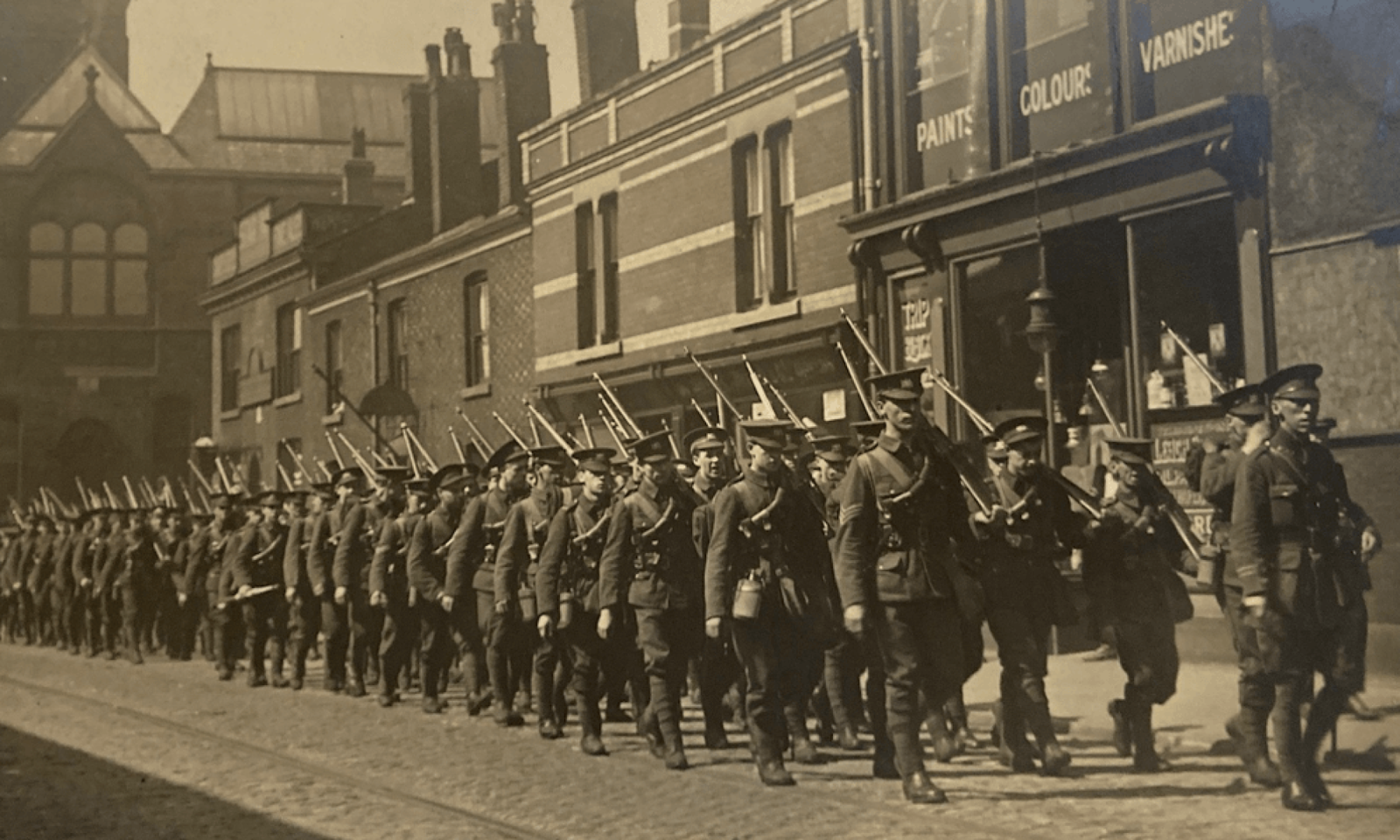
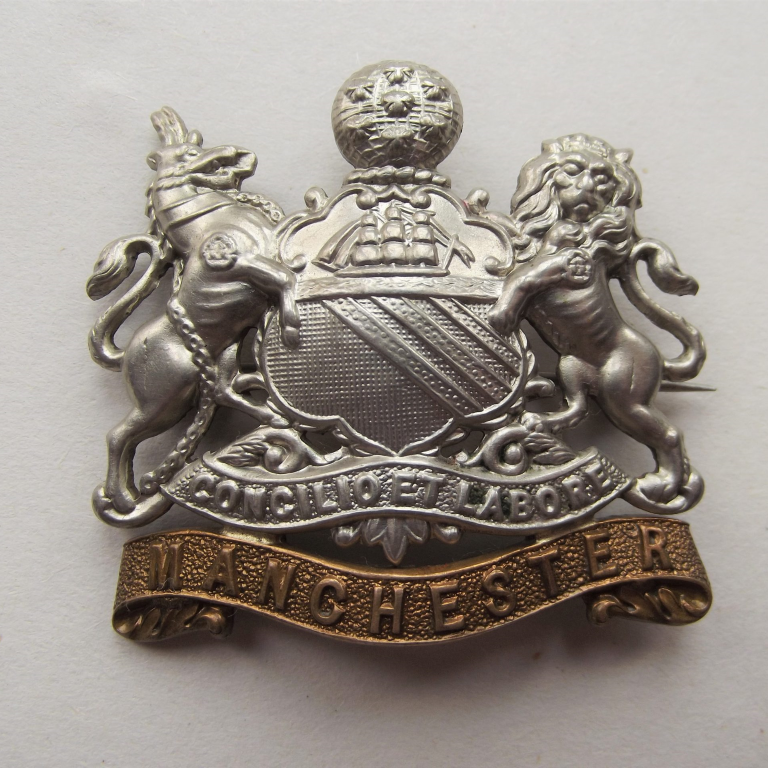
Roll of Honour

ASHTON TERRITORIALS

The Official Casualty List

Saturday, June 26, 1915:

The following official list of the casualties in the 1/9th Battalion Manchester Regiment was posted up at the Ashton Armoury on Wednesday:

KILLED

May 31 – 2175, Private F. Favier. 221 Katherine Street.
June 13 – 2151, Private W. H. Foden. 8 Craig Street, South Reddish.
June 13 – 2003, Private F. Ballard. 26 Hill Street, Ashton.
June 13 – 2192, Private J. Jones. 103 M* Street.

DIED OF WOUNDS

June 11 – 1413, Private Penney. 24 Queen Street, Dukinfield.
June 13 – 2085, Private H.[M] Bailey. Robinson Street.
June 13 – 1652, Private Stott. Wrigley Street, Ashton.

DIED OF DISEASE

June 6 – 1746, Private J. Chapman. 128 Portland Street, Ashton.
June 11 – 1796, Private R. Varey. 3 Crickets Brow, Ashton.

DANGEROUSLY ILL

June 6 – 1413, Private T. Penny.
June 11 – 1278, Private J. [A] Summersgill. 46 Botany Lane, Ashton.

WOUNDED

May 26 – 1727, Private R. Thomas. 143 Taunton Road, Waterloo.
May 26 – 781, Drummer H. Taylor. 20 Margaret Street, Ashton.
May 13 – 2042, Private H. Hesketh.
May 13 – 1837, Private J. R. Neild. 70 Brunswick Street, Ashton.
May 13 – 555, Private W. Barker. 47 Cross Leech Street, Stalybridge.
May 29 – 1212, Private T. Holden. 47a German Street, Dukinfield.
June 4 – 1799, Private H. Abbott. 43 Peel Street, Dukinfield.
June 4 – 2208, Private J. [G] A. Price.
June 5 – 1655, Private R. Boon. 3 Druce Street, Bardsley.
June 5 – 1211, Private Cuthbert. 34 Jackson Street, Ashton.
June 5 – 998, Private A. [H] Holden. 72 Furness Street, Dukinfield.
June 5 – 2013, Private A. Lilley.
June 5 – 1437, Private W. Revell. 35 William Street, Hurst.
June 7 – 1164, Private F. Dyson. 32 Russell Street, Hurst.
June 7 – 1809, Private J. [I] Smith. 35 Old Hall Street, Dukinfield.
June 8 – 2109, Private J Joyce.
June 8 – 1963, Private R. Gibson.
June 8 – 1679, Private G. Lowe. 232 Newmarket Road, Ashton.
June 8 – 1643, Private S. Newton. 119 Birch Street, Ashton.
June 10 – 1696, Private J. Crowther. 28 bank Street, Ashton.
June 13 – 1066, Private T. Garlick. 70 Moss Street, Ashton.
June 13 – 1592, Corporal E. Allott. Bradgate Street, Ashton.
June 13 – 1516, Private E. Barlow.
June 13 – 1236, Private B. Barrett. 15 Nelson Street, Hurst.
June 13 – 1293, Private T. Bell. 18 Winter Street, Hurst.
June 13 – 1625, Private A. Burn. 92 Hertford Street, Ashton.
June 10 – 1873, Private T. Carter. 9 Gibson Terrace, Ashton.
June 13 – 1623, Lance-Corporal J. Greenhalgh. 77 Denton Road, Hooley Hill.
June 13 – 2120, Private A. Hirst.
June 13 – 23, Lance-Corporal T. Lee. 46 Wellington Street, Ashton.
June 13 – 2204, Private McCartney [McCarthy]. 22 Dale Street, Ashton.
June 13 – 1872, Private H. Ogden. 84 Hill Street, Ashton.
June 13 – 174, Corporal [J] H. Shawcross. 315 Whiteacre Road, Ashton.
June 13 – 973, Private H. Smith. 19 Wharf Street, Dukinfield.
June 13 – 1137, Private T. Smith. Lordsfield, Turner Lane, Ashton.
June 15 – 2019, Private W. Gaskell.

Ashton Territorial Casualties

Saturday, July 10, 1915:

The following casualties in the Ashton Territorials in the Dardanelles have been received this week: –

KILLED

Corporal H. Mathews, 65 Oldham Road, Waterloo.
Private E. Heinemann, 103 Old Street, Ashton.
Lance Corporal Wm. Mason, 108 Church Street, Ashton.
Signaler B. A. Rawlings, 103 Bentinck Street, Ashton.
Private J. Love, 12 Spring Grove Terrace, Ashton.
Private A. E. Summersgill, 11 St. Mary Street, Hurst Brook.
Private I. Smith, 403 Higher King Street, Dukinfield.
Private Richard Burgess, 9 Manor Street, Audenshaw.
Private J. Travis, 123 Hope Street, Hurst.
Private W. R. [Fred] Lee, 41 Argyle Street, Cockbrook.
Private Harold Gartside, Frederick Street, Cockbrook.
Lance-Corporal Gerald Massey, 33 Canterbury Street, Ashton.
Private T. Doran, 65 Burlington Street, Ashton.
Lance-Corporal H. Barrett, 99 Wellington Street, Ashton.
Private S. Ogden, 84 Hill Street, Ashton.
Private Sydney Stelfox, 3 Hill Street, Waterloo.
Private William Mather, 54 Grasscroft Street, Stalybridge.
Corporal Harry Earle, 9 Eaton Terrace, Ashton.
Private Joseph Sellers, 15 Angola Street, Droylsden.
Private Henry Lewis, 103 Oldham Road, Waterloo.
Lance-Corporal John George Blandford, 63 North Road, Longsight.
Private G. W. Hudson, 42 Edge Lane, Droylsden.
Private John Tetlow, 179 Edge Lane, Droylsden.

DIED OF DISEASE

Private Benjamin Cusick, Hertford Street, Ashton.

WOUNDED

Drummer W. H. Taylor, 5 Spring Bank, Smallshaw.
Private J. Crowther, 140 Fleet Street, Ashton.
Private S. Newton, 119 Birch Street, Ashton.
Private W Barfield, 132 Turner Lane, Ashton.
Private J. McCarthy, 22 Dale Street, Ashton.
Lance-Corporal Ernest Booth, 61 Blandford Street, Ashton.
Private A. C. Hirst, 92 Blandford Street, Ashton.
Private J. Hopwood, 16 Cross Hope Street, Ashton.

Casualties in Ashton Territorials

Another Heavy List

Saturday, July 17, 1915:

Another heavy list of casualties in the Ashton Territorials, fighting in the Dardanelles, has come through during the week. The following have been received this week: –

KILLED

Sergeant Harry Earle, 9 Eaton Terrace, Henrietta Street, Ashton.
Corpl. Wm. Mitcheson, 7 Friendship Yard, Stalybridge.
Private Henry Lewis, 103 Oldham Road, Waterloo.
Private Ephraim Margrave, 6 Boodle Street, Ashton.
Private Tom Doran, 65 Burlington Street, Ashton.
Private Sydney Stelfox, 3 Hill Street, Waterloo.
Private John Walker, Cooper Street, Dukinfield.
Private Saml. Kellett, 30 Warf Street, Dukinfield.
Private Frank Jackson, formerly of 11 Markland Street, Hurst.
Private John Broadbent, 60 Mount Street, Ashton.
Private Ernest Williamson, 2 Duke Street, Ashton.
Private Maurice Barker, 11 Springfield Terrace, Ashton.
Private H. Sidebottom, 492 Oldham Road, Bardsley.
Private Jas. Ryder, 169 Wellington Road, Ashton.
Private W. H. Hamer, 14 Carr Street, Hurst.
Private H. Cooke, 10 Kenlock Street, Bradford, Manchester.

DIED OF DISEASE

Private John Hague, St. Hilda, Mossley Road, Ashton.

MISSING

Lieutenant J. M. Wade, son of commanding officer.
Private Frank Mycock, 7 Clarendon Street, Dukinfield.
Private Albert Littlewood, Old Street, Broadbottom.

Private G. F. Cain, Private J. Daley, Private T. Evans, Private T. Hardman, Sergeant J. Lawton, Private F. McDonnell, Private F. Mycock, Private E. Robinson, Private H. Ryding, Private J. Wilde.

WOUNDED

Private John Connolly, Crescent Road, Dukinfield.
Private John Mutter, 65 Stanhope Street, Hurst.
Private W. H. Corlett, 155 Cricket Lane, Ashton.
Private John Hyslop, 131 Old Street, Ashton.
Private Bullock, 3 West View, Hannover Street, Audenshaw.

The following casualties appeared in the official list this week but most have been already given in the “Reporter”: –

Private T. Bailey, Private W. Barfield, Lance-Corporal H. Barrett, Lance-Corporal J. Bertenshaw, Lance-Corporal G. Birchall, Private J. A. Bostock, Private E. Brown, Private A. Burke, Private T. Butler, Private H. Cook[e], Private J. Cragg, Private J. Dundavan, Private L. Finneran, Private T. Finnerty, Private L. Gill, Private J. Hall, Private T. Hall, Private F. Hodgins, Private J. Hyslop, Private E. H. Jones, Private J. Martin, Private W. Moss, Private R. Nichols, Private H. Partridge, Private R. Penny, Private J. Pollard, Private W. Priestnall, Lance-Corporal G. Sylvester, Private G. H. Stewart, Private P. Taylor, Drummer W. Taylor, Corporal H. Trunkfield, Private J. Turner, Private T. Tweedale, Lance-Corporal A. Willerton, Private G. E. Wilson, Private T. Wood, Private J.H. Woodcock and Private A. Wrigley.

Ashton Territorial Losses

Saturday, July 24, 1915:

Another heavy list of casualties in the 1/9th Battalion Manchester Regiment (Ashton Territorials), have been received this week: –

KILLED

Private Jas. Crompton, 3 Bramah Street, Hurst.
Private John Brady, 7 Groby Road, Hooley Hill.
Private R. Martin, 32 Garden Street, Droylsden.
Corporal J. W. Hughes, 12 St. Mary Street, Hurst Brook.

DIED

Lieut. J. M. Robson, Blandford House, Ashton.

WOUNDED

Private E. Wilson, 6 Hawke Street, Ashton.
Private Harry Ogden, 18 Queen Street, Dukinfield.
Sergeant S. Wood, Argyle Street, Cockbrook.
Sergeant Arthur Basforth, 27 Princess Street, Ashton.
Lieutenant E. Balmford, National Gas Engine Works.
Private J. W. Cheetham, 69 Haughton Road, Hooley Hill.
Norman Richardson, 73 Haughton Road, Hooley Hill.
Private Robert Nicholls, Haughton Road, Hooley Hill.
Corporal J. Joyce, 53 Fleet Street, Ashton.
Private Jas. Hill, Pickford Lane, Dukinfield.
Bandsman Harold Rhodes, 50 Bennett Street, Ryecroft.
Private Alfred Sumner, 53 Burlington Street, Ashton.
Private R. Nolan, 78 Burlington Street, Ashton.

Ashton Territorial Casualties

Saturday, August 7, 1915:

The following casualties have been notified this week: –

KILLED

Private Percy Tilbury, 180 Katherine Street, Ashton.
Corporal Thomas Gorman, 74 Crickets Lane, Ashton.
Sergeant T. Lomas, 58 Beauchamp Street, Ashton.
Private J. W. Daley, 48 Park Street, Ashton.

WOUNDED

Private Clarence St. Paul, 44 Mount Pleasant Street, Hooley Hill.
Private Harry Haughton, 13 Wych Street, Ashton.
Private Robert Daley, 5 Glebe Street, Ashton.
Private Harry Hesketh, Portland Street, Ashton.
Private John Jackson, 210 Cavendish Street, Ashton.
Private Charles Warburton, 149 Cotton Street, Ashton.
Private E. Hawkridge, 1597.
Private W. Lockwood, 1388.
Private E. Spragg, 1755.
Private S. Yarwood, 2197.

Ashton Territorial Casualties

Saturday, September 4, 1915:

The following is a list of the casualties received at the “Reporter” Office during the week: –

KILLED

Private H. Newton, 26 Wood Lane, Smallshaw.
Drummer F. Wyatt, 30 Hill Street, Dukinfield.
Private Harold Chadwick, 102 Whiteacre Road, Ashton.
Private Arnold Booth, 146 Cotton Street, Ashton.
Private James Shaw Miller, 2 Rowley Street, Dukinfield Hall.
Private Albert George Harling, 10 Queen Street, Ashton.
Private George Harry Walker, 15 Cooper Street, Dukinfield.
Private John Bardsley, 33 Henrietta Street, Ashton.
Private John Joseph O’Conner, 151 Wellington Road, Ashton.

WOUNDED

Private A. E. Snape, 6 Brierly Street, Dukinfield.
Private Jos. Wm. Hartwell, 102 Park Street, Ashton.
Private Ernest Hawkridge, 22 Gate Street, Dukinfield Hall.
Private Wm. Goddard, 8 Quarry Street, Stalybridge.

DIED

Lance-Corporal James Rowbottom (Kid James), 213 Park Road, Dukinfield.

DANGEROUSLY ILL

Private Frank Goddard, Kenyon Street, Ashton.

Ashton Territorials Wounded

Saturday, February 5, 1916:

The casualty lists published on Thursday include the following men of the Ashton Territorials: –

WOUNDED

MANCHESTER REGT. 9th BATT. (TF)

Birchenough (1946) M., Victoria Street, Ryecroft
Garside (3031) S., Langham Street, Waterloo, Ashton
Hamer (3399) F., Gorton Street, Waterloo
Hardy (2293) W.
Hill (1439) T., Gas Street, Ashton
Silvester (1358) Sergt. G., Higher King Street, Hurst
Wood (1331) W. H., Hillgate, Stalybridge
Beech (3341) E.
Dawson (2339) H.
Hargreaves (1580) N., Birch Lane, Dukinfield
Stevenson (2810) Sergt. T., Ashton

P.S.A. Movement

Several of the letters published in the Ashton Reporter from the men of the 9th Battalion Manchester Regiment have editorial references to the man being a member of the “P.S.A.” Additionally, the Reporter published short articles regarding the meetings and activities of the local P.S.A. brotherhood in Ashton and district and at one point published a P.S.A. “Roll of Honour”.

The Pleasant Sunday Afternoon (P.S.A.) movement was founded by John Blackham, a linen draper from West Bromwich, who was a prominent member of the local community. By the time he was 30 he was already a deacon at the West Bromwich Ebenezer Congregational Church, and was already active in the Adult School Movement which was originally intended to teach literacy to working class adults primarily through the study of the bible, especially the New Testament. No doubt his involvement in this endeavor caused him to think generally about how to increase attendances and especially how to regain the interest of those who had previously attended Church Sunday Schools but had since stopped.

In 1875, when he was 41, he traveled to Birmingham to hear the well-known American evangelists, Moody and Sankey who were speaking at the Town Hall one Sunday afternoon. Unable to get in, due to the large crowds, he ended up attending a small Sunday School bible study class at the Ebenezer Congregational Chapel in nearby Steelhouse Lane. Opened in 1816, this was a very large church with capacity for a thousand worshippers but on that day only a few dozen young men were in attendance. What a contrast. Thousands of people clamored to see the American evangelists preach the word of God but just a few minutes’ walk away, a capable and engaging speaker could barely summon up a handful of faithful men. Blackham had a breakthrough moment and perhaps for the first time clearly saw that in order to fill seats, the format, content and delivery mattered more than anything else. “I realized that if men were to be won, we must give them a service neither too long nor too learned. We must avoid dullness, prolixity, gloom and constraint”, he is later reported to have said.

On his return, he met with the West Bromwich Ebenezer Congregational Church Sunday School officials, and laid out his ideas of how to boost attendance, and reclaim lapsed members, by introducing a new kind of bible study class that would be short and bright and last no more than three-quarters of an hour. Importantly, as a member of a Congregationalist church the only people who needed to be persuaded to do something radical were his local church elders. Evidently, he was able to gain their consent and so he quickly set out to find as many local young men as he could who had previously attended Sunday School but who now no longer regularly attended church. The following Sunday afternoon, around 120 young men that he had recently canvased on the streets of West Bromwich duly arrived at the Ebenezer Chapel to attend the first meeting of what was shortly to become the Pleasant Sunday Afternoon (P.S.A.) movement.

The meetings were wildly successful and the popularity of the P.S.A. meetings slowly spread throughout the Black Country, across the Midlands and to the rest of the country. Within ten years, around 1885, they had reached Ashton-under-Lyne, gained traction and became an integral part of the religious establishment thus earning their place in the Ashton Reporter.

The P.S.A. and the Ashton Reporter

Saturday, September 11, 1915:

On Sunday, at the Ashton P.S.A. Society, at an open service for men and women, the veteran and distinguished elocutionist, Mr. Barnish Barnsdale is announced to recite “The Sermon That Wasn’t Preached”, “What Shall it Be”, and “Unconquered”. These are items that Mr. Barnsdale has made his own, and his elocutionary abilities ae acclaimed everywhere.

P.S.A. Roll of Honour

UNVEILING CEREMONY PERFORMED BY MRS. A. PARK

Saturday, October 30, 1915:

The gathering of the P.S.A. Society’s Bible Class on Sunday morning took the form of an open service, the first of its kind in the 30 years’ history of the class. There was a large attendance, which included a number of soldiers. The special feature of the gathering was the unveiling of the class Roll of Honour, which contains the names of all those who are doing military service in various parts of the world.

Mr. A. Park, J.P., president of the society, was in the chair, and he was accompanied on the platform by Mrs. Park. Several friends, by giving voice and recitations, added to the brightness of the service, and the members of the Singing Class rendered musical items in pleasing fashion.

The Chairman made sympathetic and appropriate reference to the members whose names appeared on the roll, and mentioned the loss they had sustained by the deaths in action of Gunner William Booth, R.F.A., and Staff-Sergeant Harry Owen of the Royal Garrison Artillery.

Ms. Park gave a short address of patriotic and religious character, and then proceeded to unveil the roll of honour, which contains the following names: –

Sergeant Thomas William Boon, 1st South Wales Borderers.
Company Quartermaster-Sergeant John Williamson, 1/9 Manchester Regiment.
Company Quartermaster-Sergeant Herbert Bradshaw, 2/9 Manchester Regiment.
Staff-Sergeant Harry Owen, 1st Siege Battery, R.G.A., killed in action.
Staff-Sergeant Wm. H. Martin, 1/9 Manchester Regiment.
Private Walter Eastwood, 3/9 Manchester Regiment.
Private Harry Hobson, 2/9 Manchester Regiment.
Private Wm. Bromley, 1/9 Manchester Regiment.
Private John Oldham, 3/9 Manchester Regiment.
Private Roland Bromley, 2/9 Manchester Regiment.
Private John Seedall, 6th Cheshire Regiment.
Private Frank Briggs, 8th South Lancashire Regiment.
Gunner Wm. Booth, R.F.A., killed in action.
Gunner Geo. H. Watkins, R.F.A., 181st Brigade.
Private James Beaumont, R.A.M.C.
Private Harry Kerrick, 3/9 Manchester Regiment.
Private Stanley Townley, 3/9 Manchester Regiment.
Private James Hague, 3/9 Manchester Regiment.

Recruiting

Recruits Wanted!

RECRUITS FOR NEW BATTALION

Over 300 Have Joined Ashton Territorials

VOLUNTEERS FOR SERVICE ABROAD

Saturday, October 10, 1914:

Recruits for the new Ashton Battalion of Territorials are coming forward at a splendid rate. Up to date over 300 have joined and recruits are being received at the rate of 25 a day which is as many as the staff at the Armoury, with their other important duties, are able to deal with. All the recruits are of an excellent character. During the week the men have been paraded every day and taken on a daily route march led by drums and bugles, their appearance attracting much public attention and favourable comment. They receive a guinea a week. Practically all the recruits have volunteered for foreign service.

ANOTHER 130 RECRUITS IN ASHTON

Saturday, October 17, 1914:

During the week another 130 recruits have been added to the new Ashton Territorial Battalion, making a total of about 450. Recruits are being enrolled as fast as the staff at the Armoury can deal with them. Below we give the names of the recruits who have been accepted since we published the list last week.

[However, not everyone was happy with the results of the various recruiting drives …]

SCENES AROUND THE ARMOURY

Saturday, November 7, 1914:

The Rev. A. C. Sinclair, vicar of St. Stephen’s Audenshaw, in the Parish Magazine makes a strong appeal to the parishioners on behalf of sobriety amongst soldiers. He says: –

I do not write as a fantastical teetotaler. As most of you know, I am not even a pledged abstainer. I write merely from the standpoint of a Christian citizen, deploring the necessity which drives me to speak. There seems to be no possible room to doubt that we are face to face with a great increase of drunkenness, and of the other moral evils which follow in its train. One’s own observation and the testimony of many others who have had opportunities for forming an accurate judgement, combine to assure one of this. Soldiers on their way to join the forces get into the train – sometimes need to be lifted into them – in a state of intoxication, and among many of those who are left behind increased drinking is rife.

 As regards other evils, continues the Vicar, I will only invite anyone who wishes to be convinced of the truth of these words to spend a little time outside the Armoury in Old-street, and watch the conduct and listen to the conversation of some of the recruits with the young women who hang around its doors.

RECRUITING RECORD IN ASHTON

The New Double Company System

240 ENLIST IN JUST OVER A WEEK

Saturday, January 9, 1915:

Ashton has achieved something in the nature of a record recently in regard to rapid recruiting for the Territorials. The advent of the new double company system of training in platoons, instead of sections, constituted a re-arrangement of the 9th (Ashton) Reserve Battalion Manchester Regiment, stationed at Southport, as a result of which an order was received by Captain R. Lees, commanding the depot of the 9th Battalion at the Ashton Armoury, to obtain recruits for two companies, which meant an additional 240 men. On Wednesday evening recruiting ceased, the requisite number of men having been obtained in a little over a week. They will form one company, and until further orders are received, they will remain in training at Ashton. They are a fine body of men, and among the applicants very few were rejected on the grounds of physical fitness by the medical officer, Dr. Corns The standard of height is 5ft 3in and the recruits were 19 years of age and older. They were required to sign a declaration for service abroad.

Facilities have been provided for training the men at Ashton golf links at Hr. Hurst, and the Secondary School playing field near the Infirmary, whilst the Brushes shooting range will be available for firing practice. Captain [George] Makin and Lieuts. A. Conner and Wilkinson have been transferred from Southport to assist Captain Lees in the training of the men. On Sunday morning the new recruits will parade at the Armoury, and will attend divine service at Albion Congregational Church.

THE MANCHESTERS

One of the Most Famous Regiments in the Army

RECORDS IN RECRUITING

Saturday, January 23, 1915:

The Manchester Regiment is one of the oldest and most famous in the Army. It has a famous fighting history, extending back 230 years. It has fought in almost every part of the globe. Upon its colours are registered battle honours which have been won in Egypt, Egmont-op-Zee, Martinique, Guadeloupe, Peninsula, Alma, Inkerman, Sevastopol, New Zealand, Afghanistan 1879-1880, Egypt 1882, South Africa 1899-1902, and the defence of Ladysmith.

The 1st and 2nd Battalions of the Manchesters are now fighting at the front. Casualties are heavy, and the men look to their native city and county to fill up the gaps which the heavy fighting causes. Any man in the Manchester zone who thinks of serving his King and country should enlist in the Manchester Regiment; he could not be serving under finer tradition, with finer soldiers. He could not be trained under better officers. Everything which can be done to make the raw recruit into an efficient soldier is carefully seen to at the Regiment’s headquarters at Ashton-under-Lyne.

It is of interest to note the following particulars of what such recruit secures on enlistment. There is no delay in providing a full khaki uniform; there is a free issue of underclothing – two suits, three shirts, three pairs of socks, boots, ties, soap, razor, shaving-brush, tooth-brush, hair-brush, and comb, hold-all, muffler, braces, watertight kit-bag, knife, fork, spoon, etc. Three blankets and sheets are issued CLEAN to each recruit. The barracks and huts all have fires, and tents are not being used until the weather becomes favourable. The men at Cleethorpes live in houses. The catering is carefully attended to, good food being provided. Breakfast comprises bread, butter, tea and meat; dinner meat and vegetables, and puddings; tea bread, butter, tea and jam or meat; supper soup, bread and cheese. As much as may be required is provided.

The formation of the Manchester Regiment is of considerable interest at the present, when such strenuous efforts are being made to raise a large number of men that are still required.

The 1st Battalion, now at the front, is commanded by Lieut.-Colonel E. P. Strickland, and was moved from India to France with the Indian contingent. The battalion was the old 63rd Foot, and traces back to 1683. The men comprising the 1st Battalion are made up of serving men doing their 12 years, and Reservists, or ex-soldiers from the 4th Battalion.

The 2nd Battalion is commanded by Lieut.-Colonel H. L. James, and was at the Curragh at the commencement of the war. It was one of the first Battalions to reach France. The 2nd was the old 96th Foot, formed from the Minorca Regiment in 1804, and on July 1st, 1881 it became the 2nd Battalion of the Manchester Regiment. It is made up of serving men doing their 12 years, and Reservists or ex-soldiers from the 3rd Battalion.

The 3rd and 4th Battalions are stationed on the Humber defences at the present time. The 3rd is commanded by Lieut.-Colonel H. K. Oram, and is used as a special reserve for the 2nd Battalion at the front.

The 4th Battalion, commanded by Lieut.-Colonel J. H. M. Jepp, D.S.O., is also on the Humber defences, and is used as a reserve of the 1st Battalion. It is on account of the heavy drafts which have had to be sent from the 3rd and 4th Battalions to the 1st and 2nd Battalions of the Manchester Regiment, now at the front, that the special appeal is being made for further men this week.

From the 5th to the 10th Battalions are Territorials; from the 11th to the 14th are special battalions formed for the period of the war. The 16th to the 23rd are the well-known City Battalions, for which recruits are also still wanted. The 24th Battalion is that formed at Oldham.

Special efforts are being made to ensure the largest number of men possible during the next few days, and it is hoped that the Manchester Regiment will secure the first place in the choice of all recruits who are enlisting at the present time.

The Lord Mayor of Manchester has kindly given his consent to the men of the Manchester Town Hall for additional recruiting. This, in conjunction with the fact that it is for the famous Manchesters that the call is being made, should bring a large number of recruits to the regiment during the next few days.

Recruiting is now in progress and will continue until Monday, 1st February. The City Battalions are being simultaneously recruited at the Town Hall and recruits may join any of these battalions should they prefer to do so.

TERMS OF ENLISTMENT IN TERRITORIALS

New Army Order Regulations

Saturday, May 15, 1915:

An Army Order provides that during the remaining period of the present war, the age for enlistment or re-enlistment in the Territorial Force will be from 19 to 38 instead of from 17 to 33 years as hitherto except in cases of Inns of Court Officers’ Training Corps and the Artists’ Rifles. Ex-non-commissioned officers, Regulars and Territorials, not below the rank of sergeant, may be re-enlisted up to the age of 50, other ex-non-commissioned officers of the Territorial Force up to 45. Enlistments for general hospitals will be restricted to men between 17 and 19 and over 38; shoeing smiths, saddlers and telegraphists may be enlisted up to the age of 50.

National Reservists who are required for the special purpose of guarding railways and other vulnerable points will be enlisted into the Territorial Forces in companies supernumary to existing battalions in that force. As far as possible, the selected battalions will be those raised in the district in which these ex-Nationalist Reservists are to be employed. The companies will number 120 all ranks, and will be organised in groups, each group being under the command of an officer termed the Supervising Officer, or Area Commandant or Section Commandant Lines of Communication. Each company will have three officers not above the rank of major appointed to the Territorial Force Reserve. No ex-Officer under the age of 40 will be accepted unless medically unfit for more active duties, and in no case will officers over the age of sixty be taken for this service.

National Reservists, except men employed on Government work, will be enlisted for one year or for the duration of the war in the rank of private, promotions being made after final approval to the extent authorised. Enlistment will be for service in any place in the United Kingdom. No man under the age of 38 medically fit to perform the ordinary duties of a soldier will be enlisted in these companies, and no man over 50 will be accepted. A new service of Territorial Force numbers commencing at 20,001 will be authorized for National Reserve numbers.

TO THE SINGLE MEN

An Ashton Territorial’s Appeal

Saturday, June 19, 1915:

TO THE EDITOR OF THE “REPORTER”
Sir – I have seen some of the letters to the shirkers of Ashton, and I quite agree with them. I expect if someone was to ask some of the single young men the reason why they did not join they would have the cheek to say, “My mother won’t let me.” But his mother won’t stop him from doing the “week-end toff” on Stamford Street, will she? Poor boy! Why can’t his mammie give him a tittty bottle or buy him a dummy tit, and put a card on his back with the words, “Mama’s darling!”

There are plenty of us here at Haywards Heath bursting to go to the front, and we can’t get there yet. We have left good homes, good work, and left the ones we love most dearly – our wives and children and mothers, and yet, those who are walking the streets creep out of the house like a mouse out of its hole to go and meet his best girl. If the girl had any respect for herself, she would take him to the nearest recruiting office and put him in and stay there while he passed the doctor.

I think if the married men had been the same as some of the single ones the war would have been over by now, and they would have found it out to their cost. Men – if you call yourself men – put some pluck into yourself and go and do your duty; don’t have insults pushed down your necks; don’t be forced to go – come of your own free will. Ashton will be the same when you come back. Go and join, and let your mothers and sweethearts see that you have got some pluck left in you yet. Don’t let it be said when the war is over, if you should meet one of your pals, “Did you stay at home?” What can you say? Think of it. Come now, and be able to hold your head up.

2/9 Manchester Regiment
Haywards Heath

TO THE EDITOR OF THE “REPORTER”

Saturday, June 19, 1915:

Sir – In last Saturday’s “Reporter” I read of young men not enlisting. I myself, a private in the 2/9 Manchesters, stationed at Haywards Heath, think that the young ladies of Ashton ought to have more sense than to speak to men who are able to join. I myself joined last November. I was at Southport till May. In my opinion the biggest part of the single men would rather talk round a taproom fire with the pint-pot in their hand than join the Army. I think myself every able young man ought to join in a time like this. When you read about your own pal being killed, I think it time someone also tried to get their own back.

There are 150 of our lot going to Sandwick for a little more shooting, and then they will be off to the Dardanelles. We ourselves are going through hard work at the present, but I myself would rather be at the front than here. In this war we need men, and without them it is impossible to win. I hope that single men of Ashton will come forward.
TOM BURNS

More Recruits Wanted!

RECRUITING OFFICER CHARGED

Alleged Embezzlement at Ashton

Saturday, July 3, 1915:

At the Ashton Borough Police Court on Monday, William Redfern, who was formerly a recruiting officer at the Old Boar’s Head Inn, St Michael’s Square, Ashton, was brought up on remand, charged with embezzlement.

Mr. H. Hyde (Deputy Town Clerk), who appeared to prosecute, applied for a remand. He said that although the charge was for embezzling a sum of 2s 9d, the investigations had disclosed amounts considerably larger than that. The investigations were therefore rather involved.

The magistrates remanded the accused for a week.

RECRUITING OFFICER SENTENCED

A Charge of Larceny at Ashton

Betrayed Public Trust

Saturday, July 17, 1915:

At the Ashton borough Police Court on Monday William Redfern, formerly recruiting officer in the district, was charged with the larceny of £25 17s 6d, £3 5s, £2 11s and 2s 9d, the monies of the King.

Mr. H. Hyde (Deputy Town Clerk), who appeared to prosecute, said the defendant was appointed recruiting officer at Ashton on August 13th, at an inclusive salary of £150 per annum. He had the entire control of the recruiting office at the Old Boar’s Head Inn, St. Michael’s Square, and he was responsible for the engagement and discharge of the clerical staff, and for the monies received and disbursed. Payments made by him were to be recorded in the usual Army cash book. Having kept a rough cash book the defendant came to the conclusion some time at the commencement of the year that it was in such a condition as to be apparently unfit for production to a superior officer for inspection. He had a fair copy of it made, and that copy had been taken possession of. It contained the various payments upon which these charges were based.

Owing to certain irregularities he was suspended on June 2nd. The first charge, which appeared to be the most serious, concerned the insertion in the cash book of the name of a fictitious person, described as P.P.R. – a paid pensioner recruiter. At the outset, a pensioner, Colour-Sergeant Harman, was engaged as paid pensioner recruiter at a weekly wage of 17s 6d. In November last he was recalled to the colours, and there became a vacancy in the office. A clerk in the office, named Thompson, continued as a specially paid recruiter. After a few days he was taken ill, and died. From that time onward apparently weekly payments of 17s 6d had been entered in respect of a P.P.R., but there had been no such person in existence, and nobody had received the money.

When the recruiting office was established at the Old Boar’s Head Inn the defendant requested Mr. J. Walsh of the George and Dragon Hotel, to supply the necessary furniture. Mr. Walsh thought the furniture was being impressed, and that the defendant had a right to commandeer it, and that no charge should be made. Just before Christmas the defendant told Mr. Walsh he thought he had a right to payment. An account for £3 6s was made and receipted by Mr. Walsh, but no payment was made, the explanation given by the defendant being that receipts had to be sent to the army authorities before the money could be obtained. The item was entered in the defendant’s cash book as having been paid. In March, April and May weekly payments of 5s to a cook or assistant cook were entered in the cash book. The investigations showed that there was no such person in existence. Two receipts, each for £1, were signed by a Mrs. E. White, purporting to be payments made to her for cleaning or cooking. The person named had never been in the employment of the recruiting officer, and she had never received the amounts stated. An account for £3 2s 9d was received by the defendant from the Northern Hardware Company for goods supplied. Discount 2s 9d was allowed to the defendant, who entered the full amount in the cash book as having been paid.

In conclusion, Mr. Hyde said: “It will be an evil day for all of us if people who are placed in positions of trust like this betray that trust. The seriousness of this offence lies not so much in the amount misappropriated, but in the betrayal of the trust placed in him at a time of national emergency when we are compelled to trust those people who are placed in such positions.”

Frank Wilson Tetlow, retired hotel manager, 203 Park Road, Oldham, deposed to being engaged by the defendant in August last to act as clerk at the recruiting office. He bore out Mr. Hyde’s statement in regard to the death of recruiting officer Thompson, and said that no other specially paid recruiting officer had since been engaged.

The Defendant: Do you remember being appointed specially paid recruiter?
Witness: No
Defendant: You were appointed by Major Digby!
Witness: I never was.
Defendant: I distinctly say you were appointed. I gave you £2 each week, and you gave me 2s change. It was agreed to between you and I, all through the piece!
Witness: No. My wages were 23s per week, and afterwards they were increased to £2 5s per week.
Defendant: You know perfectly well that we agreed to divide. You received 10s every week and I received 7s 6d! – I have no knowledge of it whatever.
If the cash book could be found it would show his signature for the money as a specially paid recruiter. We divided it. It is right dead against me that that the cash book cannot be found.
The Magistrate’s Clerk (Mr. C. H. Booth): It was your book and you kept it.

Joseph Walsh, manager of the George and Dragon Hotel, Ashton, bore out the solicitor’s statement in regard to the receipt for £3 6s given by him in respect of the furniture.

The Defendant: It is very un-businesslike to give a receipt without obtaining the money. Do you generally do that sort of thing and receive no money?
Mr. Walsh: No, you said I should receive payment when the receipt had been sent to the military authorities.
Defendant: I say distinctly I paid you the money!
Mr. Walsh: No such thing.

Elizabeth Eleanor White, of Hurst, denied having received the amounts stated, and said she had never been engaged at the recruiting offices. She said the defendant had told her that she might be surprised to know that her name appeared on documents which would have to go to the War Office for cleaning and cooking.

The Defendant: She is not the Mrs. White referred to, it was only a joke.
Mrs. White asked why the defendant did not produce the other Mrs. White.

The Defendant: It was only a huge joke.
Mrs. White: I thought it was a huge joke until I was called here. It does not look as if it is a joke.
Defendant: To bring you in is absolutely ridiculous, because you are not the one referred to. It was only a bit of fun.
Mrs. White: I think it is a very serious position to put me in.
The Magistrate’s Clerk: It is very remarkable that you should have told this woman that her signature was on documents at the War Office.
Defendant: It is remarkable because I know the name is there.
Mr. Hyde: She has been subjected to an abominable persecution by the prisoner.
Defendant: I shan’t have that, now come!
Mrs. White: I shall speak the truth.

W. Thornley, partner in the Northern Hardware Company, Ashton, deposed to receiving payment of an account for £5 2s 9d from the defendant. The defendant said, “I suppose £5 will settle the account” and witness replied, “Oh, yes”. The defendant paid £5.

The Defendant: You generally put it down as discount?
Witness: Yes.

The defendant pleaded not guilty. He repeated his previous statement that the witness Tetlow was appointed special recruiter, and that the money was divided. He paid £3 6s to Mr. Walsh for the furniture. And Mr. Walsh gave him 26s.

The Clerk pointed out that it was strange that the defendant should send to the barracks a receipt for money which he had not received, and in respect of which he had sent a requisition.

The defendant said there was no Mrs. White at all except on the first day when he appointed an old lady of that name, but she made a whole hash of the business by placing curry in the coffee pot instead of coffee and nearly poisoning one of the recruits. Although he offered 10s a week he could not get anyone to cook and he did the work himself. Having been a caterer he made the soup, coffee, and biscuits. He received the 5s weekly because he thought he was entitled to it, seeing that he did the work. He signed the name of White because it was the first name that came into his head.

The Clerk: Although there was no Mrs. White you forged her name!
The Defendant: No, I didn’t. I continued the payment in the old woman’s name. With regard to the 2s 9d not accounted for, it was a clerical error.

Mr. Hyde pointed out that the accounts were certified by the defendant as being correct.

Sarah Ann Walsh, wife of the licensee of the George and Dragon Hotel, was called, and spoke to receiving 15s from the defendant , who told her it was on account of the furniture. He told her to give the money to her husband, and said he would let him have the remainder later.

The magistrates sent the accused to prison for six months with hard labour in the first case, and three months in the other cases, two to run concurrently, or 12 months altogether.

The Prisoner: I thought you could not give me more than six months, otherwise I should have gone to the sessions.

The Mayor (Colonel C. R. Wainwright, T.D., D. L.): You would probably have got more at the sessions.

THE TERRITORIALS

Popularity of the Ashton Battalions

Saturday, July 10, 1915:

There are still at least 200 recruits wanted for the 3/9th Battalion Ashton Territorials to complete the establishment. Recruits have been coming in at a steady pace up to this week, and it should not be long before the battalion is at full strength. Recruits who now join will be sent on immediately to Southport to undergo their training with the battalion. The Armoury in Old Street, Ashton, is an administrative centre, with Captain Ralph Lees in charge, and it will act as a sort of feeder for the battalion. Recruits could not join in more favourable circumstances than at present. The battalion is billeted at the seaside, on the Lancashire coast, in the best part of the summer season. The conditions are in fact ideal. The men will undergo their training amid the most lovely and healthful surroundings.

Ashton has done wonderfully well in supplying men for the forces at this time of national crisis, and it is a tribute to the great popularity of the Territorials that no less than three battalions are now in being, that is to say, nearly 3,000 men. Even more men have offered themselves than these figures indicate, as there has been a large percentage of rejections. The men of Ashton and district are eager to serve their country in helping to defeat the country’s enemies and crush the unspeakable Huns.

Many of the brave boys who were Territorials when war was undreamed of willingly offered themselves for war service when hostilities broke out, and have nobly sacrificed their lives on behalf of the loved ones at home. Their places need filling, the gaps in the ranks require to be closed. There are not wanting those who are ready to take their places. Some of the 2/9th Battalion, which was formed as soon as the first battalion had left for Egypt, and have been in training in Southport, and more recently in Sussex, have left this country for the front, fully trained, and anxious to strike a blow for the dear old country. Now the third battalion will soon be completed, and in the course of time will themselves be ready.

There is yet time to join this gallant body of citizen soldiers, the brave Territorials who have received such high praise from General Sir Ian Hamilton, the commander-in-chief of the Mediterranean Expeditionary Force, for their gallant conduct. Those who are desirous of “doing their bit” should apply at the Armoury, Old Street, at once.

BIG RECRUITING RALLY

Ineligible Men and Women Asked to Help

Saturday, August 28, 1915:

On Saturday next it is intended to hold a big recruiting rally in Ashton. A special effort will be made to secure recruits for all branches of the services.

The arrangements are not yet quite complete but Lieut. H. C. H. Scott at the Ashton Barracks is preparing a commemorative programme, details of which will appear in the next issue of the “Reporter”.

Lieut. Scott particularly desires that all ineligible men and women should form themselves into recruiters, and give all the help they can next Saturday. The loan of cars would be appreciated, and any suggestions would be welcomed by Lieut. Scott.

Recruiting for Territorials

Saturday, September 4, 1915:

During the week recruiting at the Armoury has been pretty brisk, but still more recruits are required.

There could not be a better appeal to those who are eligible to join the Territorials than the records of glorious deeds in this issue of the “Reporter”.  They should fill them with the sense of pride, and they should regard it as a proud privilege to be able to say “I am one of the Ashton Territorials”.

All recruits are equipped immediately on enlistment, and drafted to Southport, where the 3rd Reserve Battalion are undergoing training under ideal circumstances.

APPEAL FROM TRENCHES

Ashton Territorial’s Letter to Young Men

Saturday, September 25, 1915:

A stirring letter to the young men of Ashton has been sent in a letter from the front in Gallipoli by Private Jesse Burke of the 1/9th Battalion Manchester Regiment, Ashton Territorials, who resided at Watts Place, Dukinfield. Private Burke has been in the Territorials about four years and volunteered for active service at the outbreak of the war. In civil life he was a piecer at Newton Moor Cotton Spinning Mill. He writes: –

“I hear there are hundreds of eligible young men in Ashton who do not consider it their duty to fight for their King and country. Of course, we can’t all fight. Some must stay at home as munition workers, but I believe there are hundreds in Ashton who are doing neither. If we had those men out here it would make it much better for us, and perhaps bring the war to a close a little sooner.

Four months of hard fighting in a place where men are being shot while asleep in their dug-outs; never away from the scene of the fighting! Just think what it means, and see if it is right. There are men out here who have wives and children at home dependent upon them. They did not hesitate when their country called them.

I am sure we should get a lot more lads from Ashton and Dukinfield if we could only make them understand what we are going through. It is said that a Britisher’s best time is when he is in a dust-up. I would like to see the lads of Ashton who are not already in the ranks or munition workers rally round the old flag.

Their comrades have played a gallant part in Gallipoli in the past. With their help we could do more in the future, and bring home honour to the town of Ashton.”

SINGLE MEN AND RECRUITING

An Official Message to Ashton

POSITION OF THE MARRIED

Local Committee’s Inquiry

“GOVERNMENT PLEDGE WILL BE CARRIED OUT”

Saturday, November 20, 1915:

To the Editor of the “Reporter”

Sir – We enclose you a copy of letter with cutting from a circular recently issued sent by the honorary secretary of the Parliamentary Recruiting Committee, 12 Downing Street, London, on Wednesday last in reference to a statement made by the Prime Minister as to the position of the married man. – Yours Faithfully.

J. C. BUCKLEY
J. FRANCE
J. EDGAR
Hon. Secs.
Parliamentary Recruiting Committee
Lord Derby’s Canvassing Campaign
Free Library, Old Street, Ashton

Dear Sirs – We shall be obliged if you will let us know at once the position of married men who have enlisted under the “group” scheme.

Our reason for asking this is that acting on the Prime Minister’s speech of November 2nd, followed by Lord Derby’s statement of November 11th, and the information contained in your leaflet 58 – that married men would not be called on until the single men had been summoned to the colours, many of our canvassers feel they cannot reconcile these statements with those made in Parliament last night, and are annoyed that after they have given an assurance to the married men that the single men would be called up first, and by that means got a large number to enlist in their groups, to find now that they were not justified in making use of these statements.

We feel sure you will appreciate the awkwardness of our position in having to meet our canvassers under these circumstances – Yours Truly

J. C. BUCKLEY
J. FRANCE
J. EDGAR
Hon. Secs.

The extract from the leaflet 38 is as follows: –

The Prime Minister on that occasion pledged not only himself, but his Government, when he stated that if young men did not, under the stress of national duty, come forward voluntarily, other and compulsory means would be taken before the married men were called upon to fulfil their engagement to serve.

Lord Derby is further authorized to state definitely that if young men medically fit and not indispensable to any business of national importance, or to any business conducted for the general good of the community, do not come forward voluntarily before November 30, the Government will after that date take the necessary steps to redeem the pledge made on November 2.

Copy telegram received 18th November, 1915 –

To the Hon. Secretaries Parliamentary Recruiting Committee, Free Library, Ashton-under-Lyne

YOU CAN ASSURE YOUR CANVASSERS AND ALL OTHERS THAT THE GOVERNMENT PLEDGE INLEAFLET 58 WILL BE CARRIED OUT. CONTINUE TO CIRCULATE THAT LEAFLET AS THE DEFINITE DECLARATION OF THE GOVERNMENT.

HERBERT
Hon. Secretary P.R.C.
12 Downing Street, London

ASHTON RECRUITS

“Extremely Satisfactory”

Doubtless as a result of the Derby scheme the past week has been most successful in recruiting at the office of the Ashton Town Hall. Figures are not available but the numbers enlisted are extremely satisfactory. The rush began on Monday when more men presented themselves than have done in many a full week previously. The doctors and the staff had an extremely busy time. On Tuesday while the rush had somewhat subsided, there was an excellent return, while Wednesday was another great day. Thursday as usual was a slacker.

A feature of the recruiting has been the large numbers of married men … under the group system, and been placed in the reserves to be called up when required. Single men too have come forward but the majority enrolled for deferred service. More men are required for immediate service.

It should be noted that all the infantry regiments are now open, while the artillery brigades, the R.A.M.C. and the A.S.C. are closed. Men are required for the Royal Navy Reserve.

During the week a large number of railway men, employees of the Great Central Railway Company, have enlisted under the group system and they included married and single men.

Excellent arrangements have been made at the [illegible] rooms at the Town Hall for dealing expeditiously with a large number of recruits. Two doctors are in attendance and the men who present themselves receive every care and courtesy. If they come in under the group system they are released to return to their occupations as soon as possible. Excellent provision has been made for each recruit having a medical examination in private.

ASHTON TERRITORIALS

It is pleasing also to record a distinct improvement in the recruiting of men for the famous 9th Manchester Regiment, the Ashton Territorials, whose men have gained military glory in Gallipoli. The number of men enrolled during the past week has been larger than for several weeks past, and the men are of a good and military? Type. Intending recruits should note that after the men are attested they are clothed and equipped within a few minutes.

The men are being drilled at the Armoury by Quartermaster Sergeant Burgess and are making good progress. Today, Saturday, a draft of about 70 men, consisting of recruits and Territorials who have returned from overseas, are being sent on t Southport to join the 3/9th Manchester Regiment.

On Monday, a number of men from the Manchester Regiment came over from Southport to Ashton on a short furlough prior to being sent abroad.

THE GROUP SYSTEM

Local Men Coming Forward for Deferred Service

Saturday, December 4, 1915:

The officials who are responsible for the recruiting arrangements at the Ashton Town Hall have had a busy time during the past week. A good number of persons were dealt with on Monday, while on Tuesday the men came along in such large numbers that not all of them could be accommodated. Since then there has been a steady stream of married and single men, though no figures are available owing to the receipt during the week of a strict order from headquarters prohibiting the giving of information. The great bulk of the men were attested under the group system and placed in their respective classes to be called up when required.

The eyesight test for men enlisting under the Derby scheme has been abolished for the present. The number of recruits for immediate service was not large, the grouping system having had its effect upon enlistments for the regular army. Seeing that there is only another week before the closing of the period for attestation under the Derby scheme, there is every reason to expect a rush of men before next Saturday. It should be emphasised that every provision is made at the Town Hall for each recruit to have a private medical examination, and owing to the increased accommodation large numbers can be speedily dealt with. Men attending for attestation must bring their registration certificates, and these will be endorsed

ASHTON TERRITORIALS

At the Armoury recruiting has been far from brisk. This is perhaps inevitable seeing that Lord Derby’s scheme is occupying so large a share of public attention. There are still many vacancies in the ranks of the Ashton Territorials, and any recruits who may join will be clothed and equipped within a day of two, and despatched to Southport for training with the 3/9th Manchester Regiment.

ASHTON RECRUITS

Busy Scenes at Attesting Stations

GREAT RUSH OF MEN

More Recruits Than Could be Dealt With

Saturday, December 11, 1915:

“Better late than never, but better never late”, was a comment uttered at the Ashton Town Hall on Thursday night, as an eyewitness surveyed the thronged rooms and the efforts of recruits under Lord Derby’s scheme.

Although every possible effort was made to secure the services of gentlemen to act as recruiting clerks, and the attention of medical men to inspect the recruits, it was not humanly possible to deal with all those who had presented themselves, and their names alone could be taken.

Under such conditions long delays were, of course, inevitable. Some of the recruiting officers complained that it appeared that they were expected to crowd a year’s work into three days.

A ready answer is to hand for those who grumble at being required to spend several hours in the waiting rooms. The Derby scheme has been in operation for well over a month and those who have held back till the last minute had only themselves to blame if they did not receive immediate attention.

The authorities would like to see among the number a larger proportion of the young and the unmarried. Too many men to whom this description applies remain unregistered. Some of them are accused of saying that they never will register, and that they are quite prepared to take any risk that they may run by holding aloof. They have firmly embedded in their minds the belief that if conscription should come they will suffer no penalty through their refusal to enroll under the voluntary system. It is their duty, if they are physically fit, to hand in their names at once, leaving for subsequent settlement the question whether they are or are not entitled to exemption.

The canvas on the whole has been very well done but it is to be regretted that owing to the reluctance of sufficient canvassers to come forward the Hurst canvas has had largely to be undertaken, particularly in the west ward, by canvassers from Ashton. Even on Monday at least a hundred eligible men had not had a visit paid them by the canvasser, but to their credit a large number decided for themselves without waiting to be talked over upon their course of action.

THE ARMLETS

The armlets have not yet reached Ashton, either at the Town Hall, the Armoury or the Barracks, although on Thursday night one or two young men who had attested in Manchester were proudly displaying the Khaki and red symbol on their right sleeves. One young man we noticed had had his armlet stitched on, so proud was he of the badge of his attestation.

INCIDENTS OF THE RUSH

At the Barracks, so great has been the rush that the drill shed has been converted into a temporary recruiting office.

AT THE ASHTON TOWN HALL

On Thursday at the Town Hall the number of men was so great that it was impossible for the staff to cope with the recruits who came forward. As a result, whole groups of men were not dealt with, and they were invited into the Juvenile Court to give in their names. They are to present themselves for attestation and examination later.

At many public offices, works, mills, etc. in the district men who are within military age have been advised to attest. So during the week men who are employed at public offices have come forward. Arrangements are being made for the Ashton Borough Policemen to be attested and examined at the Police Offices in order to relieve the pressure at the recruiting office at the Town Hall.

THE ARMOURY

Some remarkable scenes have been witnessed at the Armoury. As the enlistment of men for immediate service has fallen off somewhat, Capt. Ralph Lees, Commanding Officer, and Lieut. Hyde offered their assistance at the Town Hall. From Monday, and each evening during the week, the Armoury has been opened for the attestation of men under Lord Derby’s scheme. Crowds of men have been dealt with, and on one or two evenings the pressure of men who came in batches from local works was so great that no fewer than four doctors were kept busily engaged in conducting the examinations. The medical men were Capt. Gordon Whitehead, R.A.M.C. who is attached to the 2/9th Manchester Regt. at Southport, Dr. Corns, Dr. Price and Dr. C. S. Spencer.

Officers of the 9th

The following articles were published in the Ashton Reporter at various times throughout 1914 and 1915 regarding the Officers of the 9th Battalion Manchester Regiment.

MILITARY WEDDING AT ASHTON

Lieut. A. G. Birchenall and Miss Knight

Saturday September 12, 1914:

A military wedding took place quietly at Albion Congregational Church, Ashton on Saturday the bride being Miss Winifred Knight, daughter of Mr. and Mrs. John W. Knight Arncliffe, Smallshaw, Ashton and the bridegroom Lieutenant Alfred Gordon Birchenall, son of Mr. and Mrs. Edwin Birchenall, Brookfield House, Longsight, Manchester. Owing to the exigencies of the war, the arrangements originally made in connection with the wedding were cancelled, and in consequence the nuptials were of a semi-private character. Illness prevented the bridegroom from leaving for foreign service with the 9th (Ashton) Battalion Manchester Regiment Territorials in which he is a lieutenant, and this was a sore disappointment to him, inasmuch as he had volunteered for foreign service. He was, however, consoled with the prospect of joining the Ashton Battalion in Egypt at the first available opportunity. In order to complete the establishment, he had been deputed to take temporary charge of the Armoury, Old Street. His onerous duties required his presence at the Armoury and his leave of absence for the wedding amounted to a little over an hour, after which he returned to his duties. Only the immediate members of the two families and a few personal friends were present at the ceremony which was performed by 12:30pm by the Rev H. Parnaby, pastor of the church. The bridegroom was in khaki uniform and the bride was given away by her father, was attired in a neat and plain navy blue costume, and she wore a white rose, the gift of the bridegroom. Mr. Harold Knight, brother of the bride, acted as best man. Among the few present were Mr. and Mrs. Geo Harrison and Dr. and Mrs. Keighly. A repast was afterwards served at Arncliffe. A large number of wedding presents were received. Lieutenant and Mrs. Birchenall took up their residence at One Ash, Smallshaw.

Mr. IRVINE DEARNALEY

Promoted to Captaincy in Ashton Territorials

Irvine Dearnaley
Saturday, January 30, 1915:

Mr. Irvine Dearnaley has been promoted from the rank of second-lieutenant to the of captain in the 9th Battalion (Reserve) Manchester Regiment, Ashton Territorials. Captain Dearnaley joined the battalion soon after the outbreak of the war. His promotion will occasion much pleasure among his many friends. He is the son of the late Mr. Irvine Dearnaley, who for a good number of years was organist at Ashton Parish Church, and was a pianist of considerable distinction. Captain Dearnaley is in business as a yarn agent in Chapel Walks, Manchester. Previously he had held the position of secretary and salesman at the Minerva Mill, and had also held the position of secretary at the Texas Mill, and also at the Cedar Mill. He has taken a prominent part in the political and musical life of Ashton. He is chairman of the Ashton branch of the Junior Imperial and Constitutional League, is a gifted cellist and was a prominent member of the Parish Church Operatic Society. He has been house secretary of the Ashton Golf Club since its formation.

ASHTON TERRITORIALS

Saturday, February 6, 1915:
Harold Harrison Knight

Mr. Harold H. Knight, who has been promoted from second-lieutenant to lieutenant in the 9th (Reserve) Battalion Manchester Regiment, is a son of Mr. and Mrs. John W. Knight of “Arncliffe”, Henrietta Street, Ashton. Mrs. Knight, prior to her marriage, was Miss Harrison, and sister of Mr. George Harrison of the Firs. Lieut. Knight has been engaged in his father’s business of cotton wool brokers and mill furnishers in Cavendish Street. He expresses himself as highly delighted with his new profession.

J.M. Robson

Mr. John M. Robson, who has been gazette second-lieutenant in the 9th (Ashton) Reserve Batt. Manchester Regiment, Territorials, is a son of Mr. G. Robinson, B.A., headmaster of Christ Church Gatefield School, of Blandford House, Ashton. Prior to joining the Reserve Battalion, he was agent for a shipping firm in Manchester. An ardent athlete he has performed various feats in long distance cycling, and as an enthusiastic golfer he won the Lady Aitken Cup at the last competition in connection with Ashton Golf Club. He speaks German fluently.

ASHTON TERRITORIALS

Officers in the Reserve Battalion

Saturday, February 20, 1915:
Lt. William Gilbert Greenwood

Lieutenant Gilbert Greenwood is the eldest son of Councillor H. T. Greenwood, of Harwood, Mossley Road. He joined the Reserve Battalion of the Ashton Territorials on its formation soon after the outbreak of the war and was appointed to the rank of lieutenant. He was educated at Elmfield College, York, and until joining the Territorials was in business with his father, being the manager of the Office at Stockport. At college he gained distinction in all sports, being captain of his school cricket and football teams.

Lt. William Marsden Barratt

Lieutenant William Marsden Barratt, of the Reserve Battalion Ashton Territorials, now stationed at Southport, is the eldest son of Mr. Herbert Barratt, of Richmond House, Ashton. He was formerly engaged in the private office of Mr. W. B. Hibbert, the chief audit accountant of the Lancashire and Yorkshire Railway, head office, Hunt’s Bank, Manchester. He was a member of the old Ashton Nomads A.F.C., and was latterly a member of the Ashton Lacrosse Club. He was also a prominent member of the Dukinfield Operatic Society, and took an important part in many of the recent productions.

THE TERRITORIALS

Ashton Battalion Officer Reported Wounded

Saturday, May 29, 1915:

The “Rochdale Observer” of last Tuesday prints the following: –

News was received in Rochdale during the weekend that Second-Lieutenant Harold E. Butterworth, youngest son of Mr. and Mrs. James Butterworth, of Laurel House, Manchester Road, Rochdale, had been wounded. A telegram, which was received from the Record Office, Preston, on Saturday, was in the following terms: –

Regret to inform you that Second-Lieutenant H. E. Butterworth, 9th Manchesters, was wounded on the 15th May, degree not stated. Further information when received will be notified you as soon as possible.

 He was in Egypt when he sent his last letter home. That communication reached Laurel House a week ago, and stated that at the time of writing they had been ordered to be in readiness to move, but he was not in a position to say where. It may however be assumed that it was to the Dardanelles.

Second-Lieutenant Butterworth joined the 9th Battalion of the Manchester Regiment, Ashton Territorials, last August and received his commission on September 3rd. Very soon after he left for Egypt, where he has been in training. He is in his 27th year, and is a smart, well-built young officer, full of enthusiasm for his military duties. His father is an old army man, and one of the best-known members of the Army and Navy Veterans’ organization.

LIEUT.-COL. CUNLIFFE

Death of Ashton Territorial Officer

Saturday, May 29, 1915:

We regret to announce that Lieutenant-Colonel T. H. Cunliffe, commanding officer of the 2/9th Battalion, Manchester Regiment, Ashton Territorials, died suddenly at Haywards Heath, Sussex, on Tuesday. Colonel Cunliffe, who was a comparatively young man, was taken ill about seven o’ clock on Monday evening. Colonel Patterson, Major Heywood and Lieutenant Whitehead, RAMC, were called in, but despite every attention Colonel Cunliffe breathed his last at 12:40am. He only went to Haywards Heath last week, and had a house on Muster Green. On Sunday he attended the drum-head service on the Green and his fine bearing made a marked impression on the crowd. He was out riding on Monday afternoon, and later watched his men play football on Muster Green.

Apoplexy was the cause of death. He was an architect by profession and leaves a widow and two children. He was extremely popular with his brother officers, and with the men of all rank, for he possessed sound judgement, a genial disposition, and much tact. His death is a great loss to the Battalion.

Lieutenant Colonel Cunliffe was formerly in command of the 6th Manchester Battalion, but he had been on the retired list from 1911 until his appointment to the Ashton command. He resided at Whalley Range, Manchester. Since the outbreak of the war he had been acting inspector of hospitals for East Lancashire. Under his command the strength of the new reserve battalion at Ashton quickly grew to the requisite 1,000 men, his genial personality winning the esteem and respect of all ranks. All classes flocked to the colours in response to his appeal, and the battalion was described as the finest body of men ever recruited in Ashton.

During the time he was at Stretford Road he was highly popular with all ranks and he was recognized as a thoroughly efficient officer.

Though he went on the retired list some time ago, when war broke out he again decided to make sacrifice; and he was gazetted temporary Lieut.-Colonel on September 28, 1914 and given the command of the 2/9th Battalion Manchester Regiment whose headquarters are at Ashton.

Along with Lieutenant-Colonel D. H. Wade, in command of the 1st Battalion in Egypt, and Major F. Garside, in command of the depot at Ashton, Colonel Cunliffe played a commendable part in recruiting of close upon 1,000 “Terriers” from the Ashton district for active services.

MAJOR CONNERY

Wounded in Action a Second Time

TOLL OF OFFICERS

Saturday, July 31, 1915:

Major M. H. Connery, in a letter received this week, says that he was slightly wounded in the leg on July 12th. This is the second time he has been wounded.

Com. S. M. Joe Connery is under orders to proceed as quartermaster to the Dardanelles in relief of his father, Major Connery.

Major Connery writes, “Thank God I am quite well again. I got slightly hit again on July 12th. We are not safe anywhere.

Only about three of the officers out of the 11 that left Ashton with the 9th remain. The others are either killed, wounded or away sick.

Quartermaster Stuart of the 8th Manchesters was on the way to the firing line with food when they were shelled in a gully. He came into my dug-out, which is six feet underground for safety. There is also an oilsheet covered with sandbags on the dug-out, but a bullet hit him in the foot. When the boys at the base heard about it they got more sandbags to make my dugout safer.

My present wound is slight. It is not as bad as the old one. I hope God spares me to return with what is left of the dear old 9th. They have played the game very well out here.

We have done very well out here during the last few days, no doubt you will have seen it in the papers.”

Writing on July 14th he says: “I was hit in the right leg on July 12th. The same day my servant, Hall, was hit on the leg. He was sent to hospital. To-day Quartermaster Sergt. Boocock was hit. The bullet went through his foot. He goes on the hospital ship tomorrow”.

Lieut.-Col. D. H. Wade

IN WHITWORTH STREET HOSPITAL, MANCHESTER

Saturday, July 31, 1915:

Lieut.-Colonel D. H. Wade, commanding officer of the 1/9th Battalion Manchester Regiment, has returned wounded from the Dardanelles, and on Tuesday night was admitted to the Whitworth Street Hospital, Manchester, where he is now under treatment. Yesterday (Friday) he was reported to be progressing satisfactorily. He was visited on the night of his arrival by his wife, and also by Captain R. Lees, who is in charge of the Depot, Ashton Armoury. He was visited on Thursday night by his father-in-law, (Mr. John Neal), who found him to be in the best of spirits.

ASHTON OFFICER’S STORY

Vivid Account of the Dardanelles Fighting

MAGNIFICENT DEEDS BY TERRITORIALS

Saturday, August 14, 1915:

A graphic account of the operations at the Dardanelles, and of the splendid part played by the Ashton Territorials, has been received during the week by a prominent Ashton gentleman from an officer who is in a position to give a faithful and adequate record of the progress made. He writes under date July 23rd as follows: –

“Reading the ‘Reporter’ giving casualties and publishing letters from individuals killed, wounded, or killed out here, makes one’s mind go back to incidents and experiences of the Peninsula. I will try and relate some of my experiences and of the 9th over there for six weeks.

As I have said before, anyone arriving there, they are shelled and are under shell fire until the leave. Nobody got hit at the first two bivouacs, but we could not sleep at night much for the cold and the roar of the guns. The next bivouac we were in the reserve trenches and had the French troops immediately on our right. Here we were subjected to a lot of shrapnel fire, also snipers’ fire and stray bullets, and we had Andrew Gee killed and several wounded. Next we moved to fresh ground on the left, where we had to dig dugouts, and here we were subjected to the same fire And we had Private Favier killed and several wounded, including Private Butterworth.

Next we moved further still to the left, and this place we made headquarters, and it is a devil of a place for shrapnel and common shell fire as it is near a battery of French 75’s, and the Turks are always trying to find them. Here Private Jennys, Lance-Corporal Barker, Private Redfern, D Company, died from wounds received, and many others wounded. Here also Major Connery got a slight wound.

All the time we were in these various bivouacs there was always a party of the battalion out digging night and day. I have been out at all times with parties in the firing line, sapping forward, making roads, and improving and making communication trenches.

When the battalion went in the firing line for the first time it was exciting. A Company and part of B were in the fire trench, the remainder of B bivouacked nearby along the gully, C and D just a few yards behind, entrenched. D Company’s sole work was sapping forward, and it was continuous, so it was carried on by reliefs, four officers with four parties. It was a risky game, but we came out very well indeed. One morning we had finished the stand too of one hour before dawn, and it was Jones’ turn to take charge of the sapping. He had only been on duty a short time when he was shot straight through the head by a sniper as he was walking along the trench. It was a great shock to us, especially the officers of D Co., as we slept and dined together.

I was next for duty, so I took on his job, and I got orders – (by the way, I forgot to tell you that C Company went out from the trench during the night and dug themselves in about 150 yards out in front; this was to advance, and make a new firing line) – to make strenuous efforts to get one of the six saps forward to C Company, to relieve them. So I concentrated the men on one sap. This seemed a risky business, but of course, it had to be done, and it was just after dawn.

Well, I got 16 men out safely, and I was anxious about them. Later someone shouted that they wanted spades, so I got some spades, and a fellow, Private Summersgill, helped me to carry them to the sap. Here an R.E. man rushed out with some, and arrived safely, although the Turks kept potting away.

Summersgill then said to me, ‘Shall I take these other spades, sir?’ I replied, ‘Please yourself.’ Well, he said, ‘I am not frightened; I went out there last night when I was sapping.’ So he put his pipe in his pocket, and took up the spades, climbed the trench and ran out. I was anxiously watching him, when suddenly down he came, shouting, ‘Oh, I am hit,’ He was between the sap and C Company’s trench, and it was too dangerous for anyone to venture towards him, as the Turks had a machine gun trained along the space. However, Private Hare, one of the men that had gone out from the sap went to his assistance, but was shot stone dead. Summersgill managed to wriggle near to the sap, and we dug frantically towards him, and got him in. The poor chap was badly wounded and he still lives, I am pleased to say.

The men got back to the firing line in the afternoon quite pleased with the good work they had done, but C Company did not get relieved until late on, and they were drenched with the rain that fell in the afternoon and flooded all the trenches. I was wading about in stocking feet. The next day we returned to our headquarters, and the brigade was split up, and attached to different regiments.

Our A and B Companies went to the Inniskillings, C South Wales Borderers, D King’s Own Scottish Borderers, and a few to the Border Regiment. We were only with the K.O.S.B. two days, but we all enjoyed being with this fine Scottish Regular Battalion.

I am sorry to say that only one officer and a few men are left of the original battalion. We again returned to headquarters, and started digging up the Peninsula.

The Digging Song

Digging, digging, digging,
Always digging;
When we are dead and I our graves
We will dig no more

On one expedition I was in command of two parties that were out from 10pm to 2am improving roads, and one party was at Clapham Junction corner. This is a corner on the way up to the trenches at the confluence of two streams that flow, one down a large and steep gully and the other a small gully, and up these gullies the troops go to the trenches. This corner is a deadly place, or was; it may not be so now. The Turks’ spent bullets used to drop all about, and many got laid out there. On this particular night we could do very little digging, as the Turks kept firing, and all we could do was get under cover.

Lance-Corporal Lee got a bullet in his neck, and it stuck there. He said he was finished, but we could see he was not, and he did curse the Turks, as they all do when wounded. It is very laughable at times. At the same corner returning from sapping the next day shrapnel dropped around my party like heavy rain. Luckily I was not hit, but Corpl. Allott and Boon got arm injuries, and some other men got killed and plenty wounded. I was always thankful when I was past the corner.

Another episode: One morning early I was walking along the trench of a defensive position, and got to a traverse. Private bailey was about a yard in front of me, and I was looking at him as he was walking in front round the traverse, when all of a sudden the blood spurted out of a wound in the top of his head and he sank gradually down on the ground. I looked at his head (he was unconscious), and a bullet had gone in at the side and come out in the centre, and I at once got a field dressing and bandaged him up. He died later, I thought he would with such a bad head wound.

The sights of the wounded coming in after an engagement are awful, some look so pitiful, some bravely smoking cigarettes, others rambling. One poor fellow I shall always remember. He was a fine man, about 6ft high, and his face and hair was clotted and matted with blood, and he was blind. The poor man could walk all right with plenty of rests, but he could not be made to bend his head going along the trench as the blood would ooze out of his wounds. I thought he would get shot again as he went along the trench. He rambled, and asked for his clogs, and wanted to go back.

I have read in the papers about the action when Captain Hamer, Lieutenant Stringer, Sergeants Braithwaite and Lawton were killed. D Company were on the other side of the gully, and did not hear about it until the morning. They have caught it rough C Company. I can imagine what a gloom would be cast over Ashton-under-Lyne when the news of the casualties arrived there.  I do not think that that damnable Achi Baba hill will be long before it is taken by us. It has been a a stiff proposition so far.”

LIEUTENANT CONNERY

Saturday, August 21, 1915:

Lieut. Arthur Connery, of the 1/9th Manchester Regiment (Ashton Territorials) who was wounded on July 3 at the Dardanelles, arrived home from Malta on Monday. He is on sick leave and is making excellent progress. He informed a “Reporter” representative that the 9th Manchesters had done splendidly and he was sorry to leave them. They had been in some of the hottest fighting there.

“It was on July 3 about a quarter to eight that I got wounded”, he said. “I was giving out food to the men at the time in the trenches when about eight shrapnel shells burst over us. A bullet struck me in the top lip and went through into my mouth.”

Lieut. Connery said that during the fighting most of the notes he had taken had been captured. He mentioned that on one occasion No. 11 Platoon of the 9th Battalion greatly distinguished themselves. The Officer himself was in command of the platoon.

“We held a redoubt trench and the Turks were using lyddite shells. They completely demolished the parapet four times and greatly damaged the trench itself. All the time, the Territorials calmly and coolly built up the parapet again and made good the damage. They were under a hot fire but the Ashton men succeeded by means of the use of sand bags in raising the parapet again.”

As regards the general military situation on the Gallipoli Peninsula, Lieut. Connery said that great progress is being made but it is taking time and men. The whole army at the Dardanelles, however, were confident that victory was only a matter of time.

Ashton Territorial Officer’s Marriage

Saturday, August 21, 1915:

A pretty military wedding was solemnised on Wednesday at St. Werburgh’s Church, Chorlton-cum-Hardy. The bridegroom was Captain H. Fane Brister of the 2/9th Manchester Regiment, second son of Mr. J. C. Brister, of Chorlton-cum-Hardy, and the bride was Miss Florence Withers, also of Chorlton. Captain Brister belongs to a well-known Chorlton-cum-Hardy family, which has long been connected with the Army. His great-grandfather fought at the battle of Waterloo, and his father, who was born in the Army, has taken a prominent part in the recruiting campaign in the Manchester district, addressing numerous open-air meetings.

The ceremony attracted a large number of people. Captain Brister was supported by his younger brother, Lieut. B. H. Brister, of the same battalion, as best man. The bride was given away by her uncle, (Mr. Deakin), and the bridesmaids were Misses Winifred and Kathleen Brister, sisters of the bridegroom. It had been arranged for about half a dozen officers of the same regiment as the bridegroom to be present, but owing to a general’s inspection they could not obtain leave of absence. After the ceremony the happy couple left for Old Colwyn.

Lieut.-Col. D. H. Wade

VISITS TO ASHTON DURING THE WEEK

Saturday, September 4, 1915:

Lieut.-Col. D. H. Wade, who was in command of the Ashton Territorials in the Dardanelles, left the Whitworth Street Military Hospital on Saturday. He has not quite recovered from his wounds but has made wonderful progress. Together with Mrs. Wade and Capt. and Mrs. R. Lees arrived in Ashton on Saturday afternoon, and many people were delighted to see him once again in town after twelve months’ absence. He is full of pride at the way the Ashton Territorials have distinguished themselves and brought glory and prestige to Ashton, and his only regret is that he is not with them, leading them on to victory.

During the week Colonel Wade has visited many of his friends in Ashton, and has been given a warm welcome, tempered with sympathy for him in his paternal anxiety over the fate of his son, Lieut. J. M. Wade.

Colonel Wade visited the Armoury on Sunday and inspected the men of his battalion who have returned from overseas. He delivered a short, encouraging speech, and asked the men to give Captain Ralph Lees, the officer in command of the headquarters of the Ashton Territorials, their loyal support.

ASHTON NOTES

Saturday, December 4, 1915:

The news of the death of Captain Irvine Dearnaley in action has called forth universal expressions of sorrow. His early death is more than usually pathetic. Irvine Dearnaley was one of the strenuous young men who seemed destined to play an important part in the life of Ashton. He had already done much good work on its social, political, and religious side. He was also well known in the cotton circles of Ashton and Manchester. When the war broke out he was one of the first to take up a commission in the 1st Reserve Battalion of the Ashton Territorials for foreign service. In doing so he gave up a most promising business, which he had only recently ventured in as a yarn agent in Manchester. Life for him held out rosy prospects, and he might have gone on advancing his position in life and looking forward to doing some great public service for his town. His engagement to Miss May Mills, of Stalybridge, had only recently been announced. It seems but a few weeks since he was in Ashton on his last leave before leaving for the front. He looked especially smart in his uniform and seemed the picture of young and robust health. He will be greatly missed.

MAJOR CONNERY

Declines Promotion to Stick With “the Dear Old Ninth”

Saturday, December 25, 1915:

The many friends of Major M. H. Connery, the idolized quartermaster of the Ashton Territorials, will be pleased to hear not only that he has been offered promotion to Provost-Marshal, but that he has requested “to be allowed to remain with the boys of dear old Ashton”.

{A Provost-Marshal is an officer appointed in an army in the field to preserve order as head of the military police and perform various duties appertaining to discipline – Ed. “Reporter”}

In a letter dated December 8th, to Mr. E. Byrne, Major Connery writes in a very hopeful strain. He says: –

“Things are very quiet here just now. I do not think it will last much longer. A few Turkish prisoners came in the other day and said all they had to eat was a slice of bread and six olives a day, and a man cannot last long on that. Well, God is good and we must only hope for the best, and with God’s help I will be spared to return home with the dear old Ninth. We all miss Col. Wade very much. He trained the boys well in Egypt who have done so well out here. Best wishes for a merry Christmas and may we all meet before long”.

Lieut.-Col D. H. Wade

TO RETURN TO THE DARDANELLES

Saturday, January 8, 1916:

Colonel D. H. Wade has received a telegram from the War Office stating that his services are required with the Mediterranean Expeditionary Force. Colonel Wade is awaiting orders for embarkation. It may be assumed that Colonel Wade will again take command of his battalion at the Dardanelles.

Colonel Wade visited the 3/9th Manchester Regiment at Codford during the weekend. He has since returned to his home in Manchester. Colonel Wade was in Ashton this week and called on a number of friends. He appeared in the best of spirits and eager to rejoin his battalion.

At the meeting of the Ashton Education Committee, on Monday, the Chairman, (Coucillor J. H. Wood), informed the members that he had seen their secretary, Lieut.-Col. D. H. Wade, of the 1/9th Battalion Manchester Regiment, during the weekend, and that Col. Wade had informed him he had received orders to hold himself in readiness to proceed to his battalion at the Dardanelles.

Councillor J. H. Wood expressed the hope that Colonel Wade would again prove useful at the front, and would return safe and sound – (Hear, hear).

MAJOR HOWORTH

Territorial Officer’s Return

ASHTON MEN WERE IN THE THICK OF THE FIGHTING

Saturday, January 22, 1916:

Major T. E. Howorth of the 1/9th Manchester Regiment, and son of Mr. D. F. Howorth, 24 Villiers Street, Ashton, has returned home on sick leave. Major Howorth has been in the Ashton Territorials for about 16 years. In conversation with a “Reporter” representative he said: –

“I can tell you the Ashton Territorials in Gallipoli were absolutely first class, and if I had to pick from those men I should pick my own men. We were all very sorry when our commander, Colonel Wade, got hit, and had to leave us. We were all fond of the Colonel. I have been under him from the beginning, and he is a first class officer. Besides being a capable commander he was very considerate to all his officers and men. Major Connery is another fine fellow. It is remarkable the way he has stuck to it all the way through, although he has been wounded. He was always cheerful, and was kindness itself to everybody.”

“The Ashton men were in the tick of the fighting, and they were splendid. They performed their tasks quite as well as anybody, and the regular troops expressed their admiration and astonishment at them. You see there are a lot of quiet fellows amongst them, but they did well all the way through, and stuck to their work. Ashton has done its duty in this war. I shall be glad to get back to our fellows again, and I am only sorry there are not more of them to get back to.”

It was at the end of July that I had an attack of enteric. It is an eastern kind, and extremely severe. You can imagine how it affected me when I say that for five weeks I was unconscious. I was at Malta for some time, and afterwards in hospital at Birmingham. Everybody in hospital was exceedingly kind to me, and I feel very grateful to them all. I am getting along nicely, but, of course, I am still weak, and the doctors tell me it is only a question of time.”

EMBASSY ENQUIRIES

Turkish Foreign Office Has No Information

Saturday, January 22, 1916:

Inquiries by the American Embassy in Constantinople as to the fate of Second-Lieut. J. M. Wade, of the 1/9th Battalion Manchester Regiment (Ashton Territorials), son of Lieut.-Colonel D. H. Wade, commanding officer of the battalion, have elicited the reply that the Turkish Foreign Office has no information as to what happened to the gallant young officer, who took part in the fighting with the Ashton Territorials in the Gallipoli Peninsula, and has been missing since August 18.

Lieutenant Wade took part in a night attack on a strong Turkish position. He was last seen to leap over the parapet of a Turkish trench, said to be packed with Turks, and without hesitation to attack them vigorously. At that time his father, Lieut.-Colonel Wade, was lying wounded in the hospital. Colonel Wade has since recovered and been home, and has now resumed duty.

AMERICAN EMBASSY’S ENQUIRIES

Mrs. Wade, wife of Colonel Wade, who resides at Holly Bank, Birch Polygon, Rusholme, Manchester, has received the following letters: –

American Embassy Constantinople
December 29, 1915

“Dear Madam, – With reference to your letter of October 8th, 1915 requesting information as to the whereabouts of your son, I very much regret to inform you that this Embassy has received an official communication from the Turkish Foreign Office, under date of December 25th, 1915 stating that nothing is known of the fate of Second-Lieut. J. M. Wade, of the 9th Manchester Regiment.”

Yours Faithfully
For the Ambassador
(Signed) H. OFFMAN PHILLIP

LETTER FROM COLLEGE CHUM

HMS Duke of Albany
(Address c/o G.P.O. London)
Monday, Dec 27th, 1915

“Dear Mrs. Wade, – It is impossible for me to express in this letter the feelings of regret and sympathy which I have experienced on, and since, the receipt of your letter this morning. These feelings are intensified by the knowledge that my persistent efforts to trace Jack’s whereabouts may have caused you and Ida unnecessary pain. I do most sincerely hope that the view held by the papers regarding the possibility of his having been taken prisoner, may in the near future become a realized fact.”

“As I was probably Jack’s most intimate friend at college I feel that I am privileged to express to you the extent of the admiration in which he was held by all his fellow students, and he was undoubtedly the most popular man of our year. It was an honour to be his friend.”

“The ‘right’ of war is a tremendous mystery to us all, and I am sure that we boys, although we feel for those at home more than for ourselves – I say this as the natural feeling of every British boy – cannot realise the great anxiety and grief experienced by those at home. The mothers, wives, and sisters are, indeed, fighting this war.”

“In addition to the strain imposed by Jack’s absence, you have to bear the knowledge that Mr. Wade is also away from home, and has already been wounded. I do not wish to create illusions, but I earnestly hope that every day may bring better news of Jack.”

“May you find all possible consolation in the fact that both jack and his father have been upholding our glorious national traditions; we are certain that these sacrifices on the altar of civilization and Christianity, however great, are not all in vain, and will never be forgotten.”

“I should be glad if you will express these sentiments to Ida.”

Yours most sincerely.
(Signed) T. H. BAINES

MAJOR NOWELL’S LETTER TO COL. WADE

Outwood House, Handforth. Cheshire
10th December, 1915

“Dear Colonel, – I have this morning received a letter from Lewis, of the Egyptian Army, who was attached to us in the Peninsula. He sends a message, which I will quote to avoid error: –

“If you happen to see Colonel Wade will you tell him that although I had not the pleasure of knowing him, I knew his son. Young Wade was a splendid type of a young and brave Englishman. His presence with his company was invaluable and he was appreciative enough to recognise that looking after his men was necessary for success. As far as I could judge, he knew no fear. When I saw him last he looked quite fit and hard except for a tired look in his eyes. But we all had that.”

“His loss was a blow to me personally, and to you as well. To any battalion headquarters he would have been an addition of strength. I trust he may not be dead, and it would be a supreme moment for his family if news of his whereabouts were forthcoming.”

“I do not know whether the second paragraph was part of the message but it is to the point. I propose to take the liberty of thanking him on your behalf when I reply.”

“For myself I regret that my health has necessitated and extension of leave. For more than a week past I have been confined to the house, and have been almost completely paralysed with rheumatism. I trust you are keeping well, and increasing in fitness.”

Kind regards to yourself and Mrs. Wade
Sincerely yours, R. B. Nowell