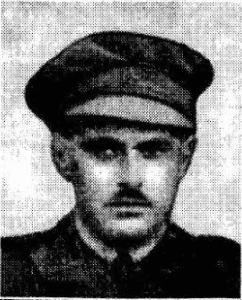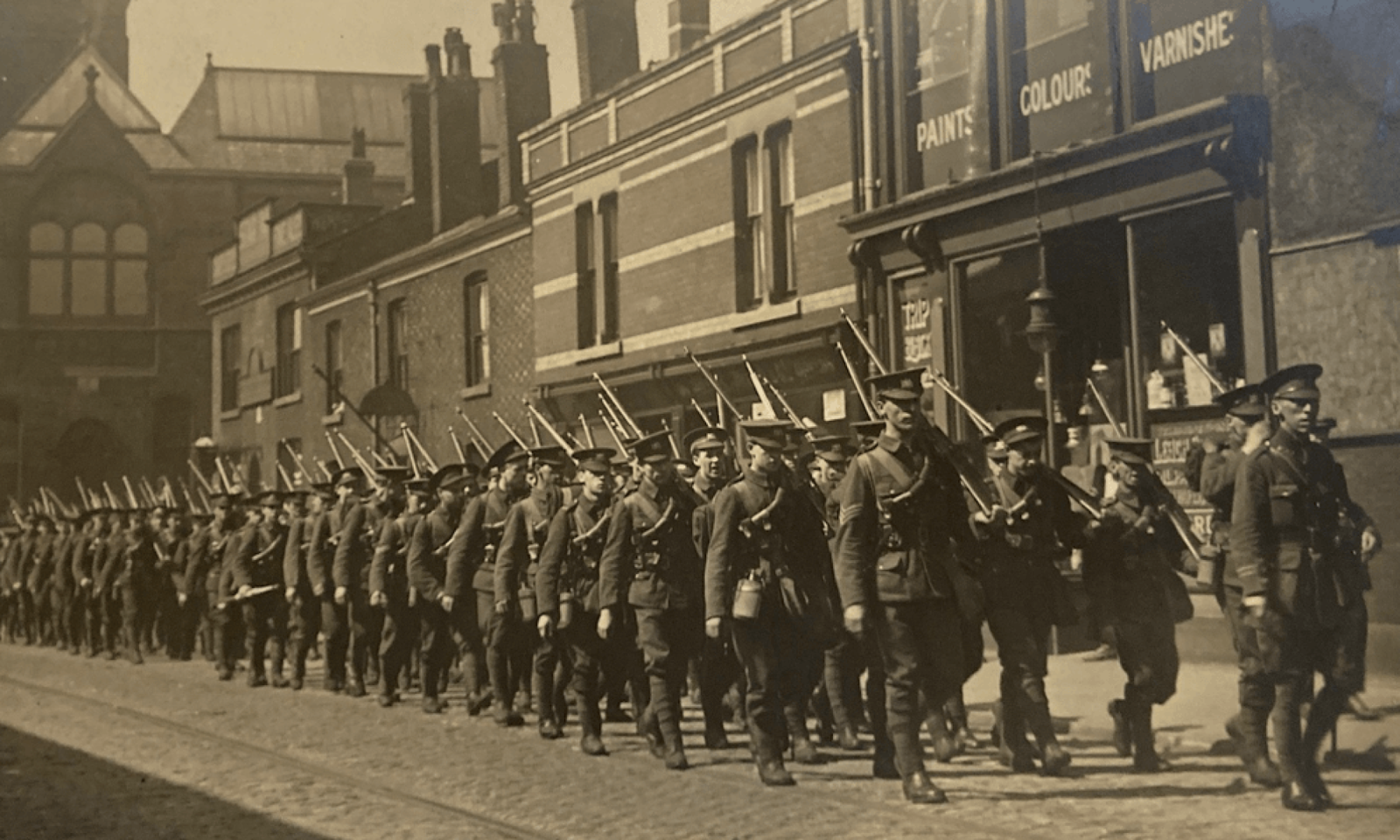
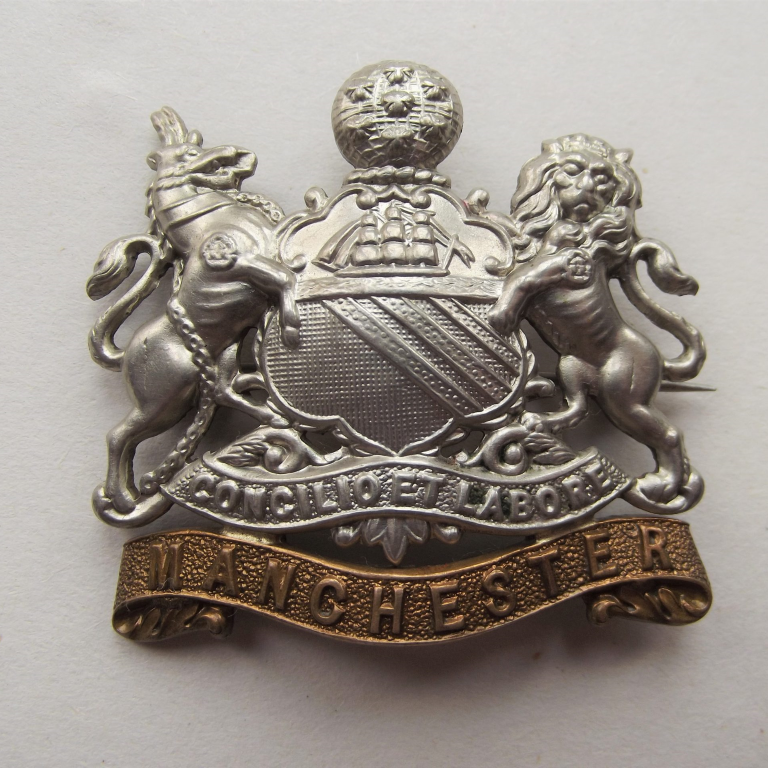
Officers of the 9th

The following articles were published in the Ashton Reporter at various times throughout 1914 and 1915 regarding the Officers of the 9th Battalion Manchester Regiment.

MILITARY WEDDING AT ASHTON

Lieut. A. G. Birchenall and Miss Knight

Saturday September 12, 1914:

A military wedding took place quietly at Albion Congregational Church, Ashton on Saturday the bride being Miss Winifred Knight, daughter of Mr. and Mrs. John W. Knight Arncliffe, Smallshaw, Ashton and the bridegroom Lieutenant Alfred Gordon Birchenall, son of Mr. and Mrs. Edwin Birchenall, Brookfield House, Longsight, Manchester. Owing to the exigencies of the war, the arrangements originally made in connection with the wedding were cancelled, and in consequence the nuptials were of a semi-private character. Illness prevented the bridegroom from leaving for foreign service with the 9th (Ashton) Battalion Manchester Regiment Territorials in which he is a lieutenant, and this was a sore disappointment to him, inasmuch as he had volunteered for foreign service. He was, however, consoled with the prospect of joining the Ashton Battalion in Egypt at the first available opportunity. In order to complete the establishment, he had been deputed to take temporary charge of the Armoury, Old Street. His onerous duties required his presence at the Armoury and his leave of absence for the wedding amounted to a little over an hour, after which he returned to his duties. Only the immediate members of the two families and a few personal friends were present at the ceremony which was performed by 12:30pm by the Rev H. Parnaby, pastor of the church. The bridegroom was in khaki uniform and the bride was given away by her father, was attired in a neat and plain navy blue costume, and she wore a white rose, the gift of the bridegroom. Mr. Harold Knight, brother of the bride, acted as best man. Among the few present were Mr. and Mrs. Geo Harrison and Dr. and Mrs. Keighly. A repast was afterwards served at Arncliffe. A large number of wedding presents were received. Lieutenant and Mrs. Birchenall took up their residence at One Ash, Smallshaw.

Mr. IRVINE DEARNALEY

Promoted to Captaincy in Ashton Territorials

Irvine Dearnaley
Saturday, January 30, 1915:

Mr. Irvine Dearnaley has been promoted from the rank of second-lieutenant to the of captain in the 9th Battalion (Reserve) Manchester Regiment, Ashton Territorials. Captain Dearnaley joined the battalion soon after the outbreak of the war. His promotion will occasion much pleasure among his many friends. He is the son of the late Mr. Irvine Dearnaley, who for a good number of years was organist at Ashton Parish Church, and was a pianist of considerable distinction. Captain Dearnaley is in business as a yarn agent in Chapel Walks, Manchester. Previously he had held the position of secretary and salesman at the Minerva Mill, and had also held the position of secretary at the Texas Mill, and also at the Cedar Mill. He has taken a prominent part in the political and musical life of Ashton. He is chairman of the Ashton branch of the Junior Imperial and Constitutional League, is a gifted cellist and was a prominent member of the Parish Church Operatic Society. He has been house secretary of the Ashton Golf Club since its formation.

ASHTON TERRITORIALS

Saturday, February 6, 1915:
Harold Harrison Knight

Mr. Harold H. Knight, who has been promoted from second-lieutenant to lieutenant in the 9th (Reserve) Battalion Manchester Regiment, is a son of Mr. and Mrs. John W. Knight of “Arncliffe”, Henrietta Street, Ashton. Mrs. Knight, prior to her marriage, was Miss Harrison, and sister of Mr. George Harrison of the Firs. Lieut. Knight has been engaged in his father’s business of cotton wool brokers and mill furnishers in Cavendish Street. He expresses himself as highly delighted with his new profession.

J.M. Robson

Mr. John M. Robson, who has been gazette second-lieutenant in the 9th (Ashton) Reserve Batt. Manchester Regiment, Territorials, is a son of Mr. G. Robinson, B.A., headmaster of Christ Church Gatefield School, of Blandford House, Ashton. Prior to joining the Reserve Battalion, he was agent for a shipping firm in Manchester. An ardent athlete he has performed various feats in long distance cycling, and as an enthusiastic golfer he won the Lady Aitken Cup at the last competition in connection with Ashton Golf Club. He speaks German fluently.

ASHTON TERRITORIALS

Officers in the Reserve Battalion

Saturday, February 20, 1915:
Lt. William Gilbert Greenwood

Lieutenant Gilbert Greenwood is the eldest son of Councillor H. T. Greenwood, of Harwood, Mossley Road. He joined the Reserve Battalion of the Ashton Territorials on its formation soon after the outbreak of the war and was appointed to the rank of lieutenant. He was educated at Elmfield College, York, and until joining the Territorials was in business with his father, being the manager of the Office at Stockport. At college he gained distinction in all sports, being captain of his school cricket and football teams.

Lt. William Marsden Barratt

Lieutenant William Marsden Barratt, of the Reserve Battalion Ashton Territorials, now stationed at Southport, is the eldest son of Mr. Herbert Barratt, of Richmond House, Ashton. He was formerly engaged in the private office of Mr. W. B. Hibbert, the chief audit accountant of the Lancashire and Yorkshire Railway, head office, Hunt’s Bank, Manchester. He was a member of the old Ashton Nomads A.F.C., and was latterly a member of the Ashton Lacrosse Club. He was also a prominent member of the Dukinfield Operatic Society, and took an important part in many of the recent productions.

THE TERRITORIALS

Ashton Battalion Officer Reported Wounded

Saturday, May 29, 1915:

The “Rochdale Observer” of last Tuesday prints the following: –

News was received in Rochdale during the weekend that Second-Lieutenant Harold E. Butterworth, youngest son of Mr. and Mrs. James Butterworth, of Laurel House, Manchester Road, Rochdale, had been wounded. A telegram, which was received from the Record Office, Preston, on Saturday, was in the following terms: –

Regret to inform you that Second-Lieutenant H. E. Butterworth, 9th Manchesters, was wounded on the 15th May, degree not stated. Further information when received will be notified you as soon as possible.

 He was in Egypt when he sent his last letter home. That communication reached Laurel House a week ago, and stated that at the time of writing they had been ordered to be in readiness to move, but he was not in a position to say where. It may however be assumed that it was to the Dardanelles.

Second-Lieutenant Butterworth joined the 9th Battalion of the Manchester Regiment, Ashton Territorials, last August and received his commission on September 3rd. Very soon after he left for Egypt, where he has been in training. He is in his 27th year, and is a smart, well-built young officer, full of enthusiasm for his military duties. His father is an old army man, and one of the best-known members of the Army and Navy Veterans’ organization.

LIEUT.-COL. CUNLIFFE

Death of Ashton Territorial Officer

Saturday, May 29, 1915:

We regret to announce that Lieutenant-Colonel T. H. Cunliffe, commanding officer of the 2/9th Battalion, Manchester Regiment, Ashton Territorials, died suddenly at Haywards Heath, Sussex, on Tuesday. Colonel Cunliffe, who was a comparatively young man, was taken ill about seven o’ clock on Monday evening. Colonel Patterson, Major Heywood and Lieutenant Whitehead, RAMC, were called in, but despite every attention Colonel Cunliffe breathed his last at 12:40am. He only went to Haywards Heath last week, and had a house on Muster Green. On Sunday he attended the drum-head service on the Green and his fine bearing made a marked impression on the crowd. He was out riding on Monday afternoon, and later watched his men play football on Muster Green.

Apoplexy was the cause of death. He was an architect by profession and leaves a widow and two children. He was extremely popular with his brother officers, and with the men of all rank, for he possessed sound judgement, a genial disposition, and much tact. His death is a great loss to the Battalion.

Lieutenant Colonel Cunliffe was formerly in command of the 6th Manchester Battalion, but he had been on the retired list from 1911 until his appointment to the Ashton command. He resided at Whalley Range, Manchester. Since the outbreak of the war he had been acting inspector of hospitals for East Lancashire. Under his command the strength of the new reserve battalion at Ashton quickly grew to the requisite 1,000 men, his genial personality winning the esteem and respect of all ranks. All classes flocked to the colours in response to his appeal, and the battalion was described as the finest body of men ever recruited in Ashton.

During the time he was at Stretford Road he was highly popular with all ranks and he was recognized as a thoroughly efficient officer.

Though he went on the retired list some time ago, when war broke out he again decided to make sacrifice; and he was gazetted temporary Lieut.-Colonel on September 28, 1914 and given the command of the 2/9th Battalion Manchester Regiment whose headquarters are at Ashton.

Along with Lieutenant-Colonel D. H. Wade, in command of the 1st Battalion in Egypt, and Major F. Garside, in command of the depot at Ashton, Colonel Cunliffe played a commendable part in recruiting of close upon 1,000 “Terriers” from the Ashton district for active services.

MAJOR CONNERY

Wounded in Action a Second Time

TOLL OF OFFICERS

Saturday, July 31, 1915:

Major M. H. Connery, in a letter received this week, says that he was slightly wounded in the leg on July 12th. This is the second time he has been wounded.

Com. S. M. Joe Connery is under orders to proceed as quartermaster to the Dardanelles in relief of his father, Major Connery.

Major Connery writes, “Thank God I am quite well again. I got slightly hit again on July 12th. We are not safe anywhere.

Only about three of the officers out of the 11 that left Ashton with the 9th remain. The others are either killed, wounded or away sick.

Quartermaster Stuart of the 8th Manchesters was on the way to the firing line with food when they were shelled in a gully. He came into my dug-out, which is six feet underground for safety. There is also an oilsheet covered with sandbags on the dug-out, but a bullet hit him in the foot. When the boys at the base heard about it they got more sandbags to make my dugout safer.

My present wound is slight. It is not as bad as the old one. I hope God spares me to return with what is left of the dear old 9th. They have played the game very well out here.

We have done very well out here during the last few days, no doubt you will have seen it in the papers.”

Writing on July 14th he says: “I was hit in the right leg on July 12th. The same day my servant, Hall, was hit on the leg. He was sent to hospital. To-day Quartermaster Sergt. Boocock was hit. The bullet went through his foot. He goes on the hospital ship tomorrow”.

Lieut.-Col. D. H. Wade

IN WHITWORTH STREET HOSPITAL, MANCHESTER

Saturday, July 31, 1915:

Lieut.-Colonel D. H. Wade, commanding officer of the 1/9th Battalion Manchester Regiment, has returned wounded from the Dardanelles, and on Tuesday night was admitted to the Whitworth Street Hospital, Manchester, where he is now under treatment. Yesterday (Friday) he was reported to be progressing satisfactorily. He was visited on the night of his arrival by his wife, and also by Captain R. Lees, who is in charge of the Depot, Ashton Armoury. He was visited on Thursday night by his father-in-law, (Mr. John Neal), who found him to be in the best of spirits.

ASHTON OFFICER’S STORY

Vivid Account of the Dardanelles Fighting

MAGNIFICENT DEEDS BY TERRITORIALS

Saturday, August 14, 1915:

A graphic account of the operations at the Dardanelles, and of the splendid part played by the Ashton Territorials, has been received during the week by a prominent Ashton gentleman from an officer who is in a position to give a faithful and adequate record of the progress made. He writes under date July 23rd as follows: –

“Reading the ‘Reporter’ giving casualties and publishing letters from individuals killed, wounded, or killed out here, makes one’s mind go back to incidents and experiences of the Peninsula. I will try and relate some of my experiences and of the 9th over there for six weeks.

As I have said before, anyone arriving there, they are shelled and are under shell fire until the leave. Nobody got hit at the first two bivouacs, but we could not sleep at night much for the cold and the roar of the guns. The next bivouac we were in the reserve trenches and had the French troops immediately on our right. Here we were subjected to a lot of shrapnel fire, also snipers’ fire and stray bullets, and we had Andrew Gee killed and several wounded. Next we moved to fresh ground on the left, where we had to dig dugouts, and here we were subjected to the same fire And we had Private Favier killed and several wounded, including Private Butterworth.

Next we moved further still to the left, and this place we made headquarters, and it is a devil of a place for shrapnel and common shell fire as it is near a battery of French 75’s, and the Turks are always trying to find them. Here Private Jennys, Lance-Corporal Barker, Private Redfern, D Company, died from wounds received, and many others wounded. Here also Major Connery got a slight wound.

All the time we were in these various bivouacs there was always a party of the battalion out digging night and day. I have been out at all times with parties in the firing line, sapping forward, making roads, and improving and making communication trenches.

When the battalion went in the firing line for the first time it was exciting. A Company and part of B were in the fire trench, the remainder of B bivouacked nearby along the gully, C and D just a few yards behind, entrenched. D Company’s sole work was sapping forward, and it was continuous, so it was carried on by reliefs, four officers with four parties. It was a risky game, but we came out very well indeed. One morning we had finished the stand too of one hour before dawn, and it was Jones’ turn to take charge of the sapping. He had only been on duty a short time when he was shot straight through the head by a sniper as he was walking along the trench. It was a great shock to us, especially the officers of D Co., as we slept and dined together.

I was next for duty, so I took on his job, and I got orders – (by the way, I forgot to tell you that C Company went out from the trench during the night and dug themselves in about 150 yards out in front; this was to advance, and make a new firing line) – to make strenuous efforts to get one of the six saps forward to C Company, to relieve them. So I concentrated the men on one sap. This seemed a risky business, but of course, it had to be done, and it was just after dawn.

Well, I got 16 men out safely, and I was anxious about them. Later someone shouted that they wanted spades, so I got some spades, and a fellow, Private Summersgill, helped me to carry them to the sap. Here an R.E. man rushed out with some, and arrived safely, although the Turks kept potting away.

Summersgill then said to me, ‘Shall I take these other spades, sir?’ I replied, ‘Please yourself.’ Well, he said, ‘I am not frightened; I went out there last night when I was sapping.’ So he put his pipe in his pocket, and took up the spades, climbed the trench and ran out. I was anxiously watching him, when suddenly down he came, shouting, ‘Oh, I am hit,’ He was between the sap and C Company’s trench, and it was too dangerous for anyone to venture towards him, as the Turks had a machine gun trained along the space. However, Private Hare, one of the men that had gone out from the sap went to his assistance, but was shot stone dead. Summersgill managed to wriggle near to the sap, and we dug frantically towards him, and got him in. The poor chap was badly wounded and he still lives, I am pleased to say.

The men got back to the firing line in the afternoon quite pleased with the good work they had done, but C Company did not get relieved until late on, and they were drenched with the rain that fell in the afternoon and flooded all the trenches. I was wading about in stocking feet. The next day we returned to our headquarters, and the brigade was split up, and attached to different regiments.

Our A and B Companies went to the Inniskillings, C South Wales Borderers, D King’s Own Scottish Borderers, and a few to the Border Regiment. We were only with the K.O.S.B. two days, but we all enjoyed being with this fine Scottish Regular Battalion.

I am sorry to say that only one officer and a few men are left of the original battalion. We again returned to headquarters, and started digging up the Peninsula.

The Digging Song

Digging, digging, digging,
Always digging;
When we are dead and I our graves
We will dig no more

On one expedition I was in command of two parties that were out from 10pm to 2am improving roads, and one party was at Clapham Junction corner. This is a corner on the way up to the trenches at the confluence of two streams that flow, one down a large and steep gully and the other a small gully, and up these gullies the troops go to the trenches. This corner is a deadly place, or was; it may not be so now. The Turks’ spent bullets used to drop all about, and many got laid out there. On this particular night we could do very little digging, as the Turks kept firing, and all we could do was get under cover.

Lance-Corporal Lee got a bullet in his neck, and it stuck there. He said he was finished, but we could see he was not, and he did curse the Turks, as they all do when wounded. It is very laughable at times. At the same corner returning from sapping the next day shrapnel dropped around my party like heavy rain. Luckily I was not hit, but Corpl. Allott and Boon got arm injuries, and some other men got killed and plenty wounded. I was always thankful when I was past the corner.

Another episode: One morning early I was walking along the trench of a defensive position, and got to a traverse. Private bailey was about a yard in front of me, and I was looking at him as he was walking in front round the traverse, when all of a sudden the blood spurted out of a wound in the top of his head and he sank gradually down on the ground. I looked at his head (he was unconscious), and a bullet had gone in at the side and come out in the centre, and I at once got a field dressing and bandaged him up. He died later, I thought he would with such a bad head wound.

The sights of the wounded coming in after an engagement are awful, some look so pitiful, some bravely smoking cigarettes, others rambling. One poor fellow I shall always remember. He was a fine man, about 6ft high, and his face and hair was clotted and matted with blood, and he was blind. The poor man could walk all right with plenty of rests, but he could not be made to bend his head going along the trench as the blood would ooze out of his wounds. I thought he would get shot again as he went along the trench. He rambled, and asked for his clogs, and wanted to go back.

I have read in the papers about the action when Captain Hamer, Lieutenant Stringer, Sergeants Braithwaite and Lawton were killed. D Company were on the other side of the gully, and did not hear about it until the morning. They have caught it rough C Company. I can imagine what a gloom would be cast over Ashton-under-Lyne when the news of the casualties arrived there.  I do not think that that damnable Achi Baba hill will be long before it is taken by us. It has been a a stiff proposition so far.”

LIEUTENANT CONNERY

Saturday, August 21, 1915:

Lieut. Arthur Connery, of the 1/9th Manchester Regiment (Ashton Territorials) who was wounded on July 3 at the Dardanelles, arrived home from Malta on Monday. He is on sick leave and is making excellent progress. He informed a “Reporter” representative that the 9th Manchesters had done splendidly and he was sorry to leave them. They had been in some of the hottest fighting there.

“It was on July 3 about a quarter to eight that I got wounded”, he said. “I was giving out food to the men at the time in the trenches when about eight shrapnel shells burst over us. A bullet struck me in the top lip and went through into my mouth.”

Lieut. Connery said that during the fighting most of the notes he had taken had been captured. He mentioned that on one occasion No. 11 Platoon of the 9th Battalion greatly distinguished themselves. The Officer himself was in command of the platoon.

“We held a redoubt trench and the Turks were using lyddite shells. They completely demolished the parapet four times and greatly damaged the trench itself. All the time, the Territorials calmly and coolly built up the parapet again and made good the damage. They were under a hot fire but the Ashton men succeeded by means of the use of sand bags in raising the parapet again.”

As regards the general military situation on the Gallipoli Peninsula, Lieut. Connery said that great progress is being made but it is taking time and men. The whole army at the Dardanelles, however, were confident that victory was only a matter of time.

Ashton Territorial Officer’s Marriage

Saturday, August 21, 1915:

A pretty military wedding was solemnised on Wednesday at St. Werburgh’s Church, Chorlton-cum-Hardy. The bridegroom was Captain H. Fane Brister of the 2/9th Manchester Regiment, second son of Mr. J. C. Brister, of Chorlton-cum-Hardy, and the bride was Miss Florence Withers, also of Chorlton. Captain Brister belongs to a well-known Chorlton-cum-Hardy family, which has long been connected with the Army. His great-grandfather fought at the battle of Waterloo, and his father, who was born in the Army, has taken a prominent part in the recruiting campaign in the Manchester district, addressing numerous open-air meetings.

The ceremony attracted a large number of people. Captain Brister was supported by his younger brother, Lieut. B. H. Brister, of the same battalion, as best man. The bride was given away by her uncle, (Mr. Deakin), and the bridesmaids were Misses Winifred and Kathleen Brister, sisters of the bridegroom. It had been arranged for about half a dozen officers of the same regiment as the bridegroom to be present, but owing to a general’s inspection they could not obtain leave of absence. After the ceremony the happy couple left for Old Colwyn.

Lieut.-Col. D. H. Wade

VISITS TO ASHTON DURING THE WEEK

Saturday, September 4, 1915:

Lieut.-Col. D. H. Wade, who was in command of the Ashton Territorials in the Dardanelles, left the Whitworth Street Military Hospital on Saturday. He has not quite recovered from his wounds but has made wonderful progress. Together with Mrs. Wade and Capt. and Mrs. R. Lees arrived in Ashton on Saturday afternoon, and many people were delighted to see him once again in town after twelve months’ absence. He is full of pride at the way the Ashton Territorials have distinguished themselves and brought glory and prestige to Ashton, and his only regret is that he is not with them, leading them on to victory.

During the week Colonel Wade has visited many of his friends in Ashton, and has been given a warm welcome, tempered with sympathy for him in his paternal anxiety over the fate of his son, Lieut. J. M. Wade.

Colonel Wade visited the Armoury on Sunday and inspected the men of his battalion who have returned from overseas. He delivered a short, encouraging speech, and asked the men to give Captain Ralph Lees, the officer in command of the headquarters of the Ashton Territorials, their loyal support.

ASHTON NOTES

Saturday, December 4, 1915:

The news of the death of Captain Irvine Dearnaley in action has called forth universal expressions of sorrow. His early death is more than usually pathetic. Irvine Dearnaley was one of the strenuous young men who seemed destined to play an important part in the life of Ashton. He had already done much good work on its social, political, and religious side. He was also well known in the cotton circles of Ashton and Manchester. When the war broke out he was one of the first to take up a commission in the 1st Reserve Battalion of the Ashton Territorials for foreign service. In doing so he gave up a most promising business, which he had only recently ventured in as a yarn agent in Manchester. Life for him held out rosy prospects, and he might have gone on advancing his position in life and looking forward to doing some great public service for his town. His engagement to Miss May Mills, of Stalybridge, had only recently been announced. It seems but a few weeks since he was in Ashton on his last leave before leaving for the front. He looked especially smart in his uniform and seemed the picture of young and robust health. He will be greatly missed.

MAJOR CONNERY

Declines Promotion to Stick With “the Dear Old Ninth”

Saturday, December 25, 1915:

The many friends of Major M. H. Connery, the idolized quartermaster of the Ashton Territorials, will be pleased to hear not only that he has been offered promotion to Provost-Marshal, but that he has requested “to be allowed to remain with the boys of dear old Ashton”.

{A Provost-Marshal is an officer appointed in an army in the field to preserve order as head of the military police and perform various duties appertaining to discipline – Ed. “Reporter”}

In a letter dated December 8th, to Mr. E. Byrne, Major Connery writes in a very hopeful strain. He says: –

“Things are very quiet here just now. I do not think it will last much longer. A few Turkish prisoners came in the other day and said all they had to eat was a slice of bread and six olives a day, and a man cannot last long on that. Well, God is good and we must only hope for the best, and with God’s help I will be spared to return home with the dear old Ninth. We all miss Col. Wade very much. He trained the boys well in Egypt who have done so well out here. Best wishes for a merry Christmas and may we all meet before long”.

Lieut.-Col D. H. Wade

TO RETURN TO THE DARDANELLES

Saturday, January 8, 1916:

Colonel D. H. Wade has received a telegram from the War Office stating that his services are required with the Mediterranean Expeditionary Force. Colonel Wade is awaiting orders for embarkation. It may be assumed that Colonel Wade will again take command of his battalion at the Dardanelles.

Colonel Wade visited the 3/9th Manchester Regiment at Codford during the weekend. He has since returned to his home in Manchester. Colonel Wade was in Ashton this week and called on a number of friends. He appeared in the best of spirits and eager to rejoin his battalion.

At the meeting of the Ashton Education Committee, on Monday, the Chairman, (Coucillor J. H. Wood), informed the members that he had seen their secretary, Lieut.-Col. D. H. Wade, of the 1/9th Battalion Manchester Regiment, during the weekend, and that Col. Wade had informed him he had received orders to hold himself in readiness to proceed to his battalion at the Dardanelles.

Councillor J. H. Wood expressed the hope that Colonel Wade would again prove useful at the front, and would return safe and sound – (Hear, hear).

MAJOR HOWORTH

Territorial Officer’s Return

ASHTON MEN WERE IN THE THICK OF THE FIGHTING

Saturday, January 22, 1916:

Major T. E. Howorth of the 1/9th Manchester Regiment, and son of Mr. D. F. Howorth, 24 Villiers Street, Ashton, has returned home on sick leave. Major Howorth has been in the Ashton Territorials for about 16 years. In conversation with a “Reporter” representative he said: –

“I can tell you the Ashton Territorials in Gallipoli were absolutely first class, and if I had to pick from those men I should pick my own men. We were all very sorry when our commander, Colonel Wade, got hit, and had to leave us. We were all fond of the Colonel. I have been under him from the beginning, and he is a first class officer. Besides being a capable commander he was very considerate to all his officers and men. Major Connery is another fine fellow. It is remarkable the way he has stuck to it all the way through, although he has been wounded. He was always cheerful, and was kindness itself to everybody.”

“The Ashton men were in the tick of the fighting, and they were splendid. They performed their tasks quite as well as anybody, and the regular troops expressed their admiration and astonishment at them. You see there are a lot of quiet fellows amongst them, but they did well all the way through, and stuck to their work. Ashton has done its duty in this war. I shall be glad to get back to our fellows again, and I am only sorry there are not more of them to get back to.”

It was at the end of July that I had an attack of enteric. It is an eastern kind, and extremely severe. You can imagine how it affected me when I say that for five weeks I was unconscious. I was at Malta for some time, and afterwards in hospital at Birmingham. Everybody in hospital was exceedingly kind to me, and I feel very grateful to them all. I am getting along nicely, but, of course, I am still weak, and the doctors tell me it is only a question of time.”

EMBASSY ENQUIRIES

Turkish Foreign Office Has No Information

Saturday, January 22, 1916:

Inquiries by the American Embassy in Constantinople as to the fate of Second-Lieut. J. M. Wade, of the 1/9th Battalion Manchester Regiment (Ashton Territorials), son of Lieut.-Colonel D. H. Wade, commanding officer of the battalion, have elicited the reply that the Turkish Foreign Office has no information as to what happened to the gallant young officer, who took part in the fighting with the Ashton Territorials in the Gallipoli Peninsula, and has been missing since August 18.

Lieutenant Wade took part in a night attack on a strong Turkish position. He was last seen to leap over the parapet of a Turkish trench, said to be packed with Turks, and without hesitation to attack them vigorously. At that time his father, Lieut.-Colonel Wade, was lying wounded in the hospital. Colonel Wade has since recovered and been home, and has now resumed duty.

AMERICAN EMBASSY’S ENQUIRIES

Mrs. Wade, wife of Colonel Wade, who resides at Holly Bank, Birch Polygon, Rusholme, Manchester, has received the following letters: –

American Embassy Constantinople
December 29, 1915

“Dear Madam, – With reference to your letter of October 8th, 1915 requesting information as to the whereabouts of your son, I very much regret to inform you that this Embassy has received an official communication from the Turkish Foreign Office, under date of December 25th, 1915 stating that nothing is known of the fate of Second-Lieut. J. M. Wade, of the 9th Manchester Regiment.”

Yours Faithfully
For the Ambassador
(Signed) H. OFFMAN PHILLIP

LETTER FROM COLLEGE CHUM

HMS Duke of Albany
(Address c/o G.P.O. London)
Monday, Dec 27th, 1915

“Dear Mrs. Wade, – It is impossible for me to express in this letter the feelings of regret and sympathy which I have experienced on, and since, the receipt of your letter this morning. These feelings are intensified by the knowledge that my persistent efforts to trace Jack’s whereabouts may have caused you and Ida unnecessary pain. I do most sincerely hope that the view held by the papers regarding the possibility of his having been taken prisoner, may in the near future become a realized fact.”

“As I was probably Jack’s most intimate friend at college I feel that I am privileged to express to you the extent of the admiration in which he was held by all his fellow students, and he was undoubtedly the most popular man of our year. It was an honour to be his friend.”

“The ‘right’ of war is a tremendous mystery to us all, and I am sure that we boys, although we feel for those at home more than for ourselves – I say this as the natural feeling of every British boy – cannot realise the great anxiety and grief experienced by those at home. The mothers, wives, and sisters are, indeed, fighting this war.”

“In addition to the strain imposed by Jack’s absence, you have to bear the knowledge that Mr. Wade is also away from home, and has already been wounded. I do not wish to create illusions, but I earnestly hope that every day may bring better news of Jack.”

“May you find all possible consolation in the fact that both jack and his father have been upholding our glorious national traditions; we are certain that these sacrifices on the altar of civilization and Christianity, however great, are not all in vain, and will never be forgotten.”

“I should be glad if you will express these sentiments to Ida.”

Yours most sincerely.
(Signed) T. H. BAINES

MAJOR NOWELL’S LETTER TO COL. WADE

Outwood House, Handforth. Cheshire
10th December, 1915

“Dear Colonel, – I have this morning received a letter from Lewis, of the Egyptian Army, who was attached to us in the Peninsula. He sends a message, which I will quote to avoid error: –

“If you happen to see Colonel Wade will you tell him that although I had not the pleasure of knowing him, I knew his son. Young Wade was a splendid type of a young and brave Englishman. His presence with his company was invaluable and he was appreciative enough to recognise that looking after his men was necessary for success. As far as I could judge, he knew no fear. When I saw him last he looked quite fit and hard except for a tired look in his eyes. But we all had that.”

“His loss was a blow to me personally, and to you as well. To any battalion headquarters he would have been an addition of strength. I trust he may not be dead, and it would be a supreme moment for his family if news of his whereabouts were forthcoming.”

“I do not know whether the second paragraph was part of the message but it is to the point. I propose to take the liberty of thanking him on your behalf when I reply.”

“For myself I regret that my health has necessitated and extension of leave. For more than a week past I have been confined to the house, and have been almost completely paralysed with rheumatism. I trust you are keeping well, and increasing in fitness.”

Kind regards to yourself and Mrs. Wade
Sincerely yours, R. B. Nowell
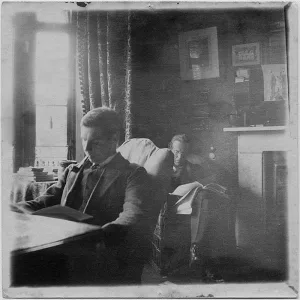
2/Lt. Alfred Gray

Alfred Gary was born on August 9, 1883 in Llangollen, Denbighshire, Wales. His father, Alfred Thomas Gray, was a merchant and spent his time between Manchester and Singapore. Alfred Thomas Gray married Jane Ann Foxwell in November 1881 in Llangollen and 11 months later Vernon Foxwell Gray was born in the Straits Settlements, Singapore. By 1891 Jane Gray was a 32-year old widow and she and her two children were living with her sister in Leamington Spa. By 1901 the family had moved to their own house in Chorlton-cum-Hardy, Manchester and Alfred, now 17, was working as an apprentice. By 1911 Alfred was employed as a traveling salesman in the cloth business and living with his mother and a domestic servant in Chorlton, his brother Vernon having left to seek his fortune in India.

Alfred Gray was commissioned as a Second Lieutenant in the 9th Battalion Manchester Regiment (Territorial Force), from the 13th (Service) Battalion Manchester Regiment, on August 21, 1915. On October 13, 1915 he embarked on His Majesty’s Transport Ship Scotian at Devonport for Gallipoli with 10 other Officers, arriving at Mudros on October 24th and joined the Battalion on Cape Helles on October 26, 1915.

On December 19, 1915 he lead 26 men of B Company in a diversionary frontal attack on the Turkish positions at the North East corner of Fusilier Bluff. A large mine, followed by 5 smaller mines, were detonated and the plan was for the men to advance and shelter in the crater for cover. The mines failed to create any meaningful cover for the men and they were mercilessly fired upon by the Turks. Four men were killed and 11 wounded before Lt. Gray was compelled to order the men to retire.

He somehow managed to survive Gallipoli unscathed and sailed with the Battalion to Egypt, arriving there on January 18, 1916. He attended a course of instruction in February and on October 10, 1916 left the Battalion for 47 days home leave in the UK, rejoining them on November 26, 1916.

He sailed with the Battalion to France, arriving on March 11, 1917. He was a platoon commander in B Company and is briefly mentioned in the Battalion war diary. He was promoted to Lieutenant on July 1, 1917 and shortly after, proceeded to Paris for 6 days leave on June 13-19, 1917. Not long after he returned, he was sent sick to hospital on July 11, 1917 and eleven days later was invalided to the UK and struck off the strength of the Battalion.

By October 1917 Alfred had recovered sufficiently to marry Edith Winnifred Brittain in Chorlton, the couple subsequently making their home in Walley Range, Manchester. In August 1918 their first son, Vernon Brittain Gray was born and was followed in October 1920 by Ross Foxwell Gray.

Meanwhile he continued to serve, now with the 8th (Reserve) Battalion Manchester Regiment in Filey, and was awarded the Military Cross on May 5, 1919 for “gallant and distinguished services in the Field”. He resigned his commission on February 22, 1921 retaining the rank of Lieutenant.

By 1939 the family were living in Southport and Alfred was a manager and buyer for a wholesale garment manufacturer. After the outbreak of World War Two both of his sons served in the Royal Air Force. By the 1960s Alfred and Edith had long since retired to a small town near Exeter where Edith passed away in August 1965. Alfred Gray’s exact date of death is unclear but he was by now 82 years old and after the debacle of December 19, 1915 must have counted every day since as a blessing.

2/Lt. John Reginald Tommis

John Reginald Tommis was born in Wilmslow on July 14, 1892 the oldest son of Richard and Annie Tommis (née Mills). By 1911 John was working as a travelling salesman for a rubber boot company and living with his parents and his younger brother, George Harold Tommis, in Wilmslow within walking distance of the Wilmslow Preparatory School where his father was the headmaster.

Shortly after the outbreak of war, on October 6, 1914, he joined the 7th Battalion, Manchester Regiment as a Private (#2687).  9  months later, on July 3, 1915, he was discharged from Crowborough to a commission as a Second Lieutenant in the 9th Battalion Manchester Regiment (Territorial Force) effective July 21, 1915. After 3 months training, on October 13, 1915, he embarked on His Majesty’s Transport Ship Scotian at Devonport for Gallipoli with 10 other Officers, arriving at Mudros on October 24th and joined the Battalion on Cape Helles on October 26, 1915.

He survived Gallipoli unscathed and sailed with the Battalion to Egypt, arriving on January 18, 1916. On July 23, 1916 he left for 35 days home leave in the UK where he married Annie Wilson. He rejoined the Battalion in Egypt in late August and on September 2nd he attended a course of instruction. He sailed with the Battalion to France, arriving March 11, 1917 and was almost immediately attached to the 42nd Division Signals Company where he remained for two months. From this point, he was effectively a Signals Officer attached the Royal Engineers and remained this way until the end of the war. He rejoined the Battalion on May 15 but two weeks later went sick to hospital where he remained for almost a month. Upon being discharged from hospital he was temporarily attached to the 210th Brigade of the Royal Field Artillery and shortly thereafter was promoted to Lieutenant on July 1, 1917. He remained with the R.F.A. until February 17, 1918 when he transferred to the 6th Battalion Manchester Regiment and was struck off the strength of the Battalion.

On April 6, 1918 he was severely wounded by a machine gun bullet to the chest from an aeroplane when repairing telephone lines on the Somme. The entrance wound entering the back of the top of his right shoulder. He coughed up blood for 4 days but there was no evidence of haemothorax, (a collection of blood within the pleural cavity which is potentially life-threatening). He was treated in Hospital in France until sufficiently fit to travel, at which point he was medically evacuated to England. He was medically assessed at the 4th London General Hospital, Denmark Hill on May 23, 1918, given an overly optimistic diagnosis and granted 2 months leave. He was however paid a wound gratuity of £83 6s 8d on June 14, 1918.

And so began a series of monthly medical assessments, at Blackpool, that each pronounced him permanently unfit for General Service and an expectation of reaching a fitness level of ‘C1’ within six months. At his August assessment he was pronounced to have reached fitness level ‘C2’ and subsequently awarded another gratuity of £166 13s 4d. He was again pronounced to have reached fitness level ‘C2′ on September 23, 1918 and was promptly assigned to the College of Technology, Manchester University under the temporary employment of the Officers’ University and Technical Committee (O.U.T.C). The OUTC was a short-lived government programme, initiated by the Minstry of Munitions and run by the Ministry of Labour, designed to provide university training for disabled officers in order to better equip them for post war employment in government and commerce.

Lt. Tommis was called to London for yet another medical assessment on July 1, 1919. He was awarded a one year £50 pension gratuity, on account of his injuries, granted for the period April 6, 1919 to April 5, 1920. He was then instructed to report to Prees Heath where he was demobilised on July 9, 1919.

He was still not a well man and in November 1919 he started coughing up blood again, as he had done when initially wounded, and he subsequently underwent an operation to remove the machine gun bullet that up until this time was still lodged in his upper chest. The operation was successful, leaving a 7 inch scar, and on February 4, 1920 he was medically assessed again, this time in Leeds where he and his wife were now living. The report was not entirely encouraging:

“States that he had haemoptysis [coughing up blood] 3 months ago. The bullet was then removed from the chest 10 weeks ago. Now has cough without blood. Feels weak and cannot exert himself. Small scar of entry at base of right acromion good scar, long fresh operation scar 7″ long across right chest just above nipple. A little superclavicular dulness, cavernous breathing top of right chest and lower neck. Evidence of old pneumothorax [collapsed lung] not yet completely absorbed. Looks ill.”

He was awarded another one year £50 pension gratuity, on account of his injuries, granted for the period April 6, 1920 to April 5, 1921 and informed that the pension could be awarded permanently until it had been paid annually for 5 years.

He resigned his commission on February 22, 1921 retaining the rank of Lieutenant. He stayed in Leeds working again as a travelling salesman. Lt. John Reginald Tommis died on June 10, 1965. He was 63 years old.

2/Lt. Robert Jacomb Norris Dale

Robert Jacomb Norris Dale was born in Kensington on November 13, 1884 and was the oldest of four children. His father, Bernard Dale, was a successful solicitor and managing partner in the firm of Dale & Company of Cornhill. Robert was educated at Haileybury College (1900-02) and later joined the Inns Court O.T.C. (popular with lawyers and others in the legal profession) in 1910, when he was 26, where he served for two years. By 1911 he was working as a solicitor in his father’s firm and living with his parents and two domestic servants in Wimbledon.

Robert Jacomb Norris Dale
Robert Jacomb Norris Dale with Father in the Background

But by 1914, apparently having now forsaken his father’s business and profession, Robert was working as a designer printer for Thomas Russell of Clun House, London a noted Commercial Advertising expert who was President of the Incorporated Society of Advertising Consultants and former Advertising Manager of the London Times.

The day after the outbreak of war, (August 5, 1914), he joined the 28th (County of London) Battalion, The London Regiment (Artists’ Rifles), as a Private (#1656). The Artists’ Rifles was a popular choice for volunteers of public schools and universities and as a Territorial Force battalion eventually provided a substantial number of officers both for the London Regiment and other Territorial Force regiments. After a very short period of training Pte. Dale embarked for France from Southampton on October 26, 1914 and was deployed with the British Expeditionary Force. He remained in France until June 17, 1915 when he left the Battalion at St. Omer to return to England upon being granted a commission as a Second Lieutenant in the 2/9th Battalion Manchester regiment (Territorial Force), dated June 18, 1915.

Interestingly, on his application for a commission he now described his occupation as: “Scholar; Author; Painter”.

He joined the 2/9th Battalion, Manchester Regiment while they were at Pease Pottage Sussex engaged in basic training. The battalion moved to Burham Camp, Kent on September 22, 1915 and around 3 weeks later, on October 13, 1915, he embarked on His Majesty’s Transport Ship Scotian at Devonport for Gallipoli with 10 other Officers, arriving at Mudros on October 24th and joined the 1/9th Battalion on Cape Helles on October 26, 1915.

Just under two months later he was tried by Field General Court Martial with Conduct to the prejudice of good order and military discipline under Section 40 of the Army Act 1881. He was found not guilty and no records remain regarding the specifics of the alleged offence.

He survived Gallipoli unscathed and sailed with the Battalion to Egypt, arriving on January 18, 1916. He was sent sick to hospital on May 2, 1916 and remained there for 12 days. Two weeks after his return he attended a 10-day course of Instruction and on September 15 was attached to the Royal Flying Corps for instruction in Aviation at 22 Reserve Squadron, Aboukir where he remained for a little over 2 months after becoming sick while with the RFC.

On February 22, 1917 he took 19 days leave in the UK, where he married the 24 year old Irene Rose Mawer, rejoining the Battalion in France on March 13. On April 8 he attended a course of instruction at the Army Telescopic Sights School rejoining the Battalion 9 days later. He was promoted to Lieutenant on July 1, 1917 and took an 11-day leave in the UK on July 28, 1917. On August 29, 1917 he was accepted to the Royal Flying Corps and was struck off the strength of the Battalion.

He was accepted as a Balloon Observer on Probation on September 24, 1917 and was attached to No. 33 Kite Balloon Section (9th Balloon Company) on October 20, 1917. He took another home leave in the UK from December 8-22, 1917.

Lt. Robert Jacomb Norris Dale was killed in action on January 31, 1918 in Italy when his balloon was attacked by an enemy aircraft and he was shot whilst in the basket. He is buried at Giavera British Cemetery, Italy and remembered on the Haileybury College Cloister Wall Memorial, Hertford Heath. He was 33 years old.

2/Lt. Frederick Beard

Frederick Beard was born in Manchester on April 6, 1890. His father, James Hogg Beard, was a Master Chemist and Druggist (a pharmacist). Frederick was the youngest of 3 boys and he also had a younger sister, Lucy. His father, James Hogg Beard, died in 1910 and by 1911 he was living in Marple with his mother, Jessie Ellen Beard (née Wraight), his brother Edward, his sister Lucy his aunt and a domestic servant. Educated at Manchester Grammar School, by 1911 he was employed as an export manager for a metal and hardware merchant.

He joined the 6th Battalion Manchester Regiment as a Private (#3057) on October 5, 1914 and was commissioned as a Second Lieutenant in the 9th Battalion Manchester Regiment (Territorial Force) on March 11, 1915. He joined the 2/9th Battalion in training at Southport and moved with them to Pease Pottage in June 1915. On October 13, 1915 he embarked on His Majesty’s Transport Ship Scotian at Devonport for Gallipoli with 10 other Officers, arriving at Mudros on October 24th and joined the Battalion on Cape Helles on October 26, 1915.

He survived Gallipoli unscathed and sailed with the Battalion to Egypt, arriving on January 18, 1916. On October 4, 1916 he was awarded 45 days home leave in the UK returning to Egypt in November. He sailed with the Battalion to France, arriving on March 11, 1917.

He was promoted to Lieutenant on July 1, 1917 and on July 29th left for 16 days home leave in the UK where he married Isabel May Ferguson. Upon his return to France he was immediately attached to the 126th Infantry Brigade where, on September 4, 1917 he was gassed at Ypres.

He was medically evacuated to England sailing from Calais on September 13, 1917 aboard the Hospital Ship Stad Antwerpen, arriving at Dover later the same day. He was medically assessed at Anstie Grange Military Hospital, Holmwood, on September 21, pronounced fit for General Service and given 3 weeks leave. He reported to the 8th Reserve battalion Manchester Regiment at Filey on October 11 but was immediately invalided, complaining of shortness of breath and palpitation after any exertion. He was medically assessed on November 28 at Scarborough and again on January 28, 1918; both indicating no improvement. On May 17, 1918, at Heaton Park, he was assessed for the last time and his condition pronounced severe and permanent. The examining Physician stating: “The injuries are severe and though improvement may take place in time, permanent ill effects have resulted from the gassing.”

He was forced to resign his commission on June 22, 1918 on account of ill-health contracted on active service, but retained the honorary rank of Lieutenant. Remarkably, his application for a wound gratuity was denied by the Ministry of Pensions, despite numerous protestations on his behalf, on the grounds of his condition not being  sufficiently serious.

After the war, he lived in Marple with his wife and became a company director. In 1920 they had a son, John Knowler Beard. He retired and moved to Buxton but his wife died in 1955 and sometime later he moved to Chipping Campden where he died on July 24, 1982. Lieutenant Frederick Beard was 92 years old.

2/Lt. Francis Cyril Hampson

Francis Cyril Hampson was born in West Didsbury on June 4, 1896. His father, Frank Hampson, owned a business that manufactured ladies’ blouses.  By 1911, Francis was a pupil at Stockport Municipal Secondary School and living in Stockport with his parents, Frank and Emily Hampson (née Midgley), his older sister Doris, his younger brother, Harry Midgley, his two younger sisters Hilda and Irene, and a domestic servant.

In September 1914 he joined the 6th Battalion Manchester Regiment as a private and 6 months later was commissioned as a Second Lieutenant in the 9th Battalion Manchester Regiment (Territorial Force) on February 18, 1915. He joined the 2/9th Battalion in training at Southport and moved with them to Pease Pottage in June 1915. He was made temporary Lieutenant on August 9, 1915. On October 13, 1915 he embarked for Gallipoli with 10 other Officers, arriving at Mudros on October 24th and joined the Battalion on Cape Helles on October 26, 1915.

He was sent sick to hospital in Alexandria on November 29, 1915 where he remained for 84 days before rejoining the battalion in Egypt on February 21, 1916. He didn’t stay with them long, because on March 14, 1916 he transferred to the Machine Gun Corps and was struck off the strength of the Battalion. He remained with the Machine Gun Corps until the end of the war and was appointed temporary Lieutenant September 1, 1916 and promoted to Lieutenant on July 1, 1917. He was disembodied on February 25, 1919 having returned from France in December 1918.

After the war he transferred to the Territorial Reserve as a Lieutenant on February 5, 1921 and in 1925 married Helen Clarkson. They lived in Stockport, where he became a company director, and in 1931 they had a daughter, Helen Patricia Hampson, followed in 1933 by a son, Francis N. Hampson.

Lieutenant Francis Cyril Hampson died on the Isle of Man on May 7, 1970. He was 73 years old.

2/Lt. Percy Parker Fielding

Percy Parker Fielding was born in Stockport on November 20, 1885. His father, William Fielding was a designer and manufacturer of Jacquard Machines used in Textile Manufacturing. Percy was the youngest of three children and he lived with his parents, his brother and sister, a governess and a domestic servant in Wilmslow.

By 1911, after the death of his father, the family moved to Newton Heath, Manchester where he was living with his widowed mother, Annie Fielding Fielding, his brother, Arthur Fielding Fielding, and sister, May Fielding. His brother worked as an engineer and assistant to a Jacquard Machine Maker while Percy managed the design business.

On November 24, 1914 he applied for a commission with the 9th Battalion Manchester Regiment. In January 1915, the Battalion was ordered to appoint eight supernumerary 2nd Lieutenants and he was granted a commission as one of them on January 20, 1915 and joined the 2/9th Battalion in training at Southport. In June 1915 he married Doris Stacey Birchenall, the sister of Lieutenant Arthur Gordon Birchenall, also of the 9th Battalion Manchester Regiment. On October 13, 1915 he embarked for Gallipoli with 10 other Officers, arriving at Mudros on October 24th and joined the 1/9th Battalion Manchester Regiment on Cape Helles on October 26, 1915.

He came through Gallipoli unscathed and sailed with the Battalion to Egypt, arriving on January 18, 1916. On May 19, 1916 he was sent to hospital in Alexandria sick and was subsequently invalided to the UK on September 6th. He spent 74 days in hospital and recovering in England before joining the 8th Reserve Battalion Manchester Regiment on November 20th and remained with them for the duration of the war, unfit to serve overseas. He was appointed acting Lieutenant on February 1, 1917 and promoted to Lieutenant on July 1, 1917. On January 1, 1918 he was Appointed Adjutant and acting Captain of the 8th Reserve Battalion, The Manchester Regiment, relinquishing the position of Adjutant and the acting rank of Captain on May 29, 1919.

He was then transferred to the 196 Territorial Force Depot of the 5th Battalion Manchester Regiment, at Wigan, as Lieutenant and Officer Commanding the Depot and remained there until October 18, 1919. During this time, his son Geoffrey Fielding was born in June 1919. He then spent 3 weeks attached to the 1st Battalion Manchester Regiment before being disembodied on November 8, 1919.

On February 5, 1921 he joined the Territorial Army Reserve of Officers as a Captain. And on June 14, 1921 he submitted his Application from an Officer on the Active List of the Territorial Force for permission to transfer to the Territorial Force Reserve. At this point he was 35 years-old and living with his family in Longsight, Manchester. His application was granted and he joined the Territorial Force Reserve Regimental List as a Captain with Class 2 fitness, (suitable for garrison duty overseas or home service).

His daughter, Dreena Margaret Fielding, was born in 1922 and Anthony Birchenall Fielding was born in July 1927. Percy was working as a textile machine factory works manager and the family lived in Stockport.

On November 20, 1935, his 50th birthday, he was forced to relinquished his commission, (under Paragraph 7, Appendix XXVI Territorial Army Regulations 1929), having attained mandatory the age limit, but retained the rank of Captain.

His oldest son, Geoffrey GW Fielding, developed tuberculosis and by October 1939 he was a patient at the Cheshire Joint Sanatorium, Loggerheads Staffordshire. The development of the streptomycin antibiotic in 1944 enabled treatment but this came too late for him and he died in 1947.

Captain Percy Parker Fielding died in Stockport on February 10, 1960. He was 74 years old.

2/Lt. Oscar Stockton Needham

Oscar Stockton Needham was born in Didsbury on November 30, 1892. His father, Herbert Needham, was a buyer of cotton and woolen for a shipping merchant. Oscar was the youngest of 3 children and he lived with his family and a domestic servant in Withington, Manchester. He was educated at Hulme Grammar School and later at Lycee d’Angoulême, France. By 1911 he was working as a clerk in the office of a shipping merchant while his brother, Herbert Sidney Needham, attended Manchester University.

In 1914 he joined the Officer Training Corps of Manchester University and was later commissioned as a Second Lieutenant in the 9th Battalion Manchester Regiment (Territorial Force) on October 12, 1914. He joined the 2/9th Battalion in training at Southport and moved with them to Pease Pottage in June 1915. He was made temporary Lieutenant on August 9, 1915. On October 13, 1915 he embarked for Gallipoli with 10 other Officers, arriving at Mudros on October 24th and joined the Battalion on Cape Helles on October 26, 1915. Upon arrival it was found that two Officers already serving at Gallipoli were of a junior rank and so he relinquished his temporary appointment.

He came through Gallipoli unscathed, serving as the Transport Officer. The battalion evacuated the Gallipoli peninsula on December 28 and temporarily stayed at Mudros. On January 16, Lieutenants Parker, Balmford, Bury and Needham along with 7 enlisted men embarked a Hospital Transport at Mudros for Alexandria. The ship sailed two days later and arrived at Alexandria on January 20. They disembarked the following day and rejoined the battalion.

On February 26, 1916 he was made temporary Lieutenant and was promoted to Lieutenant on June 1, 1916. On July 23, 1916 he was awarded 35 days home leave in the UK. Two months after rejoining the Battalion he attended a course of instruction at Zeitoun for just over 3 weeks. On January 31, 1917 he left the Battalion for Port Said as part of the Advance Party, under Major R.B. Nowell, tasked with making all necessary preparations for the Battalion’s imminent departure to France.

He disembarked in France on February 10, 1917 and rejoined the Battalion a month later on March 17th. He left the Battalion to attend the 42nd Division Bombing School on May 30, 1917 and rejoined them 18 days later after spending an extra week sick in hospital. He attended a 2 months course of instruction at Nieuport from mid-July until early September and immediately upon rejoining the battalion was granted a short  11 days leave in the UK.

He was again granted two weeks leave in England from February 1-15, 1918 sailing from Boulogne on January 31 and arriving at Folkestone the same day. While on leave he contracted Impetigo and was treated at the 2nd Western General Hospital, Manchester. During his treatment he reported that he was suffering from insomnia, giddiness and a feeling of general nervousness. He was promptly diagnosed with Neurasthenia, granted 3 weeks leave after which he was attached to the 8th Reserve Battalion Manchester Regiment at Filey. The start of his illness was stated to have been September 1917 at Nieuport and it is likely that his leave in September was an attempt by the battalion to informally treat his nervousness through a short break.

He was medically assessed again on April 19th at Scarborough, pronounced still only fit for home service and directed to rejoin the 8th Reserve Battalion. A month later he was assessed again and pronounced for for General Service and directed to rejoin the 8th Reserve Battalion, now at Hunmanby, outside Filey.

Fully recovered, at least from the Army’s perspective, he attended No. 1 School of Instruction for Infantry Officers at Brocton in Staffordshire, May 18 – July 13, 1918.  He received an excellent report where it was stated that he “should make a useful Company Commander”, (which of course would result in a promotion to Captain). After attending the course he took leave until August 17th and received orders to embark for France on the 18th.

British Cellulose and Chemical Manufacturing Company, Ltd.

The British Cellulose and Chemical Manufacturing Co. was formed in 1916 by Swiss brothers, Henri and Camille Dreyfus after the British Government invited the brothers to London to produce their recently developed cellulose acetate dope for varnishing aircraft canvas skins as an alternative to nitrocellulose dope, which was easily ignited by bullets.

But in August 1918, the report of the Select Committee on the Swiss Cellulose Company, which was registered as the British Cellulose and Chemical Manufacturing Company, Limited, revealed that there had been no supervision of the company, which received tax relief and got the state to agree to pay its capital expenditures although not an economical proposition. The company secured a monopoly of cellulose acetate and received a contract worth £3,000,000. The company’s capital was £160,000 in sixpenny shares and the shareholders subsequently received £14 10s for each sixpenny share. It became a scandal and questions were asked in the Houses of Parliament. Mr. Andrew Bonar Law, leader of the government, appointed a Select Committee to look into the matter. The committee was chaired by Lord Colwyn, otherwise known as Sir  Frederick Henry Smith a prominent Mancunian businessman.

In a letter dated August 15, 1918 a representative of Lord Colwyn requested that Lt. Needham’s leave be extended for one month so that he could continue to assist the Select Committee investigating “the Cellulose case”.  His embarkation orders for France were postponed for a month, his leave extension granted and notice was forwarded to the Imperial Hotel in Russell Square, London where Lt. Needham was staying. Upon receiving the news of the leave extension a further 3 months extension was requested which, although initially denied, was eventually granted on the basis that Lt. Needham held specialist knowledge and the committee work was of national importance. Unfortunately his leave was granted without pay but it was extended to December 15, 1918. Predictably, a further 3 months leave extension was requested and granted in mid December expiring on March 15, 1919.

His committee work done, Lt. Needham returned to the 8th Reserve battalion, Manchester Regiment and was demobilised on April 7, 1919. He resigned his commission, retaining the rank of Lieutenant, effective January 4, 1921.

South Africa

After the war, in 1921, he sailed to South Africa with the intention to permanently reside there.  While in South Africa he met and married Mary Barkley Denne, the daughter of a Major in the Royal Artillery who had emigrated to South Africa putting his knowledge of explosives to use in the mining industry. Oscar Needham lived in South Africa, with his wife, working as a salesman in the mining industry until his death in Johannesburg on July 22, 1965. Lt. Oscar Stockton Needham was 72 years old.

2/Lt. Bernard Harold Brister

Bernard Harold Brister was born in Dublin on September 14, 1887. His father, Joseph Charles Brister, was a stockbroker. Bernard was the youngest of 3 sons and also had 3 younger sisters. The family and a domestic servant were living in Chorlton-cum-Hardy by 1901. He was educated at William Hulme’s Grammar School, Manchester from April 1899 to December 1903. In 1910 he traveled to Brazil and resided there for 4 years before returning to the UK in May 1914. While in Brazil he had been employed as a bookkeeper.

He enlisted in the Duke of Lancasters Own Yeomanry, in Manchester, on September 1, 1914 and was discharged after 100 days when he was given permission to transfer to the King Edward’s Horse, a cavalry regiment. He joined the 1st Battalion King Edward’s Horse on December 9, 1914, in Watford, as an enlisted man and was subsequently discharged to a commission on June 9, 1915. He was commissioned into the 9th Battalion Manchester Regiment (Territorial Force) on June 10, 1915.

On October 13, 1915 he embarked on His Majesty’s Transport Ship Scotian at Devonport for Gallipoli with 10 other Officers, arriving at Mudros on October 24th and joined the Battalion on Cape Helles on October 26, 1915.

He sailed with the Battalion to Egypt, arriving on January 18, 1916 and temporarily became acting Transport Officer when Lt. Shatwell reported sick. He came down with Malaria on March 5, 1916 and went to the Government Hospital at Suez for treatment. He became dangerously ill with suspected typhoid in April and, although recovered, the medical board found him to be unfit for general service. While waiting to return to the UK he contracted “Malta Fever” (Brucellosis) and was admitted to the Nasreih Schools Hospital in Cairo on May 18th. Sufficiently recovered to sail, he embarked HS Letitia on May 29, 1916 in Alexandria bound for the UK. Once in the UK he was granted leave to convalesce at home until August 19, 1916.

In August he was medically assessed and sent to the 9th Reserve Battalion Manchester Regiment for home service. Bernard Harold Brister was fluent in Portuguese, having spent 4 years residing abroad prior to the war, and so was assigned as a translator to the British Mission attached to the Portuguese Expeditionary Force in France. During his time in France, he was promoted to Lieutenant, effective July 1, 1917 and mentioned in Sir Douglas Haig’s Despatch of November 7, 1917.

Unfortunately, on October 8, 1917 he was injured in France when he fell from his horse. He was evacuated to the UK on October 21st and admitted to 1st Eastern General Hospital, Cambridge on October 29, 1918 suffering from a contusion to the right hip. He was granted leave from October 21, 1917 to January 1, 1918 to recover at home. He was medically assessed again on January 21st and found to be fit enough to return to France. He rejoined the British Mission on February 13, 1918.

On October 23, 1918 he was taken sick to hospital and evacuated to the UK. Assessed on November 6, 1918 he was once again given leave to recover at home. He was re-assessed on March 18, 1919 and found to be permanently unfit for further military service. He relinquished his commission, retaining the rank of Lieutenant, due to ill health contracted on active service, on May 24, 1919.

After the war he worked as a commercial traveler and traveled internationally. Lt. Bernard Harold Brister died in Manchester on July 25, 1977. He was 89 years old.

2/Lt. Irvine Dearnaley

Irvine Dearnaley was born in Ashton under Lyne on April 2, 1884. His father, Irvine Dearnaley, was a professor of music and organist at Ashton Parish Church but he died in 1894 when young Irvine was only 10 years old. The family lived on Fraser St in Ashton and Irvine, the youngest of 5 children, was educated at the parochial school. He started work as a clerk in a cotton mill and became Secretary and Salesman at the Texas Mill, and later the Minerva Mills. By 1914 he was a Yarn Agent and Director of the Harper Twist Company which, among other things, owned the Harper Mill in Ashton. During this time, he became House Secretary of the Ashton Golf Club and was one of several Officers who were members of the club.

2/Lt. Irvine Dearnaley

He was commissioned Second Lieutenant in the 9th Battalion Manchester Regiment (Territorial Force) on November 14, 1914 and within two weeks was appointed temporary Captain. He joined the 2/9th Battalion in training at Southport and moved with them to Pease Pottage in June 1915. On October 13, 1915 he embarked on His Majesty’s Transport Ship Scotian at Devonport for Gallipoli with 10 other Officers, arriving at Mudros on October 24th and joined the Battalion on Cape Helles on October 26, 1915.

On November 12, 1915 the Battalion moved into the trenches and on November 23, 1915 Captain Irvine Dearnaley was killed in action near Boyes Point. He is buried in Twelve Tree Copse Cemetery and commemorated on the Ashton under Lyne Civic Memorial.

Twelve Tree Copse Cemetery

In Ashton, the following short article appeared in the Saturday December 4, 1915 edition:

The news of the death of Captain Irvine Dearnaley in action has called forth universal expressions of sorrow. His early death is more than usually pathetic. Irvine Dearnaley was one of the strenuous young men who seemed destined to play an important part in the life of Ashton. He had already done much good work on its social, political, and religious side. He was also well known in the cotton circles of Ashton and Manchester. When the war broke out, he was one of the first to take up a commission in the 1st Reserve Battalion of the Ashton Territorials for foreign service. In doing so he gave up a most promising business, which he had only recently ventured in as a yarn agent in Manchester. Life for him held out rosy prospects, and he might have gone on advancing his position in life and looking forward to doing some great public service for his town. His engagement to Miss May Mills, of Stalybridge, had only recently been announced. It seems but a few weeks since he was in Ashton on his last leave before leaving for the front. He looked especially smart in his uniform and seemed the picture of young and robust health. He will be greatly missed.