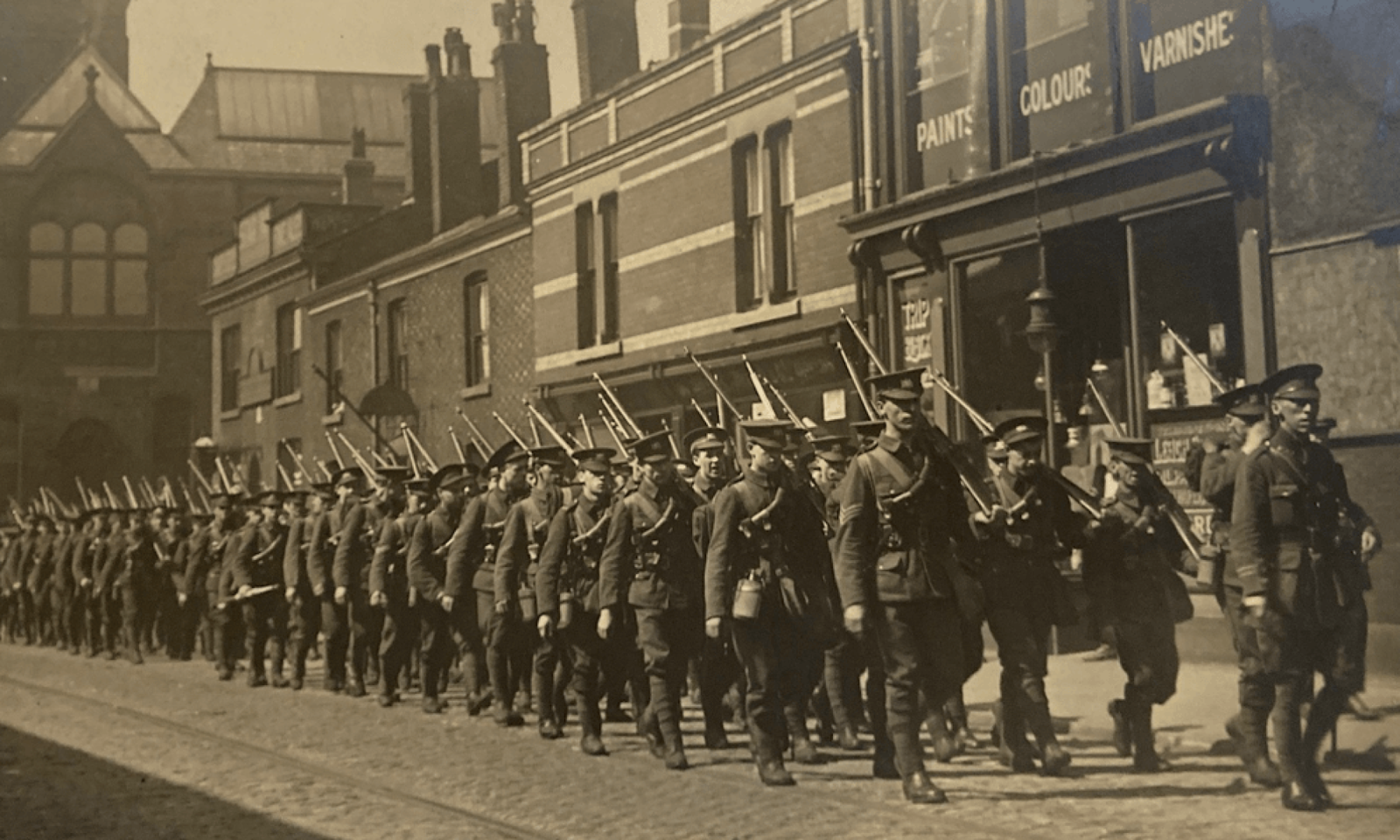
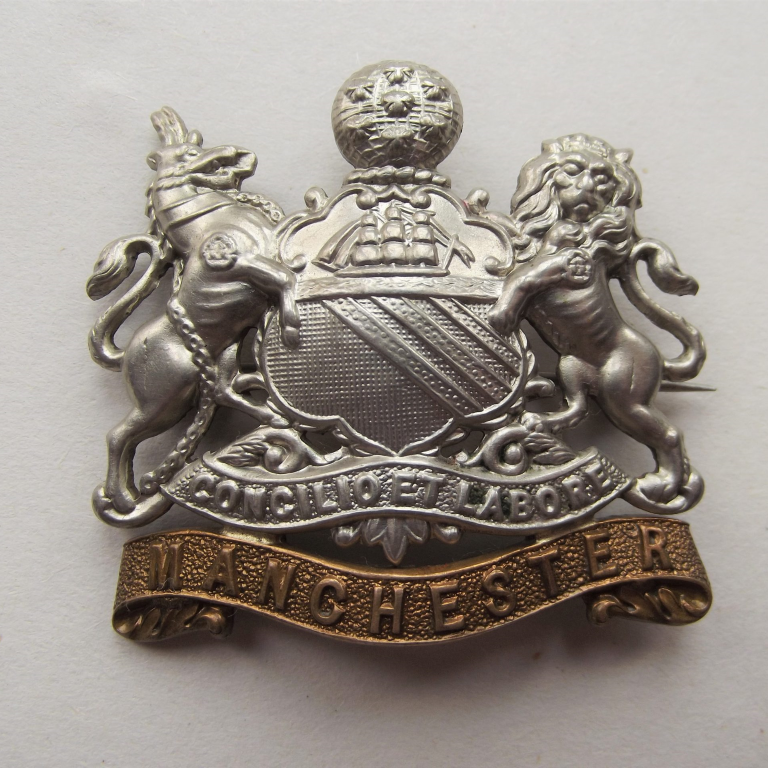
The 9th Battalion left Mudros in early January and landed at Alexandria on January 17, 1916. They were taken by train from Alexandria to Cairo and from Cairo Station to Mena Camp by tram. Mena Camp was situated about 10 miles West of the centre of Cairo just on the outskirts of the city and took its name from Mena House, an old hotel located near the Giza pyramids.
Mena House Hotel, Giza
A week later they moved to Tel-el-Kebir which is located about 68 miles north-north-east of Cairo and 25 miles West of Ismailia.
Tel el Kebir
Shortly after, they moved to El Shallufa on the Suez Canal, making camp on the East of the canal.
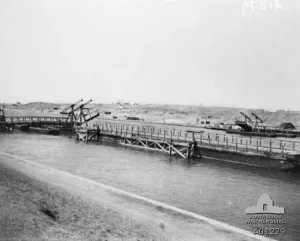
Cantilever bridge at Shallufa
On February 10th they moved again to El Kabrit, about 20 miles north of Suez where they remained for some time.
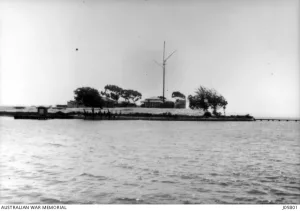
Kabrit South Pilot Station
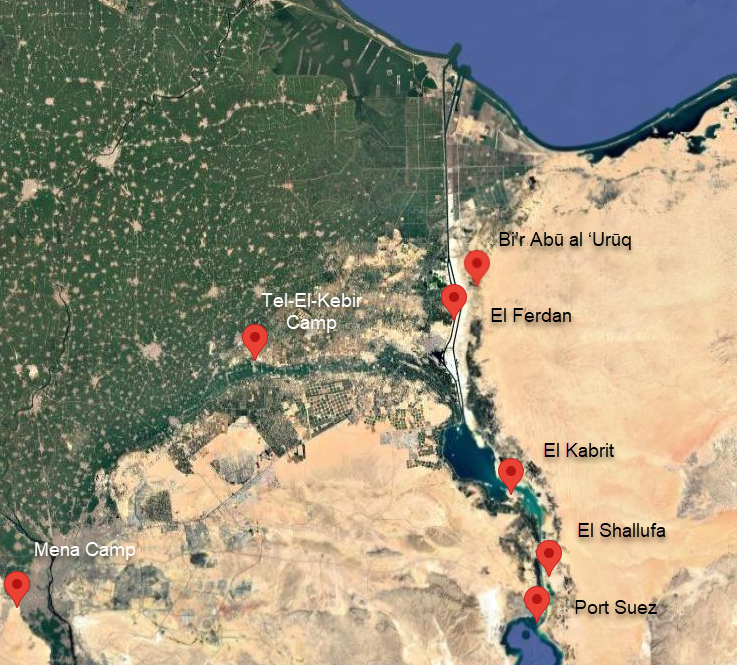
Map: Battalion Locations January to June 1916
January – June was spent rebuilding the Division by the addition of new recruits from England and soldiers rejoining from hospital to replace those lost in Gallipoli and the longest serving Territorials whose time had expired. The battalion was engaged in improving the canal fortifications needed to protect the Southern route across the Sinai from raiding parties (since no large army could cross quickly without first building rail and water supplies).
There were 3 routes across the Sinai; the Northern Route which covered El Arish to B’ir Qatia to El Qantara (known as Kantara to the Allies); the Central Route (which followed the Ismailia to Maghara Road), and the Southern Route. Militarily, each route had a base of operations which were El Qantara, El Ferdan and Shallufa respectively. Since the central and southern routes were impassible to a large force without first building supply lines these two routes were defended by the Allies from small raiding parties through a three tier defence of an outpost approximately 7 miles out from the canal, with a second outpost 3 1/2 miles out and a bridgehead at the canal itself. Much effort was spent consolidating these outposts and linking them together via signals and other communications.
Beginning in January 1916, a new railway was constructed, by the British and Egyptian allied ‘Egyptian Expeditionary Force’ (EEF), from El Qantara to Romani, and was planned to continue eastward through the Sinai to El Arish and Rafa on the border with the Ottoman Empire. A water pipeline and telegraph line were simultaneously constructed along the same route by the Royal Engineers.
April (Suez):
In April the Battalion moved south to Suez and began to engage in divisional training and route marches. On April 26th the Battalion suffered 2 fatalities and several wounded during a training exercise when a bomb exploded accidentally. And the next day a man was accidentally killed when he was shot as another man cleaned his weapon which accidentally discharged.
June (Abū al ‘Urūq):
By the end of June, 17 Officers and around 500 Other Ranks had joined (or rejoined) the Battalion. The Battalion was then effectively back to full strength.
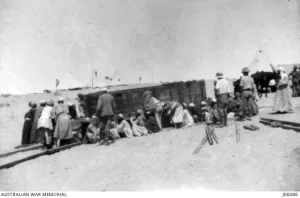
Moving a Water-Tank at El Ferdan
In late June the Division moved to El Ferdan, and then to Abū al ‘Urūq, to assist with the fortifications of the central route since they were now fully recovered and acclimated to the harsh desert conditions and summer heat. Fortification work and training continued throughout July until the 23rd.
July (El Qantara):
In July, intelligence reports indicated a large Turkish force, led by German Officers, was making its way Westwards from El Arish along the Northern Route. 8th Corp, to which the 42nd Division belonged, was transformed into a Mobile Column and sent to meet this force which was moving towards the Suez Canal.
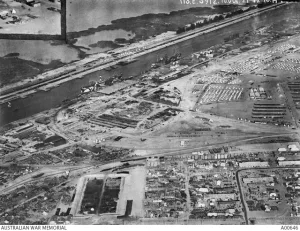
Aerial View of Kantara
On July 25th, the Battalion marched overnight from Abū al ‘Urūq to El Ferdan, so that they could cross the canal, and then the following night made their way to El Qantara (and on to Hill 40), via Al Ballāḩ. Soldiers considered not fit enough for the upcoming difficult desert marches were left at El Qantara. At this point the Battalion was re-equipped to operate as a Mobile Column.
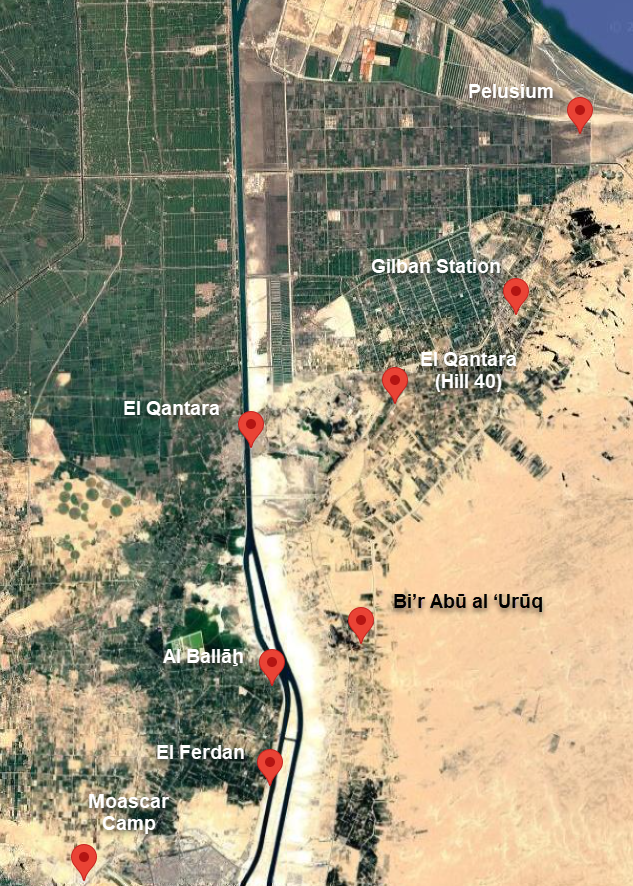
Map: Battalion Locations July to August 1916
August (Pelusium):
On Aug 4th the Battalion marched to Gilban, which was a station on the newly constructed railway along the Northern Route.
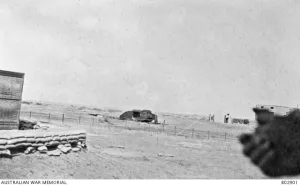
Wrecked Mk IV British tank at Gilban Station
The rest of the Division entrained to Hill 70 from where the 127th Bde marched across the desert to support the Anzacs at the Battle of Romani. The 126th Bde moved to Pelusium by train on August 8th where they were held in Corps reserve.
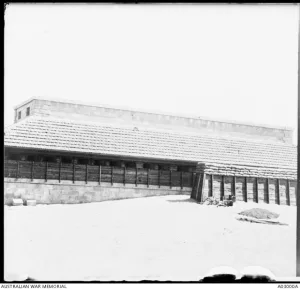
Railway Station at Pelusium
The Battalion remained at Pelusium for the rest of August engaged in outpost duty, training and route marching.
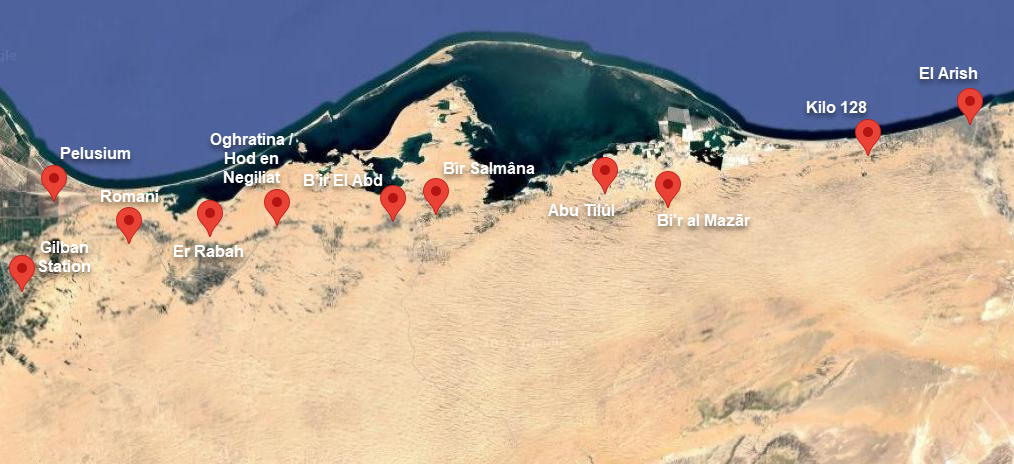
September (Oghratina):
After the allied victory at Romani, defence turned into offence and the railway and water pipes were slowly extended eastwards. The 42nd Division was pushed out ahead to protect the new construction from raiders who were mainly Bedouin tribesmen allied with the Turks.
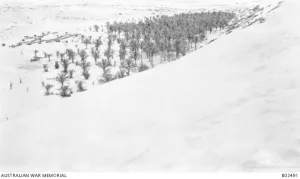
Supply Depot near Oghratina
The Battalion marched to Romani on Sept 9th and then on to Er Rabah the following day and Oghratina, which was considered to be the outpost line, on the 11th. On Sept 21st they moved into reserve at Hod en Negiliat, (a “hod” is a plantation of date palms).
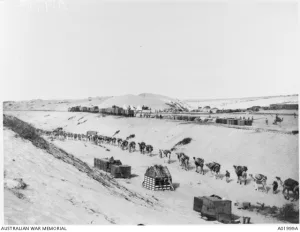
Camel train carrying supplies at Negiliat
The Battalion went back into the line at Oghratina on October 2nd and remained there until October 24th during which time they were engaged in training and route marches once again.
October & November (Bîr el-‛Abd):
In October the railway reached Bîr el-‛Abd (30 miles East of Romani) and the Battalion marched there from Oghratina on October 25th. In November it reached Bîr Salmâna and Abu Tilûl before arriving at Al Mazār.
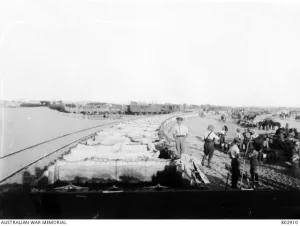
Al Mazār
The Battalion marched to Kilo 60 (Bîr Salmâna) on November 9th and then on to Kilo 100 (Abu Tilûl) the following day. Two weeks later, the Battalion marched to Al Mazār on November 24th. Here the Battalion spent 3 days being disinfected using a mobile system sent out by rail especially for the troops who had been living under canvas since arriving in Egypt.
December (Al Mazār):
In December an offensive was launched against the Turks at El Arish but by the time the Corps was ready to engage, the Turks had fled. The Battalion marched to Kilo 128 on December 20th in preparation, but were ordered to return to Al Mazār the following day.
1917 (Moascar):
The 42nd Division marched into El Arish in mid January 1917 and spent two weeks there by the sea.
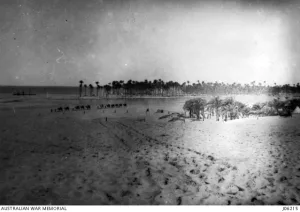
Wadi El Arish
But at the end of January they were ordered back to the Suez Canal in preparation for their imminent deployment to France. The Division arrived at El Qantara by train in early February and then marched to camp at Moascar. They left Moascar for Alexandria by train on March 1st to sail for France on March 4th.
Casualties:
Throughout their time in Egypt, during 1916 and 1917, there was little danger from hostile forces, their main threat being sickness and disease brought on by unsanitary conditions and the harsh summer climate of the Sinai desert.
| Rank | No. | 1st Name | MI | Surname | When | How |
| Pte. | 2088 | WILLIAM | H | COOKE1 | 19-Jan | Died |
| Pte. | 1744 | ANTHONY | SHERIDAN | 25-Feb | Sickness | |
| Pte. | 3260 | JAMES | W | MANSFIELD1 | 7-Apr | Sickness |
| Pte. | 2327 | THOMAS | SMITH | 26-Apr | Bomb | |
| Pte. | 3244 | ERNEST | CHADDERTON | 26-Apr | Bomb | |
| Pte. | 3483 | JOHN | HEGGINBOTTOM | 27-Apr | Shot | |
| Pte. | 3029 | TOM | A | CARR | 2-May | Died |
| Pte. | 2341 | PERCY | NICHOLSON | 13-May | Died | |
| Pte. | 3987 | HARRY | H | KERRICK | 28-Oct | Sickness |
Note 1: These men died and were buried in the UK (St. Paul’s Church Stalybridge and Dukinfield Cemetery respectively) and so it is highly unlikely that they served in Egypt in 1916.
On March 4, 1917, the same day that the Battalion embarked for France, the final Egyptian casualty, Private JAMES KERR (1984), died of pneumonia in Hospital in Ismailia. He was buried at the Ismailia War Memorial Cemetery.
Honors:
During 1916 several Officers and men were officially recognized for their long exemplary service and for individual acts of bravery in Gallipoli as prior recommendations worked their way through the honours process.
On January 28, 1916 the following men of the 1/9th Manchester Regiment were mentioned in despatches for their part in the Battle of Krithia Vineyard.
Second Lieutenant (temporary Captain) O. J. Sutton
Lieutenant W. T. Forshaw, V.C.
Second Lieutenant C. E. Cooke.
No. 180 Sergeant S. Bayley.
No. 2103 Corporal T. Pickford.
No. 2148 Lance-Corporal S. Pearson.
No. 1294 Private F. Chevalier.
No. 1160 Drummer H. Broadhurst.
In February, information was received that Capt. O. J. SUTTON and 2/Lieut. E. COOKE had each been awarded the Military Cross, and L/Cpl. PEARSON and Cpl. PICKFORD the D.C.M.
In August the Battalion received orders which in part contained the following entries:
Qtr. Mr. & Hon Major CONNERY – awarded Military Cross
No 1792 L/Cpl. DAVIES A. – awarded D.C.M.
No 1623 Sgt. GREENHALGH J. – awarded D.C.M.
No 1083 Pte. LITTLEFORD S. – awarded D.C.M.
1792 L/Cpl. A. DAVIES, DCM
For conspicuous gallantry when covering a retirement under a very heavy fire at a few yards range. [Gazetted June 21, 1916 for the actions of December 19, 1915]
1623 Sgt. JAMES GREENHALGH, DCM
For conspicuous gallantry when covering a retirement under a very heavy fire at a few yards range. [Gazetted June 21, 1916 for the actions of December 19, 1915]
1083 Pte. SAMUEL LITTLEFORD, DCM
For conspicuous gallantry in flinging a lighted bomb over the parapet, and thus probably saving many casualties. He was himself wounded in the arm by the explosion. [Gazetted June 21, 1916]
Desert Glossary:
Sabkha: A salt flat with a thin crust and very muddy underneath.
Hod: A planting of palm trees, a palm grove.
B’ir: A well from which water can be pumped to the surface.
Kathīb: A large sand dune or other elevation less than 300m.